

The Authority in Global Agricultural Chemistry & Bio-Resources
Buying Synthetic Fragrances in Bulk: How to Compare MOQ, Purity, Stability, and Lead Time

Buying synthetic fragrances bulk starts with smarter comparison
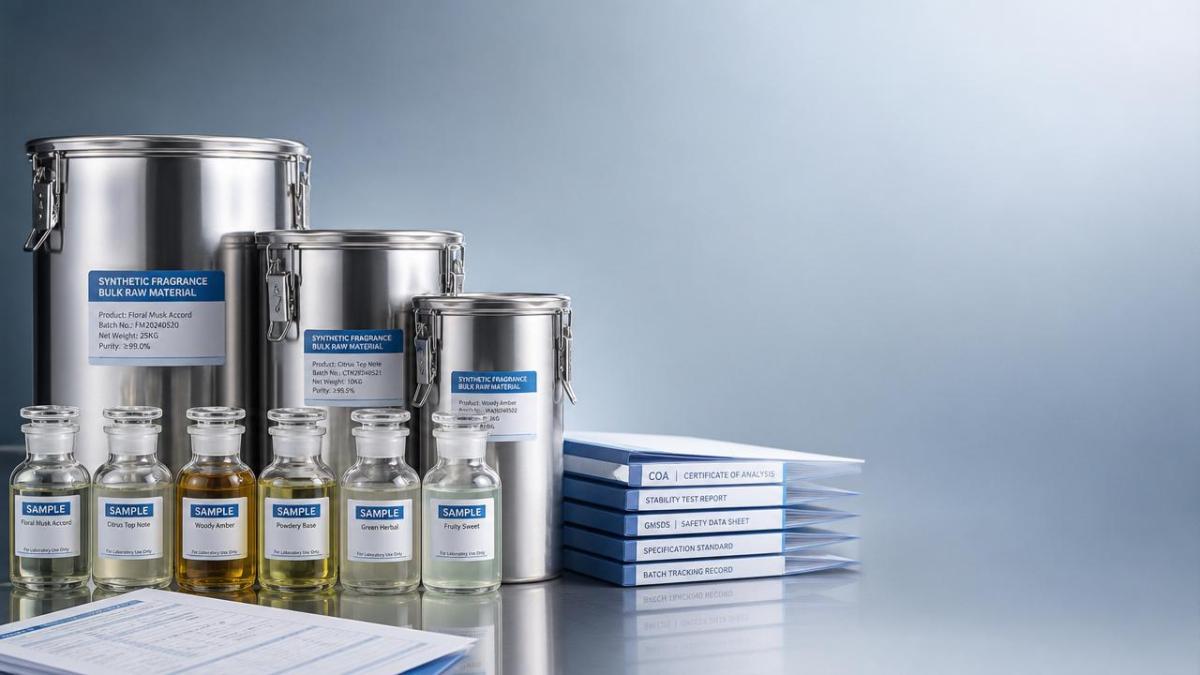
Buying synthetic fragrances bulk rarely comes down to unit price alone.
In regulated and fast-moving supply chains, a low quote can hide higher risk.
The more practical question is whether a supplier can deliver consistent material, usable documentation, and predictable replenishment.
That matters across fine chemicals, bio-based ingredients, feed additives, personal care blends, and industrial formulations.
AgriChem Chronicle often tracks this same pattern in chemical sourcing.
Procurement outcomes improve when technical review and supply planning happen together, not in separate steps.
So when evaluating synthetic fragrances bulk, four variables deserve close attention: MOQ, purity, stability, and lead time.
Each one affects landed cost, batch approval speed, and production continuity in a different way.
Is MOQ really a price issue, or a planning issue?
Many buyers treat MOQ as a negotiation target.
In practice, MOQ is usually a planning signal.
A large minimum order quantity may reflect reactor scale, packaging format, raw material allocation, or export batch economics.
That means a lower MOQ is not automatically better.
If the order is too small, the supplier may run your batch between larger campaigns.
That can create variable lead time, uneven documentation, or less favorable pricing on future repeats.
A more useful comparison looks at MOQ against monthly consumption, storage life, and cash tied up in inventory.
For synthetic fragrances bulk, the best MOQ often supports two to three replenishment cycles without overstocking.
When demand is still uncertain, asking for a trial commercial batch can be more realistic than pushing for the lowest possible MOQ.
It also helps to confirm whether MOQ changes by grade, concentration, or packaging type.
What should be checked behind the MOQ number?
- Whether MOQ applies per SKU, per fragrance family, or per combined order
- Whether custom blending raises the minimum volume
- Whether packaging in drums, pails, or IBCs changes cost structure
- Whether seasonal raw material pressure affects repeat MOQ levels
How pure does synthetic fragrance material need to be?
Purity is one of the most misunderstood points in synthetic fragrances bulk sourcing.
A higher purity figure sounds safer, but it is not always the main decision driver.
What matters more is purity consistency from batch to batch, and whether the impurity profile is controlled.
For fragrance intermediates or finished aroma chemicals, a stable assay range can be more valuable than a single premium number.
Small deviations may affect odor character, solubility, color, or downstream blending behavior.
In applications linked to personal care, household products, fine chemicals, or export formulations, documentation becomes equally important.
A certificate of analysis should not be the only file reviewed.
It is worth checking specification limits, test methods, retained sample policy, and change-control procedures.
Where compliance matters, alignment with IFRA-related use expectations, REACH position, or local regulatory declarations may affect sourcing decisions.
This is why ACC-style market intelligence often emphasizes traceability and technical validation, not just commodity pricing.
A quick comparison table helps narrow options
The table below highlights what to compare before approving synthetic fragrances bulk for repeat purchase.
Why does stability matter so much after the drum arrives?
This is where many sourcing reviews become too narrow.
A product can pass incoming inspection and still create problems later.
Synthetic fragrances bulk may face oxidation, color shift, volatilization, or performance change during storage.
The risk rises when turnover is slow or warehouse conditions fluctuate.
That is why shelf life should be separated into unopened shelf life and in-use stability.
The second number is often more important for operational planning.
Some materials remain compliant for a year sealed, but degrade quickly after repeated opening.
A supplier should be able to explain storage temperature, headspace sensitivity, and compatible container materials.
If the fragrance is used in blended systems, compatibility with solvents or carriers also deserves review.
In practical terms, a slightly higher price may be justified when stability reduces disposal and reformulation costs.
Warning signs that stability data may be too weak
- Shelf life is stated, but storage conditions are vague
- No information is provided for opened containers
- Different batches show noticeable color variation
- The supplier cannot explain accelerated stability testing
Lead time looks simple on paper, so where do delays really begin?
Quoted lead time often reflects the most favorable scenario.
Real lead time includes production scheduling, quality release, packaging, export booking, customs clearance, and inland delivery.
For synthetic fragrances bulk, small disruptions in any of these stages can move delivery by weeks.
This becomes more visible when buying from a producer that runs fragrance materials alongside other fine chemical campaigns.
The better question is not only “What is your lead time?”
It is also “Which part of the timeline is fixed, and which part is variable?”
Ask whether stock is finished goods, semi-finished material, or just raw material reserved for production.
Also ask whether documentation is issued before shipment or after final packing.
These details shape buffer stock policy far more than a headline quote.
Where the supply chain is heavily regulated, transparency matters as much as speed.
That is consistent with the broader sourcing logic seen across ACC-covered sectors, from APIs to agricultural processing inputs.
How do you compare suppliers without turning the process into guesswork?
A practical scorecard usually works better than long email threads.
It keeps technical and commercial review tied to the same decision.
When comparing synthetic fragrances bulk, it helps to assign weight to the factors that most affect your downstream risk.
For some categories, purity consistency may matter most.
For others, lead time reliability or opened-drum stability may be the real cost driver.
A simple evaluation framework can include the points below.
- Commercial fit: MOQ, payment terms, packaging efficiency, and price break structure
- Technical fit: specification control, odor consistency, impurity profile, and sample performance
- Operational fit: standard lead time, emergency supply options, and communication speed
- Compliance fit: SDS quality, transport classification, declarations, and audit readiness
- Supply resilience: raw material visibility, backup production lines, and repeat-order stability
This kind of comparison also helps explain why the cheapest quote is not always the lowest-cost option over twelve months.
What is the safest next step before placing a larger order?
If the supplier looks promising, the next move is usually a controlled validation round.
That means confirming the commercial lot size, approving the specification, and checking how the first delivery behaves in storage and use.
It is wise to document acceptable tolerance for assay, odor variation, color, and delivery timing.
For synthetic fragrances bulk, the strongest buying position comes from combining real usage data with supplier transparency.
That approach reduces requalification work later and supports more stable annual sourcing decisions.
In short, compare MOQ as a planning factor, purity as a consistency issue, stability as a cost-control issue, and lead time as a supply-risk issue.
Once those four points are visible, supplier selection becomes clearer and far less reactive.
A useful next step is to build a one-page comparison sheet for current offers, then test each offer against expected consumption, storage conditions, and reorder risk.
Related Intelligence
- Natural IngredientsFreeze-Dried Fruit Ingredients: A Packaging Checklist for Bulk StorageBuying freeze dried fruit ingredients? Use this bulk packaging checklist to assess moisture barriers, seals, and pack sizes, reduce waste, and protect quality from storage to production.
- Natural IngredientsBotanical Ingredient Prices in Europe: Comparing Quotes by Grade and Order VolumeCompare Europe botanical ingredients price quotes by grade and order volume. Discover how potency, testing, delivery, and inventory costs reveal real savings before you buy.
- Natural IngredientsMayonnaise vs. Salad Dressing: Ingredient and Texture DifferencesMayonnaise vs. salad dressing: discover key ingredient, texture, stability, and application differences to choose the right product for every recipe.
The Morning Broadsheet
Daily chemical briefings, market shifts, and peer-reviewed summaries delivered to your terminal.
