

The Authority in Global Agricultural Chemistry & Bio-Resources
API Intermediates MSDS Explained: Key Safety Sections, Storage Limits, and Handling Risks
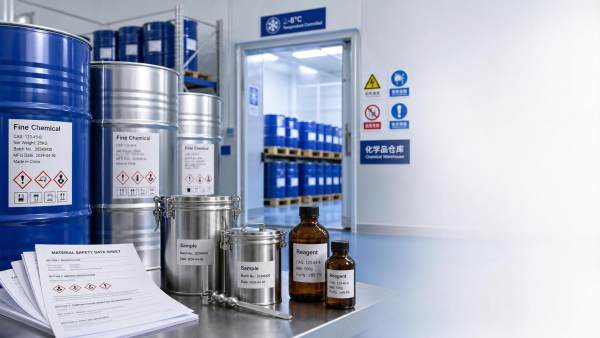
Why does an API intermediates MSDS matter beyond basic compliance?
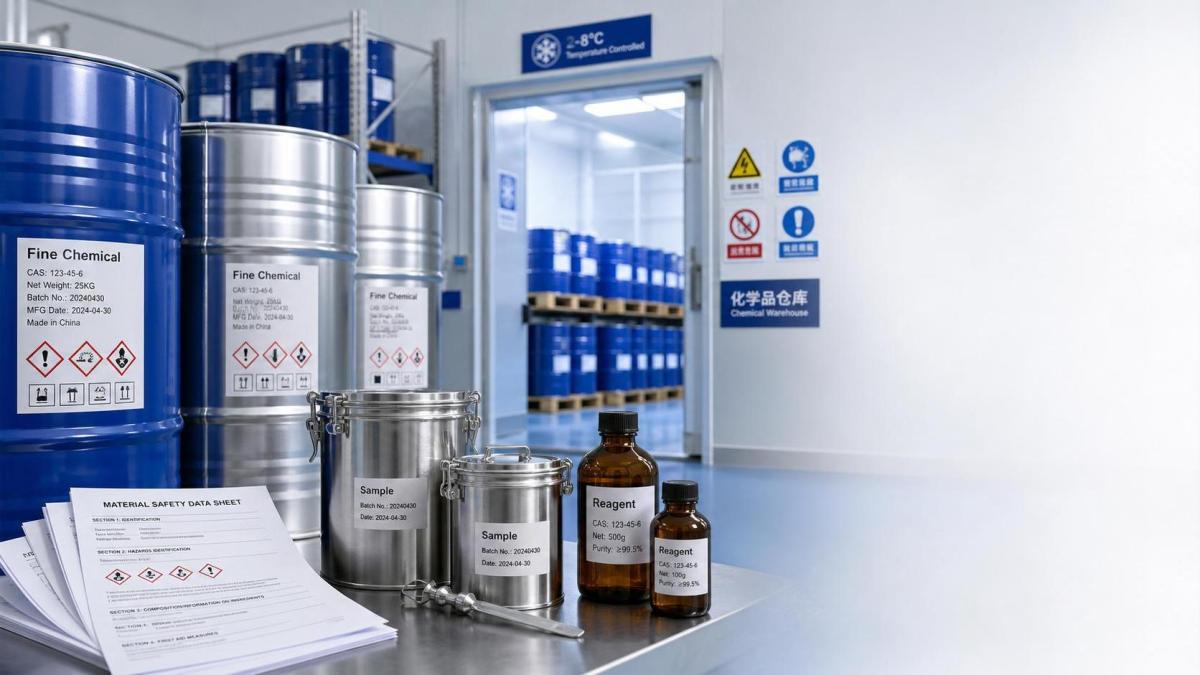
An API intermediates MSDS is not just a filing requirement. It is a working document for controlling chemical risk, product quality, and storage discipline across regulated operations.
That matters even more when raw material supply chains stretch across regions, toll processors, and contract laboratories. A small reading error can become a handling incident or a batch deviation.
In fine chemicals and primary processing, the same site may manage solvents, intermediates, extracts, and cleaning agents under different standards. The API intermediates MSDS helps keep those controls aligned.
A well-reviewed sheet supports daily decisions on ventilation, personal protective equipment, segregation, spill response, and disposal. It also helps explain why a material that looks routine may still carry serious decomposition or exposure risks.
Publications such as AgriChem Chronicle often track how tighter GMP, FDA, EPA, and transport expectations affect upstream materials. In practice, that makes MSDS literacy part of operational resilience, not only safety paperwork.
Which sections of an API intermediates MSDS deserve the closest reading?
People often start with hazard identification, but the stronger habit is reading the document as a linked system. One section rarely tells the whole risk story.
The sections below usually drive the most practical decisions during receipt, sampling, transfer, and storage:
- Section 2, hazard identification: signal word, GHS classification, and major acute or chronic effects.
- Section 4, first-aid measures: delayed symptoms, inhalation concerns, and escalation triggers.
- Section 7, handling and storage: moisture sensitivity, inert atmosphere needs, and incompatible materials.
- Section 8, exposure controls: engineering controls, occupational exposure limits, and glove or respirator guidance.
- Section 9, physical and chemical properties: volatility, flash point, pH, melting range, and odor limits.
- Section 10, stability and reactivity: heat sensitivity, polymerization, oxidation risk, and decomposition conditions.
- Section 13 and Section 14: disposal requirements and transport classifications that affect internal movement.
A common mistake is treating Section 8 as a PPE list only. In reality, exposure controls often confirm whether the current room design, dust collection, or transfer equipment is suitable.
Another blind spot appears in Section 10. Some API intermediates MSDS documents show stable handling at room temperature, yet warn against contact with oxidizers, acids, or humid air.
That is why a short comparison table helps during review meetings:
How should storage temperature limits be interpreted in real operations?
Storage advice in an API intermediates MSDS is often more nuanced than a single number. “Store in a cool place” is not the same as validated refrigerated storage.
The first step is separating three questions. What temperature preserves safety, what preserves stability, and what preserves specification compliance? Those answers may differ.
For example, an intermediate may remain non-reactive at ambient conditions, yet assay drift, discoloration, or impurity growth can still occur above a narrower internal limit.
That is why the API intermediates MSDS should be read together with stability data, COA expectations, packaging instructions, and internal change control records.
More practical checks usually include:
- Whether excursions during unloading or sampling are acceptable.
- Whether the container must remain tightly closed to prevent moisture pickup.
- Whether heat from nearby equipment changes local storage conditions.
- Whether warehouse mapping confirms the stated range in summer and winter.
In mixed industrial settings, this issue becomes sharper. Facilities handling fine chemicals alongside feed additives, extracts, or process aids can experience unnoticed cross-zone temperature variation.
If the API intermediates MSDS mentions protection from light, air, or humidity, storage limits should be treated as environmental controls, not temperature controls alone.
Where do handling risks usually get underestimated?
Handling risk is often underestimated during “short tasks” such as drum opening, line clearance, sample withdrawal, and residue collection. Exposure peaks happen there, not only during full-scale charging.
Powdered intermediates can create a false sense of control because the total batch volume is small. The API intermediates MSDS may still indicate inhalation hazards, skin absorption, or dust explosibility concerns.
Liquids bring different problems. Splashing, vapor release, and static generation become more likely during pumping, decanting, or warming for transfer.
In actual plants, the most useful review question is not “Is PPE available?” It is “Which step creates the highest uncontrolled exposure if a routine deviation occurs?”
That shift in thinking usually reveals hidden weaknesses:
- Manual scooping in areas without local exhaust.
- Using glove materials not verified against the solvent system.
- Cleaning tools that introduce incompatible residues.
- Temporary containers without proper hazard labeling.
- Assuming low odor means low exposure.
An API intermediates MSDS is especially valuable when updating standard operating procedures after scale changes, supplier shifts, or new packaging formats. Handling risk rarely stays constant when those variables move.
How can you tell whether one MSDS is complete enough to trust?
Not every sheet is equally useful. Some are legally passable yet operationally thin, especially for intermediates moving through global supply networks with uneven documentation quality.
A credible API intermediates MSDS should show internal consistency. Hazard statements, physical properties, and storage guidance should support each other instead of conflicting.
Dates matter too. If the document has not been revised after a classification update, process change, or transport re-evaluation, the site may be relying on outdated assumptions.
A stronger review process usually checks the following points before approval:
When details are vague, it is worth asking for a revised API intermediates MSDS, technical addendum, or compatibility note before expanding use conditions.
What should be updated internally after reading an API intermediates MSDS?
Reading the document is only the first step. The value appears when the information is translated into controls that operators, warehouses, and laboratories can actually follow.
A practical closeout usually includes SOP review, label verification, exposure control confirmation, emergency drill updates, and storage map checks.
It also helps to compare the API intermediates MSDS against deviation history. If spills, odor complaints, or repeated container issues exist, the sheet may explain patterns that were previously treated as isolated events.
In sectors followed closely by AgriChem Chronicle, documentation quality increasingly affects audit readiness and supplier confidence. Good interpretation supports traceability as much as safety.
A sensible next step is to build a short internal checklist for each incoming intermediate:
- Confirm the latest API intermediates MSDS revision before release.
- Match storage advice with actual site conditions and excursion records.
- Review handling steps where open transfer or dust release can occur.
- Check incompatibilities against cleaning agents and nearby materials.
- Document any gap that requires supplier clarification or internal change control.
The strongest outcome is not simply a filed document. It is a site that can explain, with evidence, why its storage limits, handling methods, and emergency measures fit the material in front of it.
Related Intelligence
- APIs & IntermediatesHow to Define a Modular System Specification for Interface Control and ExpansionModular system specification guide: define interface control, safety ownership, data rules, and scalable expansion for reliable integration and lifecycle confidence.
- APIs & IntermediatesQuotation Planning for Strategic Sourcing: How Buyers Compare Supplier BidsQuotation planning sourcing helps buyers compare supplier bids beyond price. Learn to assess scope, compliance, lead times, risk, and total cost for smarter sourcing decisions.
- APIs & IntermediatesHow to Qualify a Purified Bioprocess Materials Supplier for GMP ManufacturingPurified bioprocess materials supplier qualification guide for GMP manufacturing: assess traceability, contamination control, change notification, and supply reliability.
The Morning Broadsheet
Daily chemical briefings, market shifts, and peer-reviewed summaries delivered to your terminal.
