

The Authority in Global Agricultural Chemistry & Bio-Resources
Where Does grain production Lose the Most Margin?
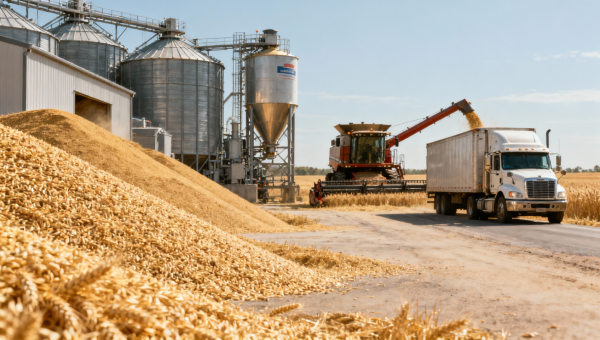
In grain production, margin erosion rarely comes from a single weak link; it accumulates across input procurement, field efficiency, storage losses, logistics, energy use, and market timing.
For business evaluation, identifying where value leaks occur is essential to judging operational resilience, supplier capability, and investment potential.
This analysis examines the highest-risk cost centers across the grain value chain, with practical indicators for assessing profitability and long-term competitiveness.
Margin Pressure in Grain Production Is Moving Upstream and Downstream
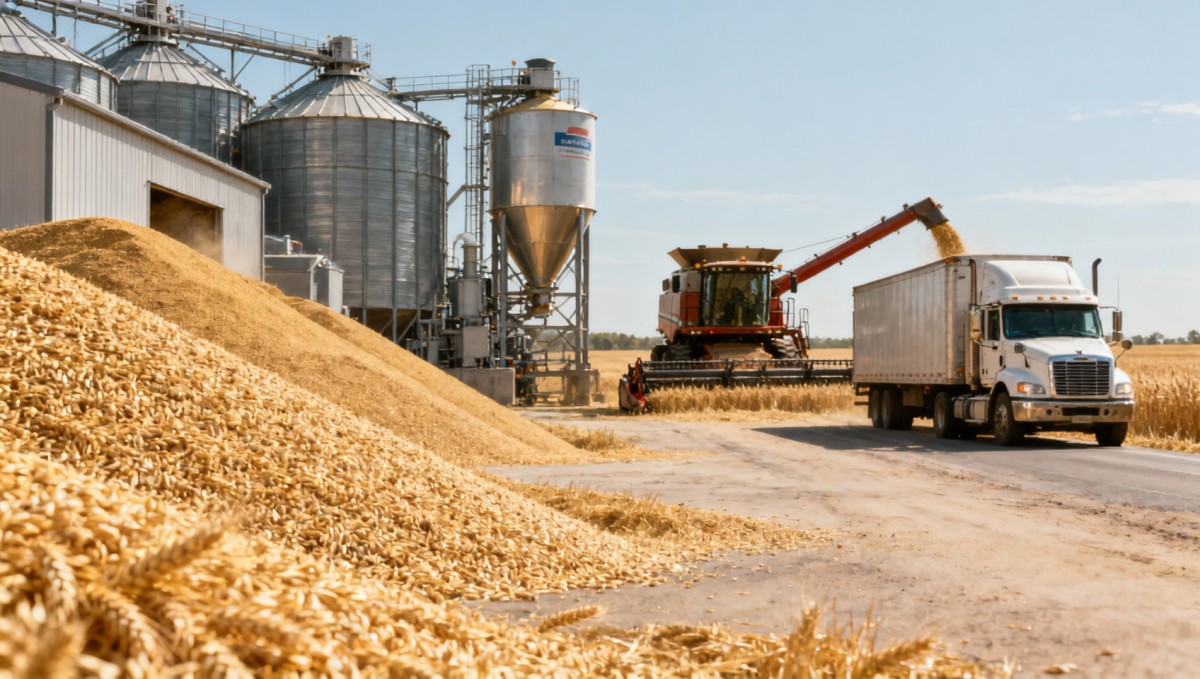
The economics of grain production have changed from a yield-centered model to a margin-control model.
Higher output still matters, but it no longer guarantees stronger returns when inputs, storage, drying, and freight rise faster than selling prices.
Recent volatility has exposed a structural issue: many operators understand field performance better than whole-chain cost behavior.
In grain production, the biggest losses often appear after agronomic decisions are already locked in.
Fertilizer timing, machinery utilization, moisture management, bin turnover, and basis risk can outweigh small differences in yield.
That shift is important for any evaluation of grain production assets, service providers, or integrated supply chains.
Current Trend Signals: Cost Control Is Becoming the Real Yield Multiplier
Several signals show why grain production margins are under renewed scrutiny.
Input prices remain unstable, credit costs are higher, weather events are less predictable, and export channels face periodic disruption.
At the same time, buyers increasingly demand traceability, quality consistency, and lower contamination risk.
These requirements add value only when operational discipline prevents them from becoming extra overhead.
Digital agronomy tools also reveal a wider performance gap between efficient and average grain production systems.
The strongest operations use data to reduce variance, not simply to collect field maps or machine records.
Key Signals Now Shaping Grain Production Margins
- Fertilizer and crop protection costs remain exposed to energy, logistics, and regulatory shocks.
- Labor scarcity increases the value of automation, scheduling accuracy, and preventive maintenance.
- Moisture and storage losses are receiving more attention as climate volatility rises.
- Market timing decisions now affect margins as much as field-level productivity.
- Traceability expectations are turning documentation quality into a commercial advantage.
Where Grain Production Loses the Most Margin
Margin loss in grain production is usually concentrated in five areas.
The first is input procurement, where late purchasing, poor formulation discipline, or weak supplier verification can inflate costs.
The second is field execution, especially when planting windows, application rates, or machinery downtime reduce attainable yield.
The third is drying and storage, where hidden shrink, spoilage, pests, and energy waste erode realized value.
The fourth is logistics, because grain is bulky, time-sensitive, and vulnerable to freight bottlenecks.
The fifth is commercial execution, including basis exposure, contract discipline, quality claims, and delayed selling decisions.
Input Procurement: The First Major Margin Trap
Input procurement can quietly determine whether grain production starts the season with a margin advantage or deficit.
Fertilizer, seed, fuel, chemicals, inoculants, and biologicals are not simple commodity purchases.
Each input must be assessed by response probability, timing sensitivity, quality assurance, and delivery reliability.
The most damaging pattern is not always buying expensive inputs.
It is applying them without a measured link to soil conditions, crop potential, or expected market value.
In high-performing grain production, input plans are adjusted by field history, nutrient removal, disease pressure, and realistic yield bands.
Procurement Factors That Deserve Close Review
- Supplier certification, batch consistency, and documentation completeness.
- Forward buying rules linked to price bands and storage capacity.
- Application rate governance across soil zones and crop rotations.
- Compatibility between chemicals, biologicals, and application equipment.
- Contingency access during weather-driven application windows.
Field Efficiency: Small Timing Errors Create Large Value Gaps
In grain production, the field stage remains the most visible performance area.
However, the greatest margin loss often comes from timing and consistency, not from a single agronomic failure.
Delayed planting can reduce yield potential before any later input has a chance to perform.
Uneven emergence, compaction, skips, overlaps, and inefficient spraying all turn purchased inputs into partial value.
Machinery utilization is another critical measure in grain production economics.
Oversized fleets lock capital into depreciation, while undersized fleets miss narrow weather windows.
The strongest systems balance equipment capacity, maintenance scheduling, operator training, and field logistics.
Drying, Storage, and Quality: The Hidden Profit Drain
Post-harvest losses are often underestimated because they do not appear as obvious field damage.
Yet drying, storage, and quality control can remove a large share of grain production margin.
Moisture mismanagement creates shrink, spoilage risk, and discounted loads.
Poor aeration or temperature monitoring increases insect pressure and mold risk.
Energy efficiency is also central, especially where drying costs are linked to volatile fuel or power markets.
For grain production businesses, storage should be assessed as a commercial asset, not just a holding facility.
Bins create value only when they improve price optionality, preserve quality, and reduce forced selling.
Logistics and Market Timing Are Becoming Strategic Margin Centers
Grain production margins are increasingly influenced by movement and market access.
Freight capacity, port congestion, rail availability, truck scheduling, and local elevator terms can reshape net returns.
A strong harvest can still underperform if delivery options are narrow or contract terms are misaligned.
Market timing creates another layer of risk.
The difference between futures price, local basis, quality premiums, and storage carry determines realized value.
Modern grain production therefore requires stronger integration between agronomy, storage, finance, and commercial planning.
How Margin Loss Affects Different Business Links
The impact of margin leakage depends on the role each business plays in the grain value chain.
Farm operations feel immediate pressure through cash flow, working capital, and debt service capacity.
Storage and processing assets face quality, throughput, and energy-use exposure.
Input suppliers and machinery providers are affected when customers delay purchases or demand proof of return on investment.
For the wider industrial ecosystem, grain production efficiency influences feed costs, bio-based ingredients, food processing, and export competitiveness.
- Primary operations need cost-per-tonne visibility by field, crop, and storage path.
- Processing facilities need reliable quality intake and reduced rejection volatility.
- Equipment decisions need proof through uptime, fuel economy, and labor efficiency.
- Input programs need transparent trial data and local response evidence.
What to Watch When Evaluating Grain Production Resilience
A resilient grain production system does not rely on perfect weather or peak commodity prices.
It reduces avoidable variance, protects quality, and keeps optionality across procurement, storage, and sales.
The most useful evaluation framework combines operational data with commercial discipline.
Practical Response: Build a Margin Map Before Expanding Capacity
Capacity expansion can improve grain production economics only when the weakest margin points are already visible.
Adding acres, bins, dryers, trucks, or larger equipment may simply enlarge an existing inefficiency.
A margin map should trace value from pre-season purchasing to final settlement.
It should separate controllable losses from market exposure and unavoidable biological risk.
Core Actions for Better Margin Protection
- Benchmark total grain production cost by field, crop, and final delivery point.
- Audit input performance against soil tests, yield maps, and price assumptions.
- Measure post-harvest shrink, drying energy, and quality deductions annually.
- Review machinery downtime during planting, spraying, and harvest peaks.
- Connect sales decisions with storage costs, basis trends, and cash requirements.
The Next Competitive Edge Is Margin Intelligence
The future of grain production will favor systems that measure margin with the same discipline used to measure yield.
Yield remains fundamental, but profitability increasingly depends on precision across procurement, operations, quality, logistics, and market execution.
The most valuable question is no longer only how much grain is produced.
It is where each tonne gains or loses economic value before it reaches the buyer.
Organizations evaluating grain production assets should begin with a margin leakage review, supported by verified data and operational records.
A focused audit of inputs, field efficiency, storage, logistics, and selling rules can reveal the fastest path to stronger returns.
For continued insight into agricultural processing, fine chemicals, machinery, and primary industry performance, follow AgriChem Chronicle’s evidence-led market analysis.
Related Intelligence
- Grain Silos & StorageHow Modular Feed and Grain Systems Support Scalable Storage and Processing ExpansionModular feed and grain systems enable smarter, scalable expansion across storage, conveying, processing, and loadout. Discover how to eliminate bottlenecks, protect future capacity, and keep operations moving.
- Grain Silos & StorageHow to Size a Grain Pre-Cleaner for Capacity, Crop Type, and Impurity LoadGrain pre cleaner machine sizing guide: match capacity, crop type, moisture, and impurity load to improve flow, separation quality, and downstream performance.
- Grain Silos & StorageHow Can You Verify That a Grain Handling System Meets Export Standards?How do I know if a grain handling system meets export standards? Explore practical checks for traceability, sanitation, quality control, and export-ready compliance.
The Morning Broadsheet
Daily chemical briefings, market shifts, and peer-reviewed summaries delivered to your terminal.
