

The Authority in Global Agricultural Chemistry & Bio-Resources
Is grain production Ready for Smarter Machinery?
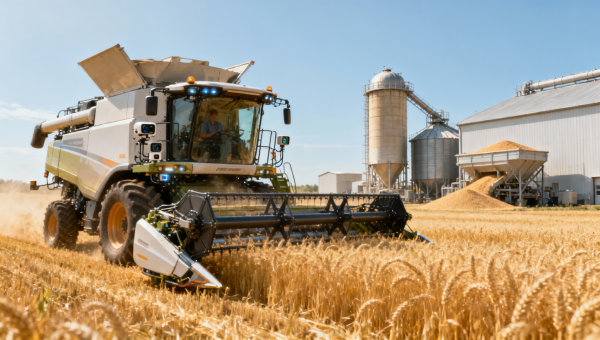
Is grain production Ready for Smarter Machinery?
As harvest windows tighten and input costs rise, operators are asking whether grain production can keep pace without smarter machinery.
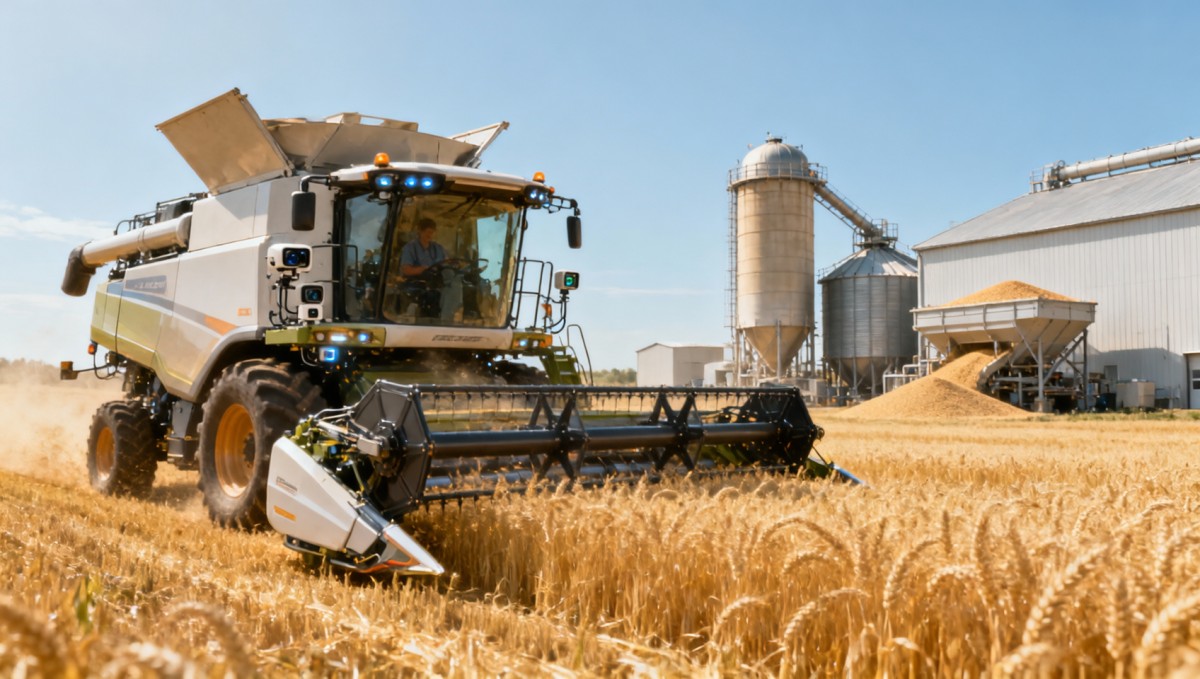
From automated seeding and precision spraying to sensor-driven drying and milling, equipment is reshaping daily decisions across farms and processing lines.
The opportunity is not just higher output. It is better control, safer work, and clearer data for every tonne handled.
The pressure on grain production is becoming structural
Grain production is no longer shaped only by soil, rainfall, and seasonal labor. It is shaped by timing, traceability, energy, and machine intelligence.
Extreme weather compresses planting and harvest periods. Export rules require cleaner documentation. Buyers expect consistent moisture, lower residues, and reliable origin records.
These pressures make smarter machinery more than a technology upgrade. It becomes a practical response to risk across grain production systems.
In many regions, the bottleneck is not field capacity alone. It is the connection between field work, storage, drying, milling, and compliance.
Signals show machinery is moving from power to decision support
The newest shift in grain production is the move from mechanical strength toward machine-guided judgment.
Tractors, combines, dryers, conveyors, and mills increasingly collect operating data while performing routine tasks.
That data supports faster correction. It helps reduce overlap, under-application, downtime, grain cracking, and storage losses.
This does not remove human expertise. Instead, it makes grain production decisions more visible, measurable, and repeatable.
Key trend signals now appearing across the chain
- Autosteer and variable-rate systems are becoming standard in large-scale grain production.
- Machine vision is improving weed detection, grading, sorting, and harvest monitoring.
- Moisture sensors are linking harvesting decisions with drying and storage control.
- Telematics platforms are turning maintenance from reactive repair into predictive scheduling.
- Energy monitoring is influencing dryer selection, milling efficiency, and elevator design.
Why smarter machinery is gaining ground now
Several forces are converging at once. Together, they explain why smarter equipment is entering grain production faster than previous mechanization cycles.
The strongest driver may be integration. Grain production gains the most value when machines share data across field and processing stages.
A combine sensor is useful alone. It becomes strategic when its data informs drying temperature, bin allocation, and milling expectations.
Field operations are seeing the earliest practical gains
In field work, smarter machinery improves grain production by making timing and placement more accurate.
Automated guidance lowers overlap during seeding and spraying. Variable-rate tools adjust inputs according to soil, yield maps, and crop conditions.
Precision spraying is especially important where chemical costs and residue scrutiny are rising. It supports better weed control with fewer unnecessary passes.
Harvest automation also matters. Header control, yield monitoring, and loss sensors help maintain throughput while protecting grain quality.
Changes affecting daily field decisions
- Planting depth becomes easier to monitor across variable soil conditions.
- Spraying decisions can respond to weed density and wind conditions.
- Harvest speed can be adjusted using loss and moisture readings.
- Fuel use can be compared by field, machine, and task.
- Maintenance alerts can prevent avoidable breakdowns during peak windows.
For grain production, these improvements are valuable because missed timing is often more expensive than equipment depreciation.
Post-harvest systems are becoming the new intelligence layer
The field is only one part of grain production. Post-harvest handling often determines whether yield becomes marketable value.
Dryers, conveyors, elevators, sorters, and mills are gaining sensors that track flow, heat, moisture, vibration, and contamination risk.
This is important because grain damage can happen silently. Overheating, poor aeration, and rough handling reduce quality before defects are visible.
Smarter post-harvest machinery turns grain production into a more controlled process, not simply a race to move volume.
Where post-harvest intelligence adds value
- Moisture monitoring helps avoid overdrying and unnecessary energy costs.
- Bin sensors warn against spoilage, hot spots, and unsafe storage conditions.
- Optical sorting improves separation of damaged kernels and foreign material.
- Condition monitoring reduces elevator, belt, bearing, and motor failures.
- Milling data supports consistent particle size and feed performance.
The impact is different across the grain production chain
Smarter machinery does not create one uniform benefit. Its impact depends on the weak point in each grain production operation.
Where labor is limited, autonomy matters most. Where energy costs dominate, dryer controls and process monitoring may provide faster returns.
Where export documentation is strict, traceability systems may matter as much as horsepower or throughput.
Data quality will decide whether the upgrade pays off
Smarter machinery can improve grain production only when data is accurate, usable, and connected to decisions.
Many systems collect information. Fewer systems convert it into timely actions that change machine settings, storage choices, or maintenance plans.
Poor calibration can create false confidence. Moisture probes, yield monitors, sprayer sensors, and weighing systems need regular validation.
Interoperability is another concern. Grain production often uses mixed fleets, older equipment, and different software platforms.
The best systems reduce complexity. They make critical warnings visible without overwhelming daily operations with unused dashboards.
What to evaluate before investing in smarter machinery
Investment decisions should start with operational pain points, not technology novelty.
A useful question is simple. Which part of grain production loses the most value through delay, waste, damage, or uncertainty?
Core points to assess
- Identify the costliest bottleneck before comparing machine specifications.
- Check whether sensors can be calibrated under local crop conditions.
- Confirm compatibility with existing tractors, implements, dryers, and software.
- Evaluate service availability during planting and harvest peaks.
- Compare energy savings, input savings, quality gains, and downtime reduction.
- Review data ownership, export options, cybersecurity, and audit usefulness.
For grain production, return on investment often comes from several modest gains working together.
A small reduction in overlap, a shorter drying cycle, and fewer storage losses can combine into a meaningful result.
A phased path reduces risk and improves adoption
The transition to smarter machinery does not need to happen in one season.
A phased plan allows grain production teams to learn, compare results, and avoid expensive mismatches.
This approach keeps grain production improvements tied to evidence rather than assumptions.
It also helps separate useful automation from features that add cost without changing outcomes.
The next benchmark is connected grain production
The question is not whether smarter machinery will enter grain production. It already has.
The more important question is whether each system can connect field performance with storage, processing, compliance, and commercial value.
Smart machinery is most powerful when it makes the whole grain production chain more predictable.
That means fewer blind spots, better timing, safer equipment operation, and stronger quality assurance.
The practical next step is to map losses by stage, then match machinery upgrades to the highest-value problem.
Start with one measurable target: less overlap, lower drying cost, fewer rejected loads, or reduced downtime.
When each upgrade is tested against a clear metric, grain production becomes smarter without becoming unnecessarily complicated.
That is where the strongest machinery decisions will be made in the coming seasons.
Related Intelligence
- Heavy Agri MachineryHow Does Market Forecasting Help Plan Farm Machinery Procurement?How does market forecasting help agri procurement planning? Discover how to time machinery purchases, protect cash flow, and reduce delivery risks before critical farm deadlines.
- Heavy Agri MachineryIs It Safe to Source Farm Machinery from Emerging Markets?Is it safe to source agri machinery from emerging markets? Discover how to verify suppliers, check compliance, and secure parts support to protect your farm and avoid costly buying mistakes.
- Heavy Agri MachineryHow to Size a Combine Harvester for Acreage, Crop Mix, and Harvest WindowsCombine harvesters sized for your acreage, crop mix, and harvest window: calculate real field capacity, match headers, and avoid costly bottlenecks.
The Morning Broadsheet
Daily chemical briefings, market shifts, and peer-reviewed summaries delivered to your terminal.
