

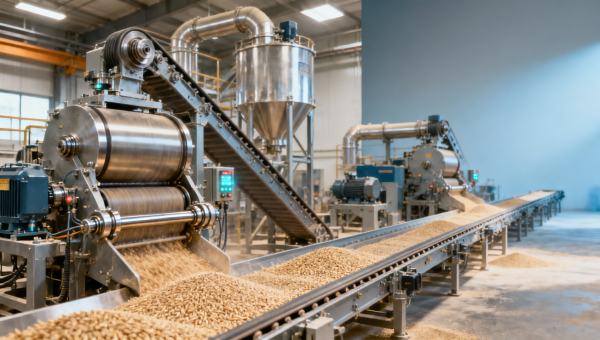
Unplanned stoppages in a Grain Milling line can quickly escalate from minor mechanical faults to costly production losses, quality deviations, and customer delays.
For after-sales maintenance teams, preventing downtime requires more than routine inspections—it demands structured control of wear, lubrication, alignment, sensors, and operator feedback.
This guide outlines practical maintenance priorities that help identify early warning signs, extend equipment life, and keep milling operations running safely and consistently.
Start With the Failures That Stop Production Fastest
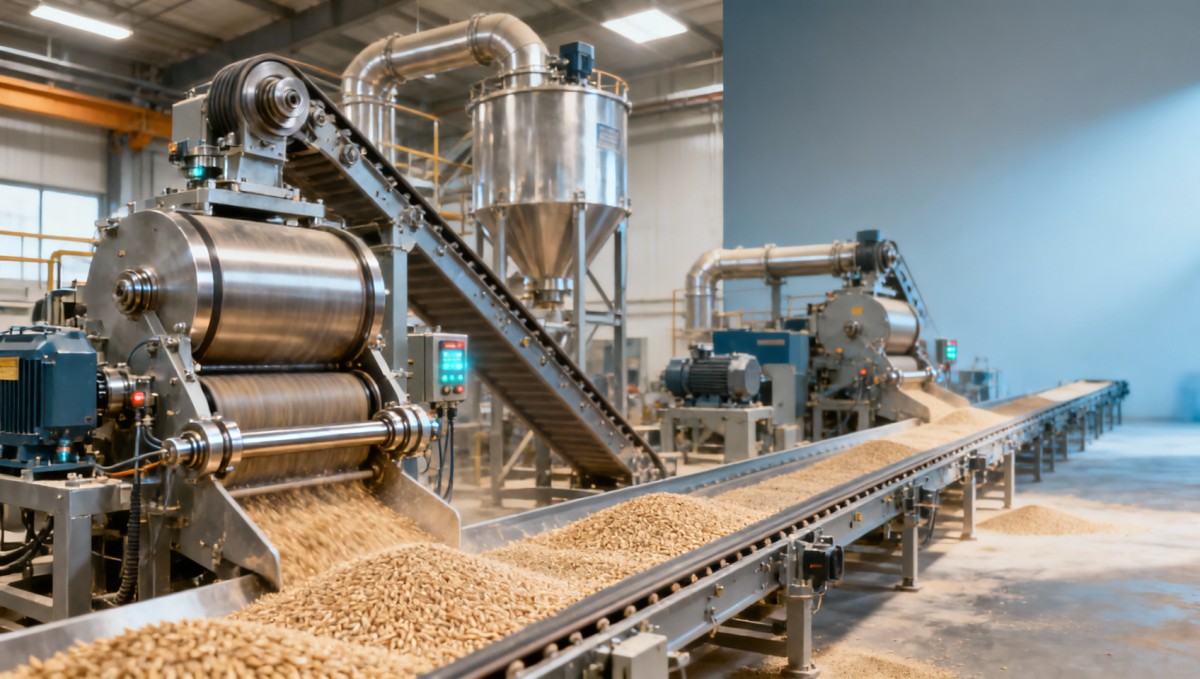
Most downtime in a Grain Milling line does not begin as a major breakdown. It usually starts with vibration, heat, leakage, blockage, or unstable feeding.
After-sales maintenance teams should focus first on components that directly interrupt material flow, power transmission, separation accuracy, or product discharge.
Typical critical areas include elevators, conveyors, magnetic separators, roller mills, plansifters, aspiration systems, motors, bearings, gearboxes, and control sensors.
A practical maintenance program ranks these assets by production impact, repair difficulty, spare part lead time, and safety risk.
This prevents teams from spending equal effort on low-risk inspections while overlooking failure points that can stop the full milling process.
Map the Grain Milling Line Before Setting a Maintenance Schedule
A strong maintenance plan begins with a clear process map, not only with equipment manuals or supplier checklists.
Maintenance personnel should trace grain movement from receiving, cleaning, conditioning, milling, sifting, conveying, packing, and dust collection.
For each stage, identify what failure would happen if the machine stopped, slowed, overheated, misaligned, or produced unstable output.
This mapping helps teams distinguish between equipment that needs daily attention and equipment that can follow weekly or monthly checks.
It also clarifies which faults create quality deviation, such as inconsistent particle size, bran contamination, excess ash, or moisture imbalance.
Control Lubrication Before It Becomes a Bearing Failure
Lubrication is one of the simplest tasks in milling maintenance, but also one of the most common causes of avoidable downtime.
Too little lubricant increases heat and metal contact, while excessive lubricant can attract dust, damage seals, and shorten bearing life.
Maintenance teams should standardize lubricant type, quantity, application interval, and responsible technician for every lubrication point.
Color-coded grease guns, lubrication route cards, and digital reminders reduce mistakes during shift changes or high-pressure production periods.
Bearings in elevators, roller mills, fans, and conveyors deserve special attention because their failure often causes secondary damage.
During inspection, technicians should record bearing temperature, noise changes, visible contamination, grease condition, and seal integrity.
Any repeated heating pattern should be treated as a warning sign, not as a normal operating characteristic.
Watch Alignment, Belt Tension, and Transmission Wear
Misalignment is a hidden downtime driver because it gradually increases vibration, belt wear, bearing load, and coupling stress.
In a Grain Milling environment, dust and vibration make small alignment problems worse over time, especially around conveyors and roller drives.
Technicians should check pulley alignment, belt tracking, chain tension, coupling condition, and gearbox mounting during scheduled inspections.
Belts that run hot, produce dust, slip during start-up, or show uneven edge wear should be corrected before failure.
Chains and sprockets require inspection for elongation, tooth wear, lubrication condition, and abnormal impact noise during operation.
For roller mills, improper roll alignment or drive imbalance may affect both mechanical stability and grinding performance.
Maintenance teams should treat transmission wear as a production quality issue, not only as a mechanical repair task.
Prevent Blockages by Managing Flow, Screens, and Aspiration
Blockages often appear suddenly, but their causes usually accumulate through poor cleaning, worn screens, weak airflow, or uneven feeding.
In milling operations, material flow depends on stable feeding rates, correct moisture conditioning, clean aspiration, and properly maintained conveying equipment.
Elevator boot sections, chutes, rotary valves, plansifter inlets, and discharge points should be inspected for residue buildup.
Dust collection filters, airlocks, ducts, and fans must be checked because weak aspiration can reduce separation efficiency and create safety risks.
When operators report slow discharge or frequent manual cleaning, maintenance teams should investigate root causes rather than normalize the workaround.
Frequent blockage records can reveal whether the problem is mechanical wear, process adjustment, product moisture, or poor housekeeping.
Use Sensor Reliability as a Downtime Prevention Tool
Modern Grain Milling lines depend heavily on sensors, interlocks, level switches, temperature probes, speed monitors, and motor protection devices.
A failed sensor can stop production unnecessarily, while an unreliable sensor can allow damage to continue undetected.
After-sales teams should include sensor cleaning, calibration checks, wiring inspection, and signal verification in preventive maintenance routines.
Dust, vibration, moisture, and rodent damage are common causes of unstable signals in grain processing facilities.
Technicians should compare sensor readings with actual field conditions, especially for temperature, speed, bin level, and pressure differential data.
False alarms should not simply be bypassed, because repeated bypassing weakens protection and increases the risk of serious failure.
A documented bypass approval process helps maintain safety while allowing urgent production decisions under controlled conditions.
Build a Practical Daily Inspection Routine
Daily checks should be short, repeatable, and focused on early warning signs that technicians can identify quickly.
A useful routine includes abnormal noise, vibration, temperature, leakage, belt condition, dust accumulation, motor load, and discharge stability.
Inspection points should be arranged according to the physical walking route, so technicians do not miss hidden or elevated equipment.
Photos, simple checkboxes, and abnormality notes are more effective than long forms that technicians avoid completing.
Whenever possible, daily inspections should happen while the line is running, because many faults disappear when machines are idle.
However, lockout procedures must be followed before touching guards, opening covers, clearing blockages, or inspecting rotating parts.
Plan Weekly and Monthly Maintenance Around Production Risk
Weekly maintenance should cover tasks requiring more time, tools, access platforms, or partial shutdown of equipment.
These tasks may include tightening fasteners, checking guards, inspecting belts, cleaning filters, testing emergency stops, and reviewing lubrication records.
Monthly maintenance should focus on deeper condition assessment, including gearbox oil condition, bearing vibration, motor current trends, and structural wear.
For high-capacity lines, planned inspection windows should be coordinated with production, quality, warehouse, and safety teams.
A maintenance window is most valuable when spare parts, permits, tools, technicians, and machine access are prepared beforehand.
Poor preparation turns planned downtime into extended downtime, especially when a simple replacement part is unavailable onsite.
Keep Critical Spare Parts Ready, Not Excessive
Downtime often becomes expensive because teams know the fault but cannot repair it quickly due to missing parts.
Critical spares should be selected based on failure probability, delivery lead time, repair complexity, and production impact.
Common priority items include bearings, belts, sensors, switches, seals, elevator buckets, fasteners, filters, screen panels, and motor protection components.
For imported machinery or customized Grain Milling systems, long-lead components should be reviewed with the equipment supplier.
Inventory should also include correct lubricants, gaskets, electrical connectors, and safety consumables needed for fast repair execution.
Spare parts management is not only a purchasing issue; it directly affects service response speed and customer satisfaction.
Turn Operator Feedback Into Maintenance Intelligence
Operators often notice problems before instruments show a clear alarm, especially changes in sound, flow, smell, or product behavior.
Maintenance teams should create simple reporting channels for abnormal observations, including photos, short notes, and machine location.
Reports such as “the elevator sounds heavier” or “sifter discharge is slower” may indicate early mechanical or process issues.
When technicians respond quickly to operator feedback, operators become more willing to report small abnormalities before they escalate.
Ignoring repeated observations damages cooperation and allows preventable faults to continue until they cause stoppage.
The best maintenance culture treats operators as the first layer of condition monitoring, not as separate from reliability work.
Use Data to Move From Reactive Repair to Predictive Maintenance
Not every milling facility needs advanced predictive systems immediately, but every facility should use basic maintenance data consistently.
Useful records include downtime duration, failure location, root cause, parts replaced, technician notes, production conditions, and repeat incidents.
Over time, these records show which machines consume the most maintenance effort and which failures are recurring.
Vibration monitoring, thermal imaging, motor current analysis, and oil analysis can be added for high-risk equipment.
The goal is not collecting data for reports, but making earlier decisions about repair, replacement, adjustment, or redesign.
A simple trend chart can justify planned maintenance far better than a general warning about possible breakdowns.
Protect Food Safety and Product Quality During Maintenance
Maintenance work in a Grain Milling line must protect hygiene, product integrity, and regulatory expectations as well as machinery.
Tools, lubricants, cleaning materials, and replacement parts should be suitable for the processing environment and controlled after use.
Food-grade lubricants may be required in areas where incidental contact risk exists, depending on local regulation and facility policy.
After maintenance, teams should confirm guards, covers, magnets, screens, and inspection doors are correctly restored.
Any maintenance activity involving contamination risk should include cleaning verification before production restarts.
Quality deviations after repair often come from small oversights, such as loose screens, incorrect gaps, or incomplete cleaning.
Respond to Breakdowns With Root Cause Discipline
Even strong maintenance programs cannot eliminate every breakdown, so response discipline remains essential for downtime control.
The first priority is safety isolation, followed by fault confirmation, temporary containment, repair planning, and restart verification.
Technicians should avoid replacing parts without understanding why they failed, because the same failure may return quickly.
Root cause review should include operating conditions, maintenance history, part quality, installation method, environment, and process changes.
A short post-repair review can identify whether inspection intervals, spare parts, training, or design improvements need adjustment.
The value of breakdown response is not only restoring production, but preventing the next stoppage from the same cause.
Measure Maintenance Performance With Practical Indicators
Maintenance teams need indicators that support decisions, not metrics collected only for management presentations.
Useful measures include unplanned downtime hours, mean time between failures, repeat failure rate, planned maintenance completion, and spare part availability.
Quality-related indicators should also be included, such as rejected batches, inconsistent particle size, or contamination incidents after maintenance.
When indicators are reviewed regularly, teams can see whether maintenance work is reducing risk or only reacting faster.
The most important question is whether the line runs longer, safer, cleaner, and with fewer repeated interruptions.
Conclusion: Downtime Prevention Is a System, Not a Checklist
A reliable Grain Milling line depends on disciplined attention to wear, lubrication, alignment, airflow, sensors, spares, and operator feedback.
For after-sales maintenance teams, the strongest results come from prioritizing failure points that directly affect production continuity and quality.
Daily observations, planned maintenance windows, reliable spare parts, and root cause reviews create a practical defense against unplanned stoppages.
Facilities that treat maintenance as a structured reliability system can reduce emergency repairs and extend the working life of key equipment.
The goal is not simply to fix machines faster, but to keep milling operations stable, safe, efficient, and predictable.
