

The Authority in Global Agricultural Chemistry & Bio-Resources
Common Grain Milling Mistakes That Reduce Flour Quality
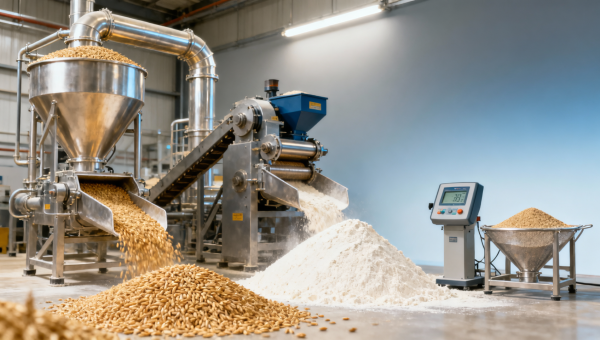
In modern Grain Milling operations, flour quality depends on far more than equipment capacity or throughput. Small errors in grain cleaning, moisture control, roller settings, temperature management, or contamination prevention can quickly affect ash content, particle size, microbial safety, and end-product performance. For quality control and safety managers, identifying these common milling mistakes is essential to maintaining consistent flour specifications, meeting regulatory expectations, and reducing costly rework or rejected batches. This article outlines the key operational pitfalls that can compromise flour quality and how to prevent them.
For industrial mills, the cost of a defect is rarely limited to one production shift. A missed inspection can affect bakery performance, feed formulation, storage stability, and customer confidence.
The most reliable Grain Milling programs combine process discipline, measurable checkpoints, trained operators, and documented corrective actions. Quality must be controlled before, during, and after milling.
1. Weak Grain Intake and Cleaning Controls
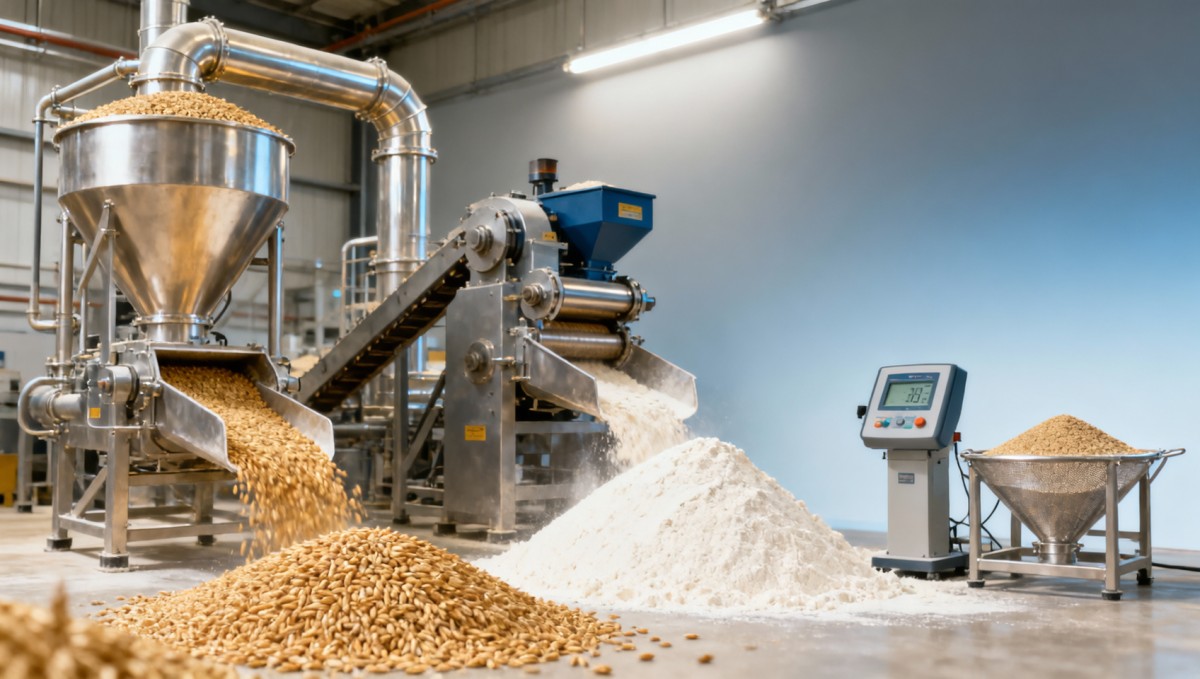
Flour quality begins at intake, not at the packing line. If raw grain enters the mill with stones, husk fragments, dust, metal, or damaged kernels, downstream controls become harder.
A common Grain Milling mistake is treating cleaning as a mechanical formality. In reality, it is the first food safety and quality barrier in the process.
Overlooking Raw Material Variability
Different wheat, corn, rice, rye, or sorghum lots may vary by protein level, test weight, moisture, infestation risk, and foreign matter percentage.
Quality teams should segment lots into at least 3 grades: suitable for premium flour, standard production, or restricted use after additional cleaning.
- Check moisture, odor, insect activity, broken kernels, and visible contaminants before unloading.
- Use sampling patterns that cover truck top, middle, and bottom layers, not only surface grain.
- Record supplier, harvest region, lot number, storage duration, and intake decision within 24 hours.
Insufficient Removal of Physical Hazards
Cleaning lines typically use magnets, separators, aspirators, destoners, scourers, and optical sorters. Each device targets a different risk profile.
If airflow is too weak or screens are worn by 1–2 mm, light impurities and undersized particles may bypass the system.
The table below summarizes typical cleaning mistakes and the quality risks they create in Grain Milling facilities.
The key lesson is simple: cleaning performance must be verified, not assumed. A well-designed checklist can prevent several costly downstream defects.
2. Moisture and Tempering Errors That Destabilize Flour
Moisture management is one of the most sensitive steps in Grain Milling. A small deviation can change bran separation, starch damage, and final flour behavior.
For many cereal grains, conditioning targets often sit within a narrow range, commonly around 14%–17% depending on species, hardness, and product specification.
Adding Water Without Enough Equilibration Time
One frequent mistake is adding correct water volume but allowing inadequate tempering time. Surface moisture may look acceptable while the kernel interior remains dry.
Hard wheat may require 16–24 hours of conditioning, while softer grains may need shorter periods. The target should be validated by mill performance.
Practical Quality Checks
- Measure moisture before water addition, after conditioning, and before first break.
- Compare flour ash and bran speck counts after each major lot change.
- Review tempering bin residence time at least once per production day.
- Set an action limit, such as ±0.3% from the approved moisture target.
Ignoring Ambient Temperature and Storage Conditions
Water absorption is affected by kernel temperature, room humidity, bin design, and airflow. Seasonal changes can alter results even with unchanged equipment settings.
Quality managers should compare summer and winter records. If flour extraction changes by more than 1%–2%, conditioning parameters may need review.
A controlled tempering strategy supports stable milling yield, lower ash drift, and fewer customer complaints about dough absorption or processing performance.
3. Incorrect Roller Settings, Sifting, and Particle Control
Roller mill setup strongly influences particle size distribution, starch damage, bran contamination, and flour color. Excessive pressure can create quality losses quickly.
In Grain Milling, a setting that improves short-term extraction may reduce downstream performance. Quality managers need to balance yield against flour functionality.
Using Roller Pressure as a Shortcut
When production teams face throughput pressure, they may tighten rolls to push more material through the system. This can increase damaged starch.
For flour used in bread, noodles, biscuits, or industrial coatings, excessive damaged starch may alter water absorption by several percentage points.
Neglecting Sifter Integrity
A torn screen, loose frame, or blinded mesh can send coarse particles into fine flour streams. The defect may appear only after packing.
Sifter inspection should not rely only on monthly shutdowns. For critical flour lines, visual checks every 8–12 hours are often justified.
The following table provides practical process parameters that quality and safety managers can use when auditing a Grain Milling line.
The strongest control programs connect equipment settings with laboratory results. Operators should understand how mechanical changes affect measurable flour specifications.
4. Temperature, Microbial, and Cross-Contamination Risks
Flour is often considered low moisture, but safety managers cannot ignore microbial, allergen, chemical, or physical contamination risks in Grain Milling environments.
Heat, dust accumulation, pest activity, and poor traffic control can turn a technically acceptable mill into a high-risk processing site.
Allowing Excessive Heat Build-Up
High grinding temperature may affect flour aroma, enzyme activity, and storage stability. It can also indicate mechanical friction or overloaded equipment.
Temperature checks at bearings, rolls, conveyors, and finished flour bins should be scheduled at least once per shift during continuous production.
Poor Zoning and Allergen Control
Some mills process multiple grains or specialty ingredients. Without zoning, carryover can affect gluten claims, organic integrity, or customer-specific limits.
A practical zoning system divides the site into 3 areas: raw intake, controlled milling, and finished product handling. Each zone needs separate hygiene rules.
Safety-Focused Controls
- Use color-coded tools for raw grain, milling rooms, and packing areas.
- Validate cleaning after allergen or organic-to-conventional changeovers.
- Review pest monitoring devices weekly, especially near intake and storage silos.
- Confirm foreign body controls before packing, including magnets and sieves.
A safety program should align with applicable food safety regulations, customer requirements, and documented hazard analysis. Records must be clear enough for audits.
5. Inadequate Testing, Documentation, and Corrective Actions
Even well-designed Grain Milling systems fail when data is collected too late or not used for action. Testing must support real-time decisions.
Quality teams often test finished flour but miss intermediate indicators. By then, several tons of product may require reclassification or rework.
Testing Only the Final Product
Final flour testing is necessary, but it is not enough. Intake, conditioning, break release, sifter performance, and packing controls all need evidence.
A practical testing plan may include 5 stages: intake approval, post-cleaning review, conditioned grain check, in-process flour sampling, and final release.
Weak Deviation Management
When ash, moisture, microbial count, or particle size moves outside specification, the response should be standardized. Verbal decisions create audit risk.
Corrective action records should identify product quantity affected, time window, root cause, disposition, responsible person, and verification result.
- Hold affected lots immediately and stop automatic release.
- Trace production from the last compliant check to the first failed result.
- Confirm root cause using equipment, raw material, and laboratory evidence.
- Define rework, downgrade, disposal, or customer notification decisions.
- Verify that the same defect does not recur within the next 3 production runs.
For B2B buyers and procurement teams, documentation quality is also a supplier evaluation factor. A mill with strong records reduces supply chain uncertainty.
6. How Quality and Safety Managers Can Build a More Reliable Milling Program
Preventing flour quality losses requires more than isolated inspections. The program should integrate people, equipment, supplier control, laboratory testing, and management review.
For Grain Milling facilities, the best improvements often come from structured routines rather than major capital investment. Consistency is the first performance multiplier.
Build a Risk-Based Audit Schedule
Critical points should be reviewed more frequently than low-risk areas. Intake, tempering, magnets, sifters, packing sieves, and sanitation deserve priority.
A balanced program can include daily operator checks, weekly quality audits, monthly maintenance reviews, and quarterly supplier performance analysis.
Recommended Implementation Steps
- Map the full process from grain receipt to dispatch in 10–15 control points.
- Assign measurable limits for moisture, ash, particle size, temperature, and foreign matter.
- Train operators to connect symptoms with root causes, not only machine alarms.
- Digitize records where possible to support faster trend analysis and audit response.
- Review customer complaints within 48 hours and link them to production records.
Use Technical Intelligence for Better Decisions
Industrial flour buyers increasingly ask for traceability, specification stability, and evidence of preventive controls. Quality teams need current technical insight.
AgriChem Chronicle supports primary processing professionals with analysis across feed and grain processing, agricultural machinery, biochemical inputs, and regulated supply chains.
For manufacturers, OEMs, and processing partners, publishing validated technical knowledge can strengthen buyer trust and clarify operational capabilities to institutional procurement teams.
The most damaging Grain Milling mistakes usually start small: a missed moisture check, a worn screen, a poorly documented cleaning step, or an unchecked temperature rise.
Quality and safety managers can prevent these failures by treating milling as an integrated control system with defined limits, frequent verification, and evidence-based correction.
If your organization needs deeper technical visibility, supplier positioning, or industry-focused content for grain processing audiences, contact AgriChem Chronicle to explore tailored solutions and learn more about our editorial partnership opportunities.
Related Intelligence
- Milling MachineryCan Agricultural Scientists Validate Grain Processing Machinery?Can agricultural scientists validate process machinery performance? Discover how grain equipment testing verifies throughput, quality, and efficiency before you invest.
- Milling MachineryGrain Processing Explained: From Cleaning and Milling to Finished Product QualityGrain Processing explained: discover how cleaning, conditioning, milling, and quality control turn raw grain into safe, consistent flour, feed, and food ingredients.
- Milling MachineryGerman Grain Processing Plants: Evaluating Automation and Energy-Efficiency UpgradesGrain processing Germany: evaluate automation and energy-efficiency upgrades to improve throughput, quality, safety, and lifecycle value.
The Morning Broadsheet
Daily chemical briefings, market shifts, and peer-reviewed summaries delivered to your terminal.
