

The Authority in Global Agricultural Chemistry & Bio-Resources
Is a screw conveyor for grain right for your silo?

Choosing the right conveying system can determine whether a grain silo project runs efficiently, safely, and within budget.
For storage upgrades or new facility builds, a screw conveyor for grain offers compact, controlled, and cost-effective movement.
Yet the same equipment can become inefficient when layout, throughput, grain condition, or operating duty are poorly matched.
Why the silo conveying decision is changing
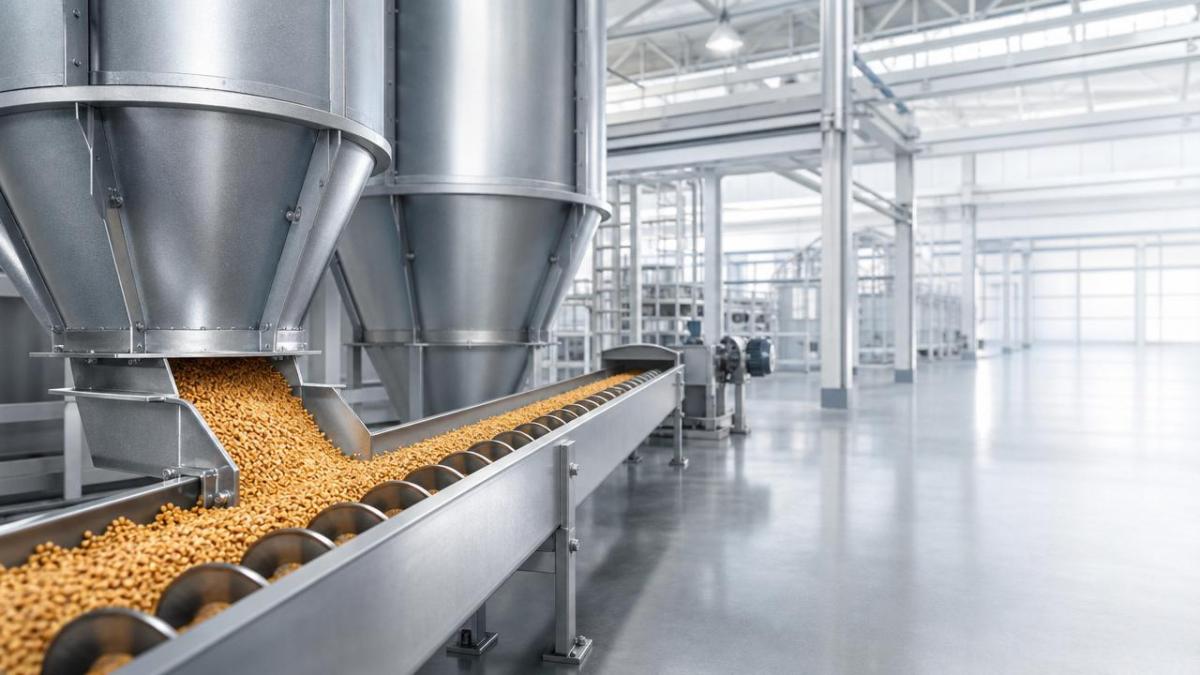
Grain storage is no longer judged only by capacity. Facilities now face tighter labor availability, higher energy scrutiny, and stricter contamination controls.
This shift is making the screw conveyor for grain more relevant in compact silo designs and controlled discharge zones.
The trend is strongest where space is limited, dust must be contained, and predictable feed into downstream equipment is essential.
However, larger terminals and high-capacity intake systems still often favor belts, bucket elevators, or pneumatic systems.
The current question is not whether a screw conveyor for grain is good. It is where it delivers measurable value.
Trend signals pointing toward compact mechanical conveying
Several operational signals are changing how silo conveying is specified across feed, milling, seed, and primary processing sites.
- More retrofits are being installed inside existing footprints.
- Operators are reducing open transfer points to manage dust.
- Automation requires steadier metering into cleaners, mills, and mixers.
- Energy use is being compared across every handling stage.
- Maintenance access is becoming a design requirement, not an afterthought.
Against this background, a screw conveyor for grain is often considered for short, enclosed, and controlled transfer duties.
It is especially attractive below silos, between process machines, and inside enclosed receiving or discharge rooms.
What is driving wider use of a screw conveyor for grain?
The market movement is supported by several practical drivers, not by equipment fashion alone.
These drivers explain why a screw conveyor for grain is increasingly reviewed during early silo engineering.
Still, early review must include capacity, angle, abrasion, moisture, and grain damage risk.
Where a screw conveyor for grain fits best
A screw conveyor for grain usually performs best in short to medium transfers with moderate capacity requirements.
Typical applications include silo discharge, bin-to-bin transfer, feeding processing equipment, and moving grain from hoppers to elevators.
Horizontal installation is generally more efficient than steep inclined installation. Capacity falls as the conveying angle increases.
The equipment also suits enclosed spaces where dust containment and tidy routing matter more than very long-distance movement.
When designed correctly, a screw conveyor for grain can provide reliable metering and reduce uncontrolled surges from silo outlets.
Good-fit conditions
- Short conveying distances with limited layout flexibility.
- Moderate flow rates rather than peak bulk terminal capacity.
- Dry, free-flowing grain with controlled foreign material.
- Need for enclosed transfer and cleaner working areas.
- Requirement for controlled feed into processing equipment.
Where it may create operational risk
A screw conveyor for grain is not always the lowest-risk choice for every silo project.
Long conveying distances can increase power demand, wear, and maintenance exposure.
Steep inclines can reduce capacity sharply and may require larger drives or different flight designs.
Fragile grain, seed, or premium food-grade material may suffer damage if speed and clearances are poorly selected.
Wet grain, fines, and sticky residues can also increase blockage risk inside the trough or tube.
In such conditions, a screw conveyor for grain needs stronger justification through testing, conservative sizing, and maintenance planning.
Capacity and layout are becoming the deciding factors
The most important selection issue is not the catalog capacity. It is real capacity under actual installation conditions.
Grain type, bulk density, moisture, speed, screw diameter, pitch, inlet design, and inclination all change performance.
A screw conveyor for grain under a silo also depends on consistent outlet flow and proper gate control.
If the inlet floods unevenly, the conveyor can overload, surge, or create uneven downstream feeding.
A layout review should confirm headroom, cleanout access, bearing locations, inspection covers, discharge clearance, and emergency isolation.
Key sizing questions
- What is the required hourly throughput under peak conditions?
- Will the conveyor run continuously or intermittently?
- What angle and total length are unavoidable?
- How variable are moisture, fines, and grain density?
- Can the system be cleaned without unsafe entry?
Impact on maintenance, safety, and grain quality
The value of a screw conveyor for grain depends heavily on maintenance discipline and safety design.
Bearings, seals, drive components, liners, flights, and hangers need inspection schedules matched to operating hours.
Abrasion can be significant when handling hard grain, screenings, or material with sand and mineral contamination.
Safety planning should include guarding, lockout points, motor protection, access covers, dust management, and overload detection.
Grain quality should also be monitored. Excessive speed, poor alignment, or tight clearances can increase breakage.
For seed or food-grade uses, a screw conveyor for grain may require gentler speeds and easier sanitation features.
How different silo functions are affected
The same conveyor choice affects receiving, storage discharge, processing, packaging, and loadout differently.
This functional view prevents overgeneralizing the screw conveyor for grain as either universally suitable or unsuitable.
Decision points that deserve close attention
Before selecting a screw conveyor for grain, the design should be checked against measurable operational priorities.
- Confirm the true required capacity, including peak and future demand.
- Evaluate grain condition across seasons, suppliers, and storage periods.
- Compare energy use under actual distance and inclination.
- Check whether maintenance access is safe and realistic.
- Review dust, ignition, and housekeeping controls.
- Assess grain damage tolerance for the intended market.
- Include shutdown consequences in the equipment comparison.
These points turn the screw conveyor for grain decision into an engineering assessment rather than a simple price comparison.
When alternatives may be stronger
A belt conveyor may be better for long horizontal runs, high throughput, and gentler handling over distance.
A bucket elevator may be preferred when vertical lift is the main challenge in the silo layout.
A chain conveyor may suit heavy-duty enclosed transfer where high capacity and robust construction are required.
Pneumatic conveying may fit complex routing, although energy demand and grain damage risk must be reviewed.
The screw conveyor for grain remains competitive where compact layout, enclosure, and controlled short transfer are priorities.
A practical judgment framework
A structured framework helps determine whether the equipment matches the silo’s real operating profile.
This approach supports a balanced decision and avoids specifying a screw conveyor for grain outside its efficient range.
The outlook for silo conveying choices
The future of grain handling points toward more enclosed, instrumented, and maintainable systems.
Condition monitoring, motor protection, improved liners, and better cleanout designs will strengthen suitable screw conveyor applications.
At the same time, energy reporting and grain quality standards will expose poorly matched installations faster.
A screw conveyor for grain will remain valuable, but mainly when its limits are respected during engineering.
Next steps before specifying equipment
Start with a silo flow map showing every inlet, outlet, elevation change, transfer distance, and access point.
Then calculate capacity needs using real operating schedules, not only nominal storage volume.
Request drawings, power estimates, cleanout details, and maintenance requirements for the proposed screw conveyor for grain.
Where grain quality is sensitive, ask for comparable application references or test results.
If the equipment satisfies capacity, safety, access, and quality requirements, it can be a strong silo solution.
If not, the better decision is to redesign the conveying route or compare other mechanical systems early.
Used in the right role, a screw conveyor for grain can improve control, reduce clutter, and support efficient storage operations.
Related Intelligence
- Grain Silos & StorageHow Modular Feed and Grain Systems Support Scalable Storage and Processing ExpansionModular feed and grain systems enable smarter, scalable expansion across storage, conveying, processing, and loadout. Discover how to eliminate bottlenecks, protect future capacity, and keep operations moving.
- Grain Silos & StorageHow to Size a Grain Pre-Cleaner for Capacity, Crop Type, and Impurity LoadGrain pre cleaner machine sizing guide: match capacity, crop type, moisture, and impurity load to improve flow, separation quality, and downstream performance.
- Grain Silos & StorageHow Can You Verify That a Grain Handling System Meets Export Standards?How do I know if a grain handling system meets export standards? Explore practical checks for traceability, sanitation, quality control, and export-ready compliance.
The Morning Broadsheet
Daily chemical briefings, market shifts, and peer-reviewed summaries delivered to your terminal.
