

The Authority in Global Agricultural Chemistry & Bio-Resources
Does a garlic powder making machine improve consistency?
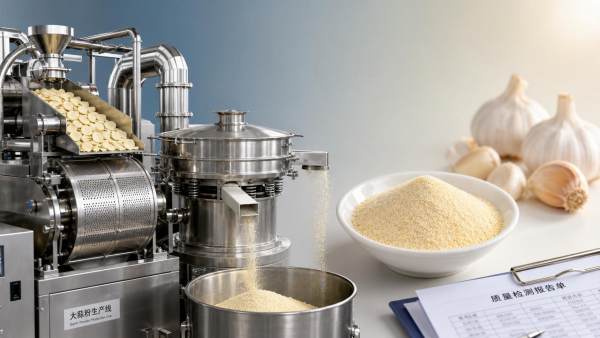
For quality control and safety managers, consistency in garlic powder is more than a production target—it affects microbial risk, allergen control, labeling accuracy, and buyer trust.
A garlic powder making machine can improve particle size uniformity, moisture control, and batch-to-batch stability when properly specified, validated, and maintained.
This article examines how automated processing influences consistency, where machine design matters most, and what operational checks support industrial quality expectations.
Does a garlic powder making machine really improve consistency?
Yes, a garlic powder making machine can improve consistency when it controls the major variables that shape final powder quality.
Those variables include slicing thickness, drying temperature, airflow, milling speed, screen size, and separation efficiency.
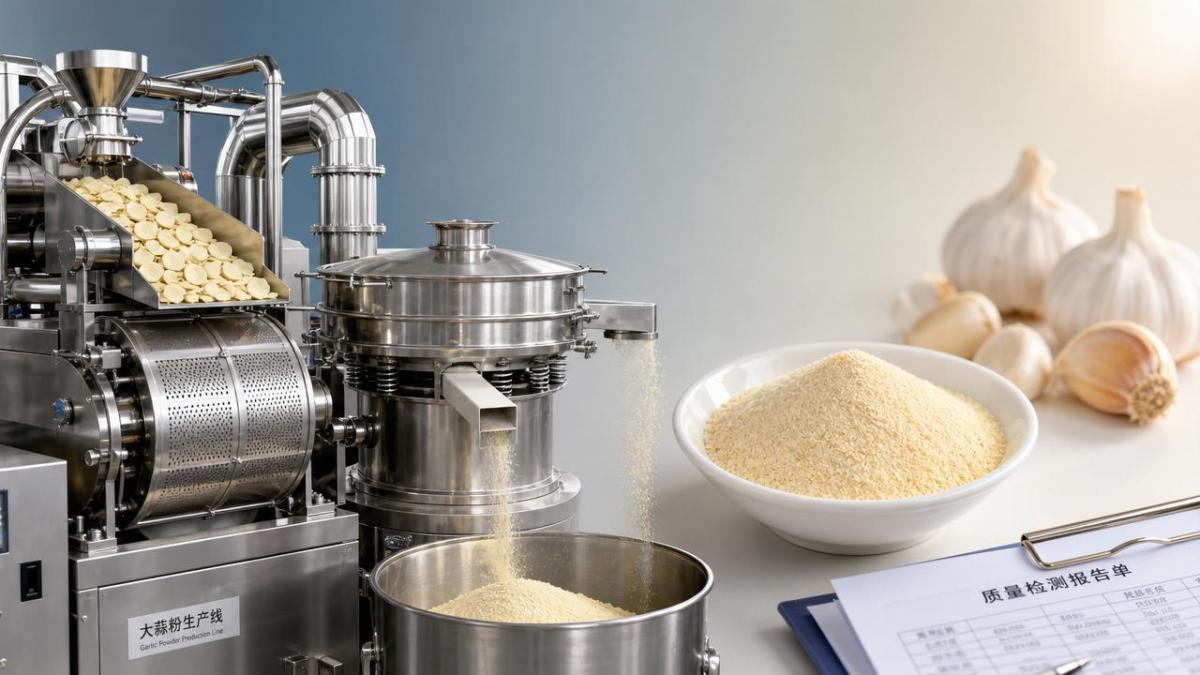
Manual processing often depends on operator judgment. That can work for small batches, but industrial buyers expect tighter specifications.
A garlic powder making machine reduces variation by standardizing each step from fresh garlic preparation to fine powder classification.
Consistency does not mean every particle is identical. It means results remain inside a defined, measurable specification.
For commercial garlic powder, typical control points include mesh range, moisture percentage, color, odor, bulk density, and foreign matter.
A well-designed garlic powder making machine helps maintain these parameters with repeatable mechanical settings and documented operating procedures.
What type of consistency matters most?
Particle size consistency is the most visible improvement. Uniform powder disperses better in seasoning blends, sauces, capsules, and premixes.
Moisture consistency is equally critical. High moisture can raise caking risk and support microbial growth during storage.
Flavor consistency also matters. Excess heat during drying or milling can damage volatile sulfur compounds responsible for garlic aroma.
A garlic powder making machine cannot fix poor raw garlic. It can only stabilize processing around controlled inputs.
How does machine design affect garlic powder uniformity?
Machine design affects uniformity through material flow, heat transfer, cutting precision, grinding behavior, and powder separation.
A garlic powder making machine usually combines several modules. These may include peeling, slicing, drying, milling, sieving, and dust collection.
Each module creates an opportunity for control. Each module can also introduce variation if poorly matched to production goals.
Why does slicing matter before drying?
Uniform slices dry at similar rates. Uneven slices create wet centers, scorched edges, and inconsistent color.
A garlic powder making machine with adjustable slicing thickness improves drying predictability and reduces rework.
Thin slices dry quickly, but they may brown faster. Thick slices protect flavor, but require longer drying time.
The right setting depends on garlic variety, initial moisture, dryer type, target color, and plant throughput.
Why is drying control a key consistency factor?
Drying is often the most important stage. It determines shelf life, milling behavior, powder flow, and microbial stability.
A garlic powder making machine connected to controlled drying can keep temperature and airflow within validated ranges.
Low moisture improves storage stability. However, over-drying increases energy cost and may weaken aroma quality.
Facilities should verify moisture through calibrated instruments, not only by appearance or operator experience.
How do milling and sieving influence powder quality?
Milling reduces dehydrated garlic into powder. Sieving separates oversized particles and supports a defined mesh specification.
A garlic powder making machine with controlled rotor speed and screen selection can reduce fines and oversize variation.
Too much fine powder can increase dusting, caking, and handling loss. Too many coarse particles affect blending uniformity.
For industrial ingredients, the ideal powder is not always the finest. It is the most suitable for the application.
What applications benefit most from a garlic powder making machine?
A garlic powder making machine is valuable where repeatability affects formulation, compliance, production speed, or customer acceptance.
Seasoning plants need predictable dispersion. Feed and grain processors need stable dosing. Ingredient suppliers need specification discipline.
Fine chemical and bio-extract operations may also use standardized garlic powder as an intermediate material for extraction or blending.
In these environments, inconsistency creates hidden costs. It may appear as rejected lots, formulation drift, or additional laboratory testing.
When is automation more important than manual flexibility?
Automation becomes more important when order volume increases, buyer specifications tighten, or traceability requirements become more demanding.
A garlic powder making machine supports documented controls. That makes audits easier and helps explain how each lot was produced.
Manual flexibility can help during product development. Yet routine production usually benefits from repeatable settings and stable process windows.
Which facilities may not need a full line?
Very small operations may only need a grinder and basic dryer. Full automation may not be economically justified.
However, even smaller facilities should understand the same control logic behind an industrial garlic powder making machine.
Consistency depends on measurable variables, not on equipment size alone.
How should a garlic powder making machine be selected?
Selection should begin with product specifications, not with catalog capacity alone.
A garlic powder making machine should match target mesh size, moisture limits, hygiene requirements, throughput, and available utilities.
Important questions include what garlic varieties are processed, whether cloves arrive peeled, and how seasonal moisture variation is managed.
What technical criteria deserve attention?
- Food-grade contact materials, commonly stainless steel for hygiene and corrosion resistance.
- Adjustable slicing, drying, milling, and sieving settings for product flexibility.
- Dust control to reduce powder loss, contamination risk, and workplace exposure.
- Cleanable design with accessible surfaces and reduced dead zones.
- Instrumentation for temperature, time, moisture, current load, and airflow monitoring.
A garlic powder making machine should also support preventive maintenance without excessive downtime.
If screens, blades, belts, and seals are hard to replace, consistency will decline as wear accumulates.
How should capacity be judged?
Rated capacity can be misleading. Garlic moisture, slice thickness, dryer efficiency, and final mesh size change real output.
A garlic powder making machine should be tested with representative raw material before final acceptance.
Trial results should include yield, energy consumption, moisture distribution, particle distribution, and cleaning time.
What risks can reduce consistency after installation?
Even a strong garlic powder making machine can produce inconsistent powder if operation and maintenance are weak.
The most common risks are raw material variation, worn cutting parts, blocked screens, uncontrolled dryer loading, and poor cleaning discipline.
Environmental humidity is another issue. Garlic powder absorbs moisture easily, especially after milling and before sealed packaging.
What validation checks are practical?
Validation should connect machine settings with measurable quality outcomes.
For a garlic powder making machine, practical checks include moisture tests, sieve analysis, color readings, and microbiological sampling.
Records should show that the same settings produce acceptable results across different lots and production days.
When results drift, operators should investigate cause before adjusting several variables at once.
What maintenance practices protect consistency?
- Inspect blades for dullness, chips, or uneven cutting marks.
- Check screens for deformation, clogging, and incorrect mesh installation.
- Verify dryer sensors against calibrated reference instruments.
- Clean powder contact areas to prevent residue buildup and cross-contact.
- Monitor bearings, motors, and airflow systems for early performance changes.
A maintenance plan turns the garlic powder making machine from a purchase into a controlled production asset.
FAQ: How to judge performance and return on consistency?
The table below summarizes common questions linked to consistency, risk, and practical decision-making.
How long does implementation usually take?
Implementation depends on equipment scope, facility preparation, utilities, training, and testing requirements.
A standalone garlic powder making machine may be installed quickly. A full line requires more commissioning and process validation.
The schedule should include operator training, sanitation verification, spare parts planning, and acceptance testing.
What documentation supports buyer confidence?
Useful records include equipment specifications, cleaning procedures, calibration logs, maintenance reports, and batch production records.
For ingredient supply chains, transparent documentation can matter as much as the garlic powder making machine itself.
Documentation helps demonstrate control during audits, customer reviews, and internal quality investigations.
Conclusion: what is the best next step?
A garlic powder making machine can significantly improve consistency, especially in particle size, moisture stability, and repeatable batch performance.
The strongest results come from matching machine design to product specifications and validating performance with real raw material.
Before investing, define target mesh range, moisture limit, hygiene standard, throughput, and packaging conditions.
Then evaluate whether the garlic powder making machine can maintain those targets through controlled settings and reliable maintenance access.
The practical next step is a documented trial. Test raw garlic, measure outputs, review cleaning, and compare results against buyer specifications.
Consistency is not created by automation alone. It is created by equipment, data, discipline, and a process built for verification.
Related Intelligence
- Milling MachineryCan Agricultural Scientists Validate Grain Processing Machinery?Can agricultural scientists validate process machinery performance? Discover how grain equipment testing verifies throughput, quality, and efficiency before you invest.
- Milling MachineryGrain Processing Explained: From Cleaning and Milling to Finished Product QualityGrain Processing explained: discover how cleaning, conditioning, milling, and quality control turn raw grain into safe, consistent flour, feed, and food ingredients.
- Milling MachineryGerman Grain Processing Plants: Evaluating Automation and Energy-Efficiency UpgradesGrain processing Germany: evaluate automation and energy-efficiency upgrades to improve throughput, quality, safety, and lifecycle value.
The Morning Broadsheet
Daily chemical briefings, market shifts, and peer-reviewed summaries delivered to your terminal.
