

The Authority in Global Agricultural Chemistry & Bio-Resources
How to Choose Feed and Grain Solutions for Storage, Conveying, and Daily Throughput
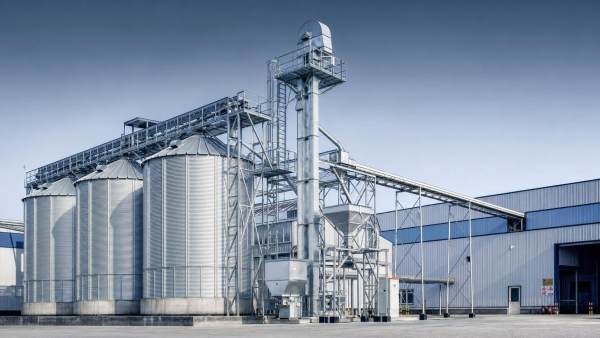
Choosing Feed and grain solutions is rarely a narrow equipment decision. It shapes how a site stores raw materials, protects quality, moves product between process points, and maintains daily throughput without creating avoidable bottlenecks.
That matters more now because feed, grain, and ingredient supply chains face tighter margins, stricter compliance expectations, and less tolerance for downtime. In ACC’s coverage of primary industries, this topic sits at the point where mechanical design, process reliability, and procurement discipline meet.
Well-matched Feed and grain solutions support stable operations. Poorly matched systems can increase spoilage risk, dust exposure, power waste, maintenance interruptions, and throughput loss across an otherwise capable facility.
What Feed and grain solutions actually include
A complete system usually combines storage, conveying, intake, discharge, cleaning, control, and safety measures. The goal is not just moving material. The goal is moving the right volume, at the right speed, with manageable loss and predictable control.
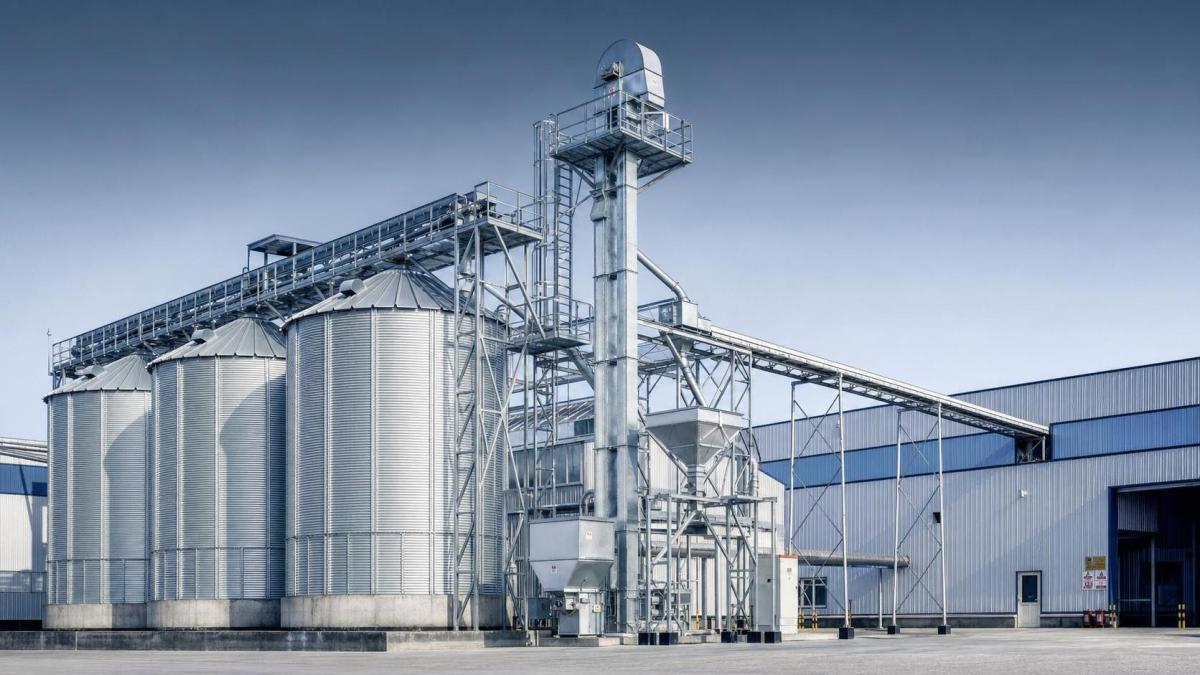
In practice, Feed and grain solutions may cover silos, bins, hoppers, bucket elevators, drag conveyors, screw conveyors, belt systems, weighing points, level sensors, dust collection, and automation interfaces.
The best configuration depends on material behavior. Pellets, mash feed, corn, soybean meal, premixes, and fine powders do not flow, separate, or degrade in the same way.
Why selection has become more critical
Facilities are under pressure to do more with less disruption. Capacity expansion, line modernization, and compliance upgrades often happen while production schedules remain tight.
That raises the cost of design mistakes. A storage vessel sized only for peak intake may still fail if reclaim rates are unstable. A conveyor sized for nameplate flow may still underperform if transfer points generate buildup or segregation.
More attention is also going to traceability and contamination control. Feed and grain solutions now need to support cleaning access, lot separation, and data visibility, not only mechanical movement.
This broader view aligns with the ACC editorial approach. In regulated and high-volume sectors, system choice is judged by operational evidence, lifecycle performance, and supply chain transparency rather than brochure claims.
Start with flow, not equipment lists
A useful evaluation begins with material flow mapping. Before comparing vendors, define how much product enters, where it pauses, how long it stays, and what daily output the site must sustain.
The central question is simple: what operating pattern must the system survive every day, not only on paper?
Core inputs worth defining early
- Hourly intake volume and realistic peak surges.
- Required storage days by material type.
- Daily throughput target and shift pattern.
- Material density, moisture, friability, and bridge risk.
- Cleaning frequency, batch changeover, and contamination tolerance.
- Available footprint, headroom, power, and access for maintenance.
Without these inputs, Feed and grain solutions are often oversized in one area and constrained in another. That creates expensive imbalance rather than useful resilience.
How to assess storage performance
Storage is not passive. It affects inventory flexibility, blending accuracy, quality retention, and line stability. The right vessel design depends on residence time, product sensitivity, and discharge behavior.
For short-cycle ingredients, fast turnover may matter more than maximum volume. For seasonal grain intake, buffer capacity and aeration control often become decisive.
Storage decisions should also reflect future operating changes. Many sites need flexibility for additional ingredients, different grain sources, or higher sanitation expectations within a few years.
Conveying choices shape throughput more than expected
Conveying equipment is often compared by rated capacity alone. That misses the real issue. Throughput depends on how the conveyor interacts with material condition, elevation changes, transfer points, and upstream control.
Feed and grain solutions should therefore be reviewed as a connected path. One underdesigned chute or one awkward conveyor transition can limit an entire line.
Questions that improve conveying decisions
- Does the material break, smear, or separate during movement?
- Are transfer points enclosed and accessible for cleaning?
- Can the line handle startup surges without plugging?
- Is the rated capacity based on this product, or an easier one?
- How much downtime is expected for chain, belt, or screw wear parts?
For abrasive or dusty materials, durability and containment may outweigh raw speed. For delicate pellets, low-impact handling may preserve value better than a faster but harsher route.
Daily throughput depends on balance across the system
A facility reaches stable output when intake, storage, reclaim, conveying, and process equipment work at compatible rates. That sounds obvious, yet many projects still optimize each package separately.
A more effective approach is to identify the controlling constraint. Sometimes it is receiving capacity. Sometimes it is silo reclaim. Sometimes it is dust extraction that forces slower operation.
Feed and grain solutions should be judged on sustained throughput, not isolated machine capacity. The difference becomes clear during shift changes, wet-weather intake, or mixed product schedules.
Signals of a balanced design
- Buffer storage supports process continuity without overstocking.
- Control logic prevents starved or flooded transfer points.
- Operators can isolate one section without stopping all movement.
- Maintenance access does not require long production interruptions.
Dust, energy, and reliability belong in the same review
These issues are often split across different teams, but they affect one another. Poorly controlled dust increases housekeeping, explosion risk, and component wear. Excessive energy use may point to friction, recirculation, or bad routing.
Reliability also has a design dimension. Feed and grain solutions that depend on difficult-to-source parts or frequent manual adjustment can become a long-term operating liability.
For this reason, vendor review should include documentation quality, commissioning support, spare parts planning, and evidence from comparable installations. Technical credibility matters more than polished marketing.
A practical framework for comparing options
When several Feed and grain solutions appear similar, comparison becomes easier if every option is scored against the same operating realities rather than a generic specification sheet.
This method brings structure to selection without turning it into a checkbox exercise. It also creates a clearer record for internal approvals and later project validation.
Where the next decision should focus
The most effective next step is usually a site-specific requirement map. That means listing materials, flow rates, storage durations, cleaning needs, utility limits, and expansion assumptions before supplier discussions deepen.
From there, Feed and grain solutions can be narrowed by operational fit, not just by price or catalog capacity. That often reveals whether the better choice is a larger system, a simpler layout, or a more controllable one.
In a market shaped by cost pressure, compliance scrutiny, and tighter performance targets, the strongest decisions come from linking storage, conveying, and daily throughput into one operational picture. That is where reliable value usually becomes visible.
Related Intelligence
- Grain Silos & StorageExport-Compliant Grain Storage Systems: Standards, Documentation, and Design ChecksExport compliant storage systems: learn how grain facilities strengthen segregation, condition control, fumigation readiness, traceability, and shipment release.
- Grain Silos & StorageApplication-Based Moisture Specifications for Stored Grain: Limits, Testing, and Risk ControlApplication based moisture specification guide for stored grain: set defensible limits, improve testing, and control spoilage risks across storage applications.
- Grain Silos & StorageHow to Plan Grain Storage Capacity and Flow for a Food Processing PlantGrain storage planning for processing plants: optimize capacity, flow, drying, segregation, and resilience to protect quality and prevent bottlenecks.
The Morning Broadsheet
Daily chemical briefings, market shifts, and peer-reviewed summaries delivered to your terminal.
