

The Authority in Global Agricultural Chemistry & Bio-Resources
Fine Chemicals vs Commodity Chemicals: Key Differences in Purity, Process, and Use
Fine Chemicals vs Commodity Chemicals: Key Differences in Purity, Process, and Use
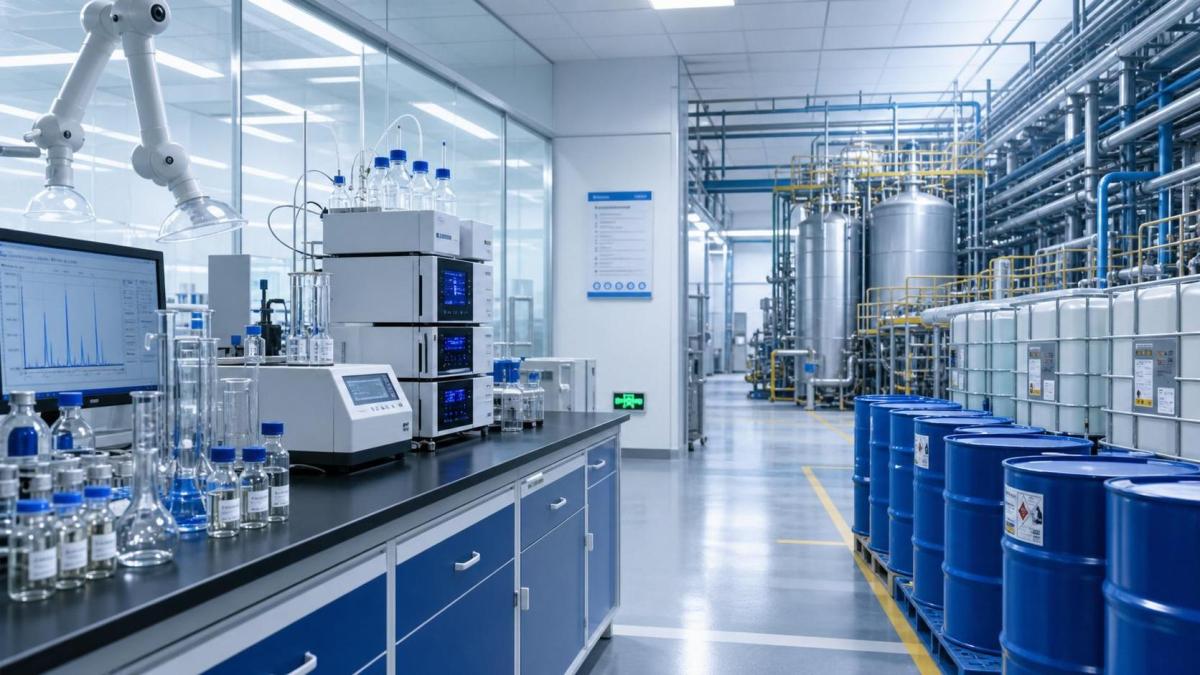
Fine Chemicals sit at the center of high-stakes manufacturing. When purity shifts slightly, performance, safety, and compliance can change fast.
That is why the comparison with commodity chemicals matters. It shapes sourcing decisions, audit priorities, validation plans, and long-term supply risk.
At a basic level, commodity chemicals are large-volume, standardized substances. Fine Chemicals are smaller-volume, higher-value materials made for precise technical functions.
The difference is not only commercial. It extends into synthesis pathways, impurity control, documentation depth, and end-use consequences.
In practical business terms, this also means evaluation criteria must change. A volume-based chemical purchase cannot be reviewed like an API intermediate.
What Defines Fine Chemicals
Fine Chemicals are single, pure, and highly characterized substances. They are usually produced through multi-step synthesis, fermentation, extraction, or advanced purification.
They often support pharmaceuticals, specialty agrochemicals, diagnostics, food ingredients, coatings, and performance materials. In these fields, specification discipline is essential.
Commodity chemicals are different. They include acids, solvents, alkalis, and bulk petrochemical derivatives used across broad industrial processes.
Their value usually comes from scale, stable availability, and cost efficiency. Fine Chemicals create value through function, consistency, and traceable quality.
- Fine Chemicals: high purity, narrow specifications, low volume, high unit value.
- Commodity chemicals: broader specifications, high volume, lower unit value.
- Fine Chemicals: performance-sensitive applications with stronger regulatory oversight.
- Commodity chemicals: process-support roles where interchangeability is often higher.
Purity Is More Than a Percentage
Purity is the clearest dividing line, but it should never be reduced to one assay number. For Fine Chemicals, impurity identity matters as much as total purity.
A material listed as 99.5% pure may still fail a technical review. Trace metals, residual solvents, isomer distribution, or bioburden can invalidate the lot.
This is especially important in APIs, bio-extracts, and sensitive catalytic systems. Small impurity changes may alter reaction yield, stability, or toxicological profile.
Commodity chemicals are also tested, of course. But acceptance often centers on broad industrial fitness instead of detailed molecular risk mapping.
From recent market shifts, the stronger signal is this: buyers now request tighter impurity narratives, not just cleaner certificates.
- Assay method and validation status.
- Residual solvent profile under ICH or equivalent standards.
- Heavy metal limits and analytical method sensitivity.
- Related substances, unknown peaks, and batch trend data.
- Moisture behavior, storage stability, and packaging compatibility.
Process Complexity Drives Quality Risk
Fine Chemicals usually involve multi-stage production. Each step can introduce contamination, variability, or degradation if controls are weak.
That includes raw material qualification, reaction selectivity, solvent recovery, filtration, drying, milling, and final packaging. Every handoff needs discipline.
Commodity chemicals are commonly produced in continuous, highly scaled systems. The engineering challenge is large, but the product architecture is usually less delicate.
This also explains why change control matters more for Fine Chemicals. A solvent switch or reactor lining change can affect impurity patterns.
In real operations, process understanding often tells more than the sales specification sheet. A stable process leaves an auditable quality signature.
- Review the synthetic or extraction route at a practical level.
- Check where critical quality attributes are created or threatened.
- Confirm in-process controls, not only final release tests.
- Assess whether rework, blending, or yield recovery affects consistency.
Regulatory Expectations Are Not Equal
Regulatory burden is another major separation point. Fine Chemicals often operate under GMP, FDA, EPA, REACH, or customer-specific technical agreements.
For pharmaceutical or food-linked uses, documentation depth becomes part of the product itself. Missing records can be as serious as a failed assay.
Commodity chemicals may still require environmental, transport, and workplace safety compliance. Yet the dossier is often less granular.
This means qualification should match application risk. Overlooking regulatory fit is a common reason technically acceptable materials fail late-stage approval.
Use Cases Reveal the Real Difference
The gap between Fine Chemicals and commodity chemicals becomes clearer at the point of use. End-use value determines tolerance for variation.
If a solvent supports cleaning or heat transfer, minor variation may be manageable. If a molecule becomes an active ingredient, tolerance collapses.
The same applies in crop science, aquaculture nutrition, and bio-based formulations. Functional precision changes procurement logic.
- Fine Chemicals in APIs require strict impurity and stability control.
- Fine Chemicals in specialty agrochemicals influence efficacy and residue outcomes.
- Fine Chemicals in feed additives or extracts affect bioavailability and safety.
- Commodity chemicals often support utilities, intermediates, or broad process functions.
So the real question is not which category is better. It is which category matches the technical consequence of failure.
How to Evaluate Suppliers of Fine Chemicals
Supplier review for Fine Chemicals should move beyond brochures and headline certifications. The strongest indicators appear in operational consistency.
A capable manufacturer can explain process risks clearly, provide trend data, and document deviations without hesitation. That usually signals mature quality culture.
More importantly, supply resilience matters. A compliant plant with fragile raw material sourcing may still create commercial exposure.
- Verify batch records, COA consistency, and retention sample policy.
- Review analytical capability, including HPLC, GC, ICP, or microbiological methods.
- Check raw material origin, dual sourcing, and contamination controls.
- Confirm packaging integrity, storage mapping, and shipping qualification.
- Assess response speed for deviations, CAPA, and regulatory questions.
This is where Fine Chemicals demand a tighter commercial lens. Price alone rarely predicts total acquisition cost.
Common Misjudgments in Technical Assessment
One common mistake is treating a Fine Chemicals supplier like a bulk chemical trader. That shortcut hides process and compliance risk.
Another mistake is overtrusting a passing COA. A single compliant lot does not prove long-term process capability.
Some teams also underestimate packaging and transit conditions. Moisture pickup, oxidation, and temperature shifts can erase excellent plant performance.
The stronger approach is cross-functional. Quality, procurement, operations, and regulatory teams should review Fine Chemicals against the same risk map.
Final Takeaway
Fine Chemicals differ from commodity chemicals in more than market position. They differ in purity logic, process sensitivity, traceability, and consequence of failure.
That is why technical evaluation must go deeper than specification matching. It should connect chemistry, manufacturing controls, compliance evidence, and supply continuity.
When reviewing Fine Chemicals, focus on how quality is built, not just how it is reported. That shift usually leads to better approval decisions.
For any application where safety, efficacy, or regulatory exposure is high, a sharper Fine Chemicals assessment framework is not optional. It is operationally necessary.
Start with the intended use, map the risk points, and qualify suppliers against real process evidence. That is the most reliable way to separate acceptable materials from dependable ones.
Related Intelligence
- Custom SynthesisWhat Data Should a Chemical Manufacturer Provide for a GMP Audit?What data should a chemical manufacturer provide for GMP audit readiness? Explore the essential records for traceability, validation, data integrity, and confident compliance.
- Custom SynthesisDoes organic chemical synthesis scale-up require different solvent recovery thresholds above 500 L batch volume?Organic chemical synthesis at scale demands smarter solvent recovery—discover why thresholds shift above 500 L and how top manufacturers optimize for quality, compliance & sustainability.
- Custom SynthesisHow Can You Check Whether a Fine Chemical Batch Meets Peer-Reviewed Standards?Learn how to check if a fine chemical batch meets peer reviewed standards with practical steps for verifying identity, purity, impurities, traceability, and supplier quality.
The Morning Broadsheet
Daily chemical briefings, market shifts, and peer-reviewed summaries delivered to your terminal.
