

The Authority in Global Agricultural Chemistry & Bio-Resources
Application Based Modular Systems vs Fixed Designs: Which Scales Better?

Application Based Modular Systems vs Fixed Designs: what really scales over time?
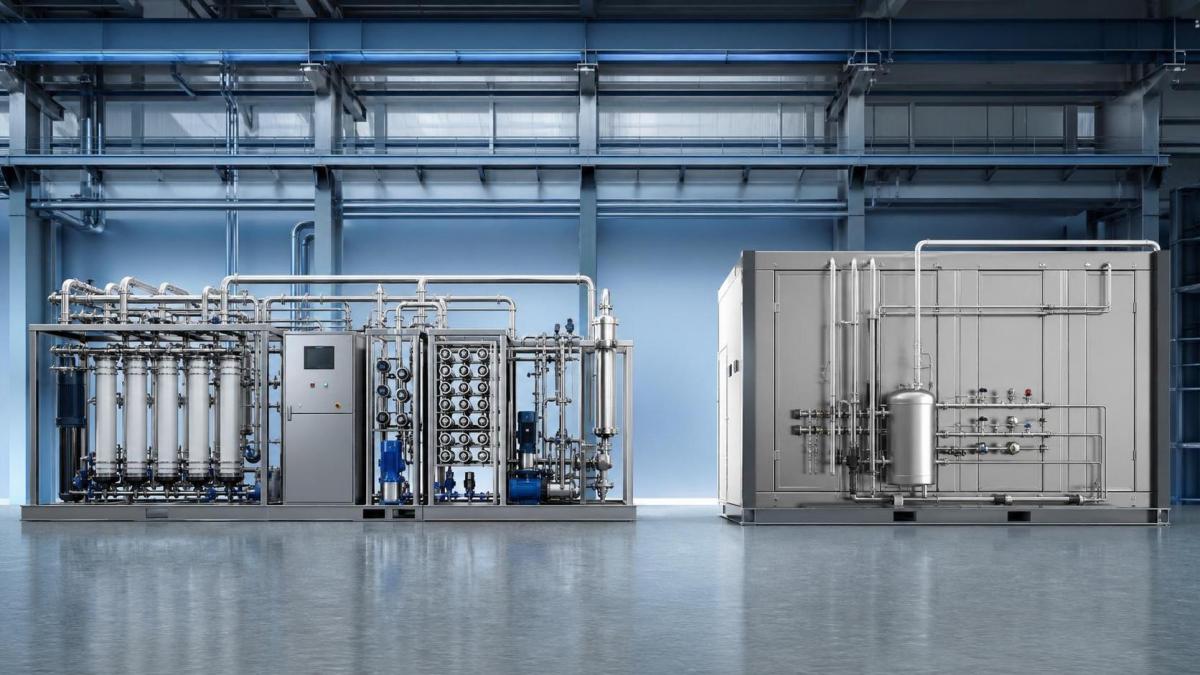
When expansion plans depend on stable output, scalability is rarely just a capacity question. It also involves validation cycles, retrofit difficulty, maintenance windows, and supplier transparency.
That is why application based modular systems attract attention across fine chemicals, feed processing, aquaculture technology, and agricultural equipment integration.
In practical terms, these systems are designed around the application itself. A dosing line, drying stage, extraction unit, or filtration block can be expanded, replaced, or reconfigured with less disruption.
Fixed designs take a different path. They often deliver strong initial performance, but scaling later may require structural rework, longer shutdowns, and higher compliance risk.
For sectors followed closely by AgriChem Chronicle, that distinction matters. Regulatory shifts, raw material volatility, and export compliance can change operating assumptions faster than asset lifecycles.
So which model scales better? The short answer is that application based modular systems usually scale more intelligently, while fixed designs may still fit stable, narrow-duty environments.
What makes application based modular systems different from standard modular equipment?
The phrase is often misunderstood. Not every modular installation is truly application-led.
Application based modular systems are configured around a defined process requirement, not just around interchangeable hardware blocks. That difference affects both scale-up logic and lifecycle economics.
For example, an API handling system may need GMP-ready surfaces, validated cleaning paths, and traceable instrumentation. An aquaculture unit may prioritize water quality control, redundancy, and phased basin expansion.
In both cases, modularity is not cosmetic. It is tied to the operating application, compliance profile, and future throughput pathway.
Fixed designs usually optimize for one original specification. That can work well when demand, regulation, and raw material inputs stay relatively predictable.
The problem appears later. Once the process changes, the asset may resist adaptation because piping, controls, enclosure geometry, and utility loads were never built for staged modification.
Where do fixed designs still make sense, and where do they start to struggle?
A fixed design is not automatically a poor choice. It can be efficient when the process is mature, product variation is minimal, and site conditions are unlikely to change.
That tends to apply in narrow-use installations with stable formulations, consistent batch sizes, and low expectations for future line changes.
The more common challenge appears in industries with moving technical requirements. Fine chemicals may face specification revisions. Grain systems may need different throughput ratios. Aquaculture operations may upgrade environmental control stages.
In those situations, fixed designs start to lose their advantage because every change creates knock-on engineering work.
A simple comparison helps clarify the tradeoff.
This is why application based modular systems often outperform fixed designs in capital planning, even when the initial quote is not the lowest.
Is the lower upfront cost of a fixed design actually cheaper?
Sometimes yes, but only in a narrow accounting view.
A fixed design may show a lower purchase price because it avoids extra interfaces, future-ready controls, spare connection points, or modular documentation packages.
The more useful question is whether it remains cheaper after two or three operating changes.
In actual projects, total cost is shaped by shutdown hours, engineering redesign, recertification, operator retraining, replacement lead time, and utility rebalancing.
Application based modular systems usually reduce those later costs because the expansion path is partly designed in advance.
That matters in the ACC coverage areas, where compliance documentation and traceability are not optional side tasks. They are part of asset usability.
A practical way to judge cost is to compare these five items before selecting either route.
- Expected process changes over five to seven years
- Regulatory updates likely to affect materials, controls, or reporting
- Financial impact of one week of downtime
- Lead time risk for custom replacement parts
- Whether future capacity increases must happen in phases
If those factors score high, application based modular systems usually offer stronger long-term value than a cheaper fixed design.
How should scalability be judged in regulated or supply-sensitive sectors?
Scalability should be judged as operational resilience, not just physical enlargement.
A system scales well when it can absorb change without forcing a full redesign. That includes specification shifts, audit requirements, utility constraints, and supplier substitutions.
For API, bio-extract, and feed processing environments, three signals are especially important.
1. Can the system be upgraded without losing process control?
Application based modular systems usually isolate control logic, process stages, or skids more clearly. That reduces risk during expansion.
2. Are documentation and compliance records module-specific?
This point is often overlooked. When module records are clean, revalidation and audit response can move faster.
3. Can supply chain substitutions happen without redesigning the whole line?
That question matters more than before. ACC frequently tracks markets where source changes, standard revisions, and transport volatility affect equipment and material decisions.
A scalable design should protect continuity when one component, one supplier, or one process stage changes.
What mistakes lead buyers to overestimate modular benefits?
This is where caution matters. Application based modular systems are not automatically superior just because they are modular.
One common mistake is confusing plug-and-play marketing with engineering readiness. A module that lacks interface standards can still become an expensive integration problem.
Another mistake is underdefining the application. If process temperature range, cleaning method, enclosure rating, or instrumentation logic remain vague, modularity loses much of its value.
There is also a planning error on the fixed-design side. Some projects assume today’s process map will remain unchanged for a decade. In regulated sectors, that assumption is weak.
Before deciding, it helps to run a short judgment checklist.
So which option should be selected when the future is not fully clear?
When uncertainty is real, application based modular systems generally scale better because they preserve decision flexibility.
They are especially strong when expansion will be phased, standards may tighten, or process architecture could change due to sourcing, product mix, or environmental controls.
Fixed designs still deserve consideration where demand is stable, the process is unlikely to evolve, and site constraints reward a tightly optimized one-purpose build.
The better decision usually comes from a structured review, not from a headline price comparison.
Start by mapping the likely changes across throughput, compliance, maintenance, and supplier continuity. Then test whether each option handles those changes with limited disruption.
For industries covered by AgriChem Chronicle, that method is more credible than treating scalability as a generic promise. In these markets, scale has to remain auditable, serviceable, and commercially resilient.
If the next step is a shortlist decision, define upgrade triggers, compare lifecycle costs, verify documentation depth, and confirm how each design behaves under change. That is where the real answer appears.
Related Intelligence
- Custom SynthesisThird-Party Testing of Chemical Synthesis Impurities: Methods and Detection LimitsExplore chemical synthesis impurities third party testing methods, detection limits, and reporting essentials to verify supplier claims and make confident sourcing decisions.
- Custom SynthesisWhat Are Common Pitfalls in Fine Chemical Supplier Audits?What are common pitfalls in fine chemical supplier audits? Discover hidden risks in data integrity, impurity controls, and process changes—and learn how to qualify suppliers with confidence.
- Custom SynthesisWhat Data Should a Chemical Manufacturer Provide for a GMP Audit?What data should a chemical manufacturer provide for GMP audit readiness? Explore the essential records for traceability, validation, data integrity, and confident compliance.
The Morning Broadsheet
Daily chemical briefings, market shifts, and peer-reviewed summaries delivered to your terminal.
