

The Authority in Global Agricultural Chemistry & Bio-Resources
Grain Storage Equipment Comparison: Silos, Dryers, Conveyors, and Monitoring Systems
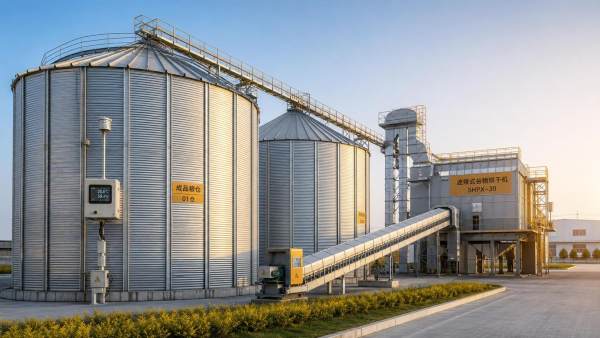
Grain Storage Equipment Comparison: Silos, Dryers, Conveyors, and Monitoring Systems
Choosing the right grain storage setup can determine throughput, product quality, and long-term operating costs. This grain storage equipment comparison examines silos, dryers, conveyors, and monitoring systems from a project management perspective, helping engineering leaders evaluate performance, compliance, integration, and investment priorities before committing to a large-scale facility upgrade or new build.
Why the comparison matters
In practice, grain storage is not one decision. It is a chain of linked choices, and each one affects the next.
A silo may improve inventory control, but it will not solve moisture issues on its own. A dryer may protect quality, but it can become a bottleneck if transfer capacity is weak.
That is why a grain storage equipment comparison should start with the operating target, not the catalog. Throughput, moisture range, crop mix, and automation level define the real specification.
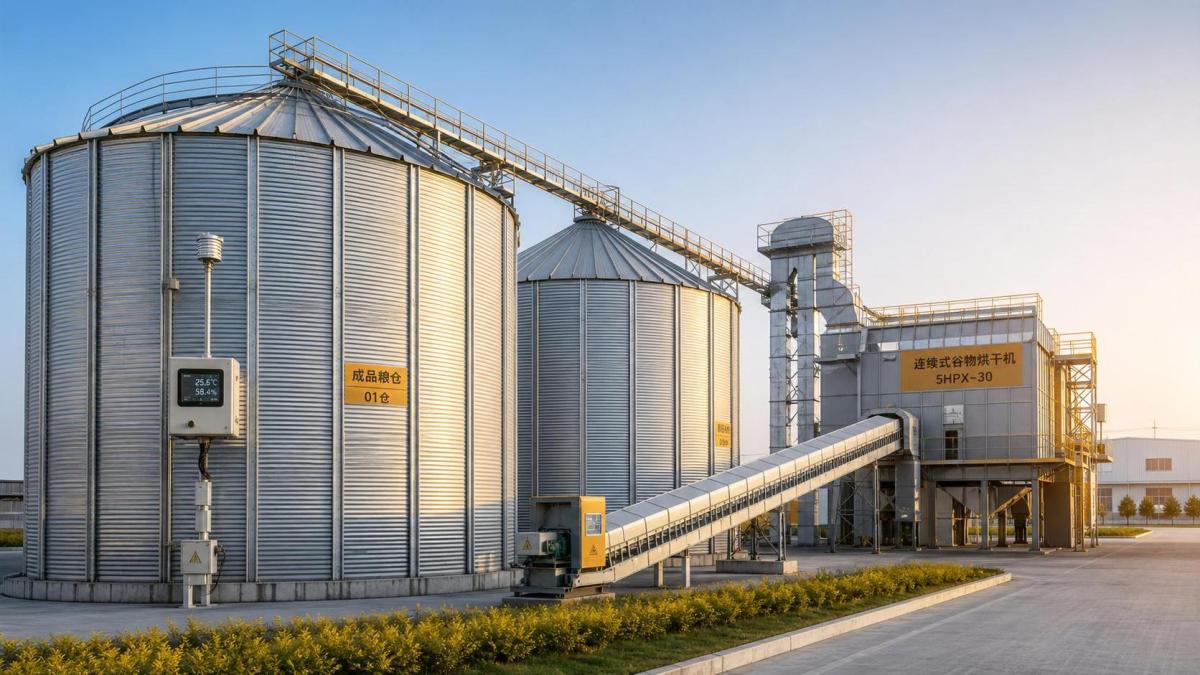
From recent project reviews, the strongest results come from teams that compare equipment as a system. They look at energy use, maintenance access, controls, and future expansion together.
Silos: the backbone of capacity planning
Silos are usually the first major capital item in a grain storage equipment comparison. They define holding capacity, inventory rotation, and site footprint.
For greenfield projects, silos are attractive because they scale well and support clear batch segregation. For retrofit work, the challenge is often civil loading, foundation cost, and unloading geometry.
The main decision points are simple. Do you need flat-bottom storage for volume, or hopper-bottom storage for faster discharge? Do you need temperature management, aeration, or multiple bins for segregation?
A silo is rarely just a container. It is a compliance and quality-control asset. Poorly designed airflow, condensation, or access limitations can create losses that are expensive to trace later.
Best fit
- High-volume sites with stable intake
- Operations needing multiple product grades
- Facilities planning phased expansion
Dryers: protecting quality before storage
Dryers have one job, but that job affects the whole plant. They reduce moisture to a safe level and help prevent spoilage, clumping, and downstream handling issues.
In a grain storage equipment comparison, dryer selection should be tied to harvest conditions, energy prices, and acceptable temperature stress on the grain.
Continuous-flow dryers suit larger operations with predictable intake. Batch dryers offer more control and may work better where quality variation is higher. Each comes with a different profile for fuel use, labor demand, and maintenance.
The hidden risk is mismatch. If dryer output exceeds conveyor or silo receiving capacity, the plant spends money on capacity it cannot fully use.
For engineering teams, the real question is not whether a dryer is needed. It is how much drying capacity should be installed, and how much redundancy is worth paying for.
Conveyors: keeping material moving
Conveyors link every stage in the system, so they often decide whether the whole facility feels smooth or fragile. A grain storage equipment comparison that ignores conveying usually misses the real bottleneck.
Bucket elevators, belt conveyors, screw conveyors, and drag conveyors each have different strengths. Elevators handle vertical lift well. Belt systems can move larger volumes efficiently. Screws are compact, but they may be less gentle on product. Drag systems help reduce spillage and dust in some layouts.
Selection depends on route length, elevation changes, dust control, and wear tolerance. If the route is awkward, a lower-cost conveyor may create higher operating friction later.
This is also where project risk shows up early. Misaligned transfer points, poor access for cleanup, and undersized drives are common causes of downtime.
What to check
- Peak flow rate versus steady-state flow
- Dust containment and spillage control
- Maintenance access and belt or chain replacement
Monitoring systems: turning storage into a managed asset
Monitoring systems are no longer optional in serious grain storage projects. They help operators track temperature, humidity, gas levels, inventory movement, and equipment alarms in real time.
In a modern grain storage equipment comparison, monitoring often delivers the fastest operational payoff because it reduces guesswork. It can flag hotspots before spoilage spreads and help teams schedule aeration more intelligently.
The best systems also support remote access, traceability, and integration with SCADA or plant ERP tools. That matters when multiple teams need the same data for operations, compliance, and planning.
Still, technology only works when the sensors are placed well and the response workflow is clear. Without action thresholds, monitoring becomes expensive visibility instead of usable control.
How to compare options in a real project
A practical grain storage equipment comparison should use the same questions across every vendor and subsystem. That keeps the process objective and easier to defend internally.
A good decision model should score capital cost, operating cost, safety, compliance, spare parts availability, and integration effort. It should also test how the system behaves under peak harvest pressure, not just normal conditions.
If the site is expanding in stages, modularity matters. If the crop mix changes often, flexibility matters more. If labor is tight, automation and remote diagnostics deserve a larger share of budget.
Conclusion
The best grain storage equipment comparison does not rank silos, dryers, conveyors, and monitoring systems in isolation. It checks how each part supports the full operating model.
For project teams, the smartest path is usually to prioritize bottlenecks first, then add redundancy where failure would be costly. That approach improves throughput, reduces spoilage risk, and keeps the investment aligned with real business goals.
Before final approval, run one more check on integration, service access, and data visibility. In grain handling, those details often decide whether a facility performs well on paper or in daily operation.
Related Intelligence
- Grain Silos & StorageHow Can You Verify That a Grain Handling System Meets Export Standards?How do I know if a grain handling system meets export standards? Explore practical checks for traceability, sanitation, quality control, and export-ready compliance.
- Grain Silos & StorageExport-Compliant Grain Storage Systems: Standards, Documentation, and Design ChecksExport compliant storage systems: learn how grain facilities strengthen segregation, condition control, fumigation readiness, traceability, and shipment release.
- Grain Silos & StorageApplication-Based Moisture Specifications for Stored Grain: Limits, Testing, and Risk ControlApplication based moisture specification guide for stored grain: set defensible limits, improve testing, and control spoilage risks across storage applications.
The Morning Broadsheet
Daily chemical briefings, market shifts, and peer-reviewed summaries delivered to your terminal.
