

The Authority in Global Agricultural Chemistry & Bio-Resources
Why feed & grain processing equipment fails too soon
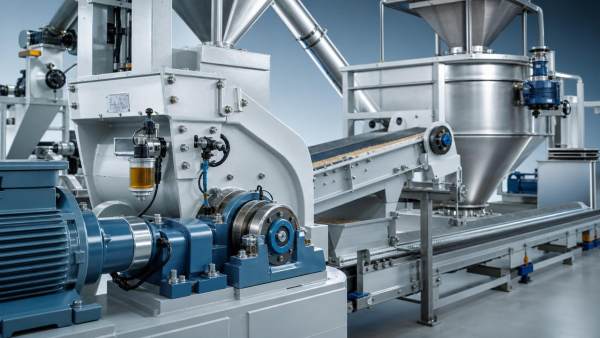
Feed & Grain processing equipment often fails earlier than expected in real operating conditions. The cause is rarely one dramatic breakdown. Early failure usually grows from unnoticed wear, unstable loads, poor lubrication, contamination, and weak maintenance discipline.
In high-throughput plants, these issues reduce uptime, affect product consistency, and raise repair costs. Understanding where Feed & Grain processing equipment fails too soon helps maintenance teams act before damage spreads across conveyors, mills, mixers, dryers, and pellet lines.
When early failure begins in daily operation, not in design
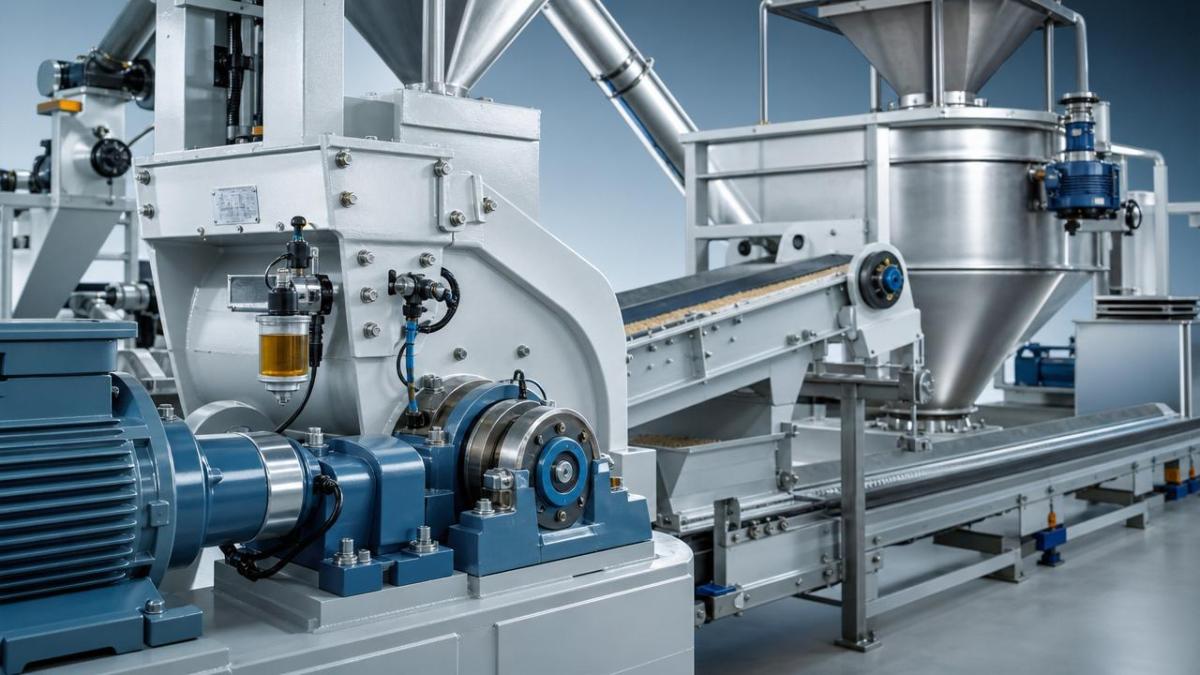
Most Feed & Grain processing equipment is engineered for demanding duty cycles. Yet service life depends heavily on operating context. A machine running clean grain at stable moisture behaves differently from one handling abrasive, wet, or contaminated material.
That is why failure analysis must begin with the processing scene. Temperature swings, start-stop frequency, dust levels, throughput spikes, and cleaning methods all change the stress profile of rotating and conveying systems.
A practical review asks three questions. What material is moving? How stable is the load? Which hidden stress accumulates fastest? These answers guide maintenance priorities better than generic service intervals.
In abrasive material handling, wear accelerates long before parts look damaged
Hammer mills, bucket elevators, drag conveyors, and screw conveyors face constant abrasion. Fine particles erode liners, flights, casings, and transfer points. The visible surface may still look acceptable while clearances and balance already drift out of tolerance.
In this scene, Feed & Grain processing equipment fails too soon because wear changes material flow. Restricted discharge, uneven feed, and recirculation raise motor load and bearing temperature. Secondary damage then appears far from the original wear zone.
Core signs to judge this scene
- Power draw gradually rises without output improvement.
- Particle size becomes less uniform.
- Transfer points show repeated buildup or blowback.
- Bearings near worn components run hotter than baseline.
In moisture-variable processing, lubrication control becomes the weak link
Conditioned mash, damp grain, and changing ambient humidity create a different risk pattern. Moisture promotes corrosion, weakens grease performance, and carries fines into seals. Once lubricant integrity drops, bearing and gearbox life can collapse quickly.
Many Feed & Grain processing equipment failures in this scene are blamed on component quality. In reality, lubricant selection, relubrication timing, and sealing design are often mismatched to washdown exposure, steam, or frequent temperature cycling.
Core signs to judge this scene
- Grease purges discolored or watery.
- Gearbox oil darkens earlier than expected.
- Seals show paste-like dust accumulation.
- Corrosion appears around housings and fasteners.
In high-speed rotating lines, vibration stress shortens equipment life silently
Pellet mills, fans, sifters, and high-speed shafts rarely fail without warning. The warning is usually vibration. Small imbalance, misalignment, looseness, or resonance can slowly damage shafts, couplings, bearings, and foundations.
Feed & Grain processing equipment in this scene often keeps running while stress accumulates. Teams may normalize noise and vibration because production continues. That delay turns a correctable condition into a coupling failure or cracked support structure.
Core signs to judge this scene
- Repeatable vibration increase after screen or die changes.
- Fastener loosening at motor bases or guards.
- Uneven coupling wear patterns.
- Foundation cracking or soft foot conditions.
In stop-start production schedules, fatigue damage appears around transitions
Not every facility runs continuously. Some lines cycle through short batches, formula changes, or irregular demand peaks. Repeated starts and stops create torque shock, thermal cycling, and repeated stress reversals in motors, drives, chains, and shafts.
Here, Feed & Grain processing equipment fails too soon because transition moments are more damaging than steady-state operation. Belts slip during startup, chains stretch unevenly, and overloaded restarts after blockages hit components hard.
How different processing scenes change maintenance needs
Scenario-based recommendations for longer Feed & Grain processing equipment life
Maintenance works better when tasks match the real failure scene. A fixed calendar alone misses too much. The following actions improve reliability across most Feed & Grain processing equipment installations.
- Set operating baselines for vibration, temperature, amperage, and output.
- Inspect wear parts by measured loss, not visual judgment alone.
- Match grease and oil to moisture, load, and speed conditions.
- Track contamination sources around seals, breathers, and transfer points.
- Review alignment after every major component replacement.
- Record blocked starts, overload trips, and unplanned restarts.
- Use trend data to shorten or extend intervals by scene.
Common misjudgments that make Feed & Grain processing equipment fail too soon
One common mistake is replacing failed parts without tracing the operating cause. A new bearing installed into a contaminated, misaligned, or overloaded system will likely fail again. The symptom disappears briefly, but the failure mechanism remains active.
Another mistake is over-lubrication. More grease does not guarantee better protection. In many Feed & Grain processing equipment assemblies, excess grease raises heat, damages seals, and traps contamination close to the rolling elements.
A third issue is ignoring small process changes. New raw material blends, different moisture levels, and higher throughput targets can shift stress patterns dramatically. Equipment that was stable last season may no longer be operating in the same scene.
Finally, many teams rely too heavily on audible inspection. By the time Feed & Grain processing equipment sounds rough, damage is often advanced. Trend-based checks catch deterioration earlier and support better shutdown planning.
What to do next when early failure signs appear
Start with one critical line and map its scene clearly. Note material type, moisture behavior, operating hours, start-stop frequency, and cleaning exposure. Then compare those conditions with current lubrication, inspection, and alignment practices.
Next, build a short failure-prevention checklist for that line. Include baseline readings, wear measurements, seal checks, and restart records. This simple step often reveals why Feed & Grain processing equipment fails too soon in a specific plant context.
When scene-based maintenance becomes routine, downtime falls, parts last longer, and service decisions become more accurate. Feed & Grain processing equipment performs best when maintenance follows real operating stress, not assumptions.
For deeper technical insight across agricultural machinery, feed systems, and primary processing reliability, AgriChem Chronicle provides verified analysis built for complex industrial environments.
Related Intelligence
- Milling MachineryCan Agricultural Scientists Validate Grain Processing Machinery?Can agricultural scientists validate process machinery performance? Discover how grain equipment testing verifies throughput, quality, and efficiency before you invest.
- Milling MachineryGrain Processing Explained: From Cleaning and Milling to Finished Product QualityGrain Processing explained: discover how cleaning, conditioning, milling, and quality control turn raw grain into safe, consistent flour, feed, and food ingredients.
- Milling MachineryGerman Grain Processing Plants: Evaluating Automation and Energy-Efficiency UpgradesGrain processing Germany: evaluate automation and energy-efficiency upgrades to improve throughput, quality, safety, and lifecycle value.
The Morning Broadsheet
Daily chemical briefings, market shifts, and peer-reviewed summaries delivered to your terminal.
