

The Authority in Global Agricultural Chemistry & Bio-Resources
When should Feed & Grain milling equipment be upgraded?
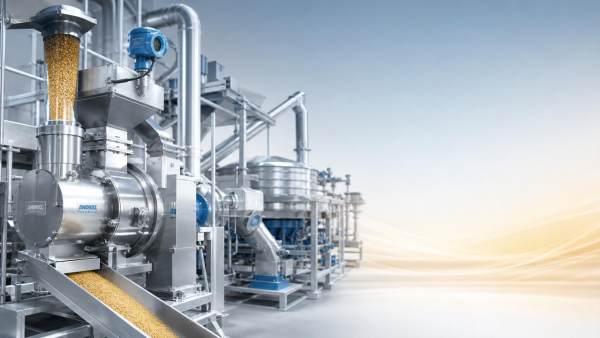
Upgrading Feed & Grain milling equipment is no longer a routine maintenance decision. It is a strategic investment in throughput, compliance, energy efficiency, and long-term competitiveness.
The right timing depends on measurable signals. Rising downtime, inconsistent particle size, higher energy costs, safety risks, and traceability gaps all matter.
Across primary processing, feed manufacturing, grain handling, and ingredient preparation, milling assets now sit at the center of quality control and operational resilience.
Why Feed & Grain milling equipment upgrades are becoming a strategic trend
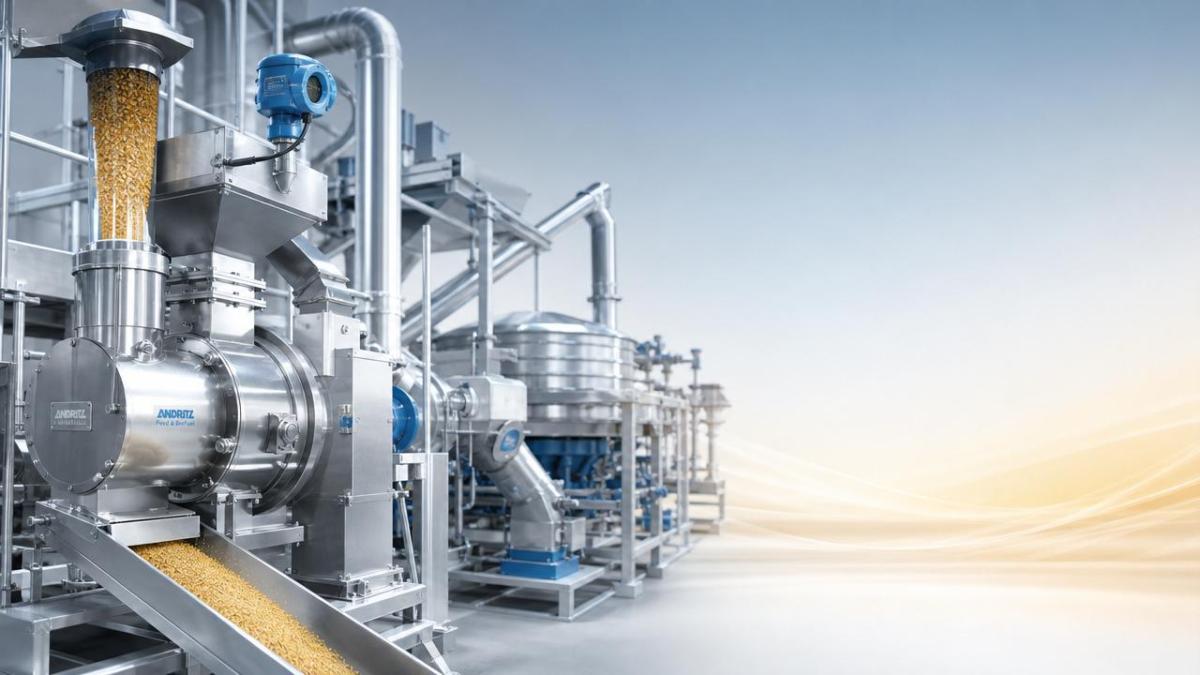
The global feed and grain sector is moving toward tighter tolerances, cleaner operations, and more transparent supply chains.
Older Feed & Grain milling equipment may still run, but performance stability often declines before a visible failure occurs.
That decline affects particle distribution, pellet durability, formulation accuracy, energy consumption, and sanitation performance.
The upgrade question has shifted from “Can the machine continue?” to “Can the system support the next operating standard?”
This change is especially important where feed safety, animal nutrition, export compliance, and industrial traceability are becoming commercial requirements.
Current signals showing that legacy milling systems are under pressure
One early warning sign is unstable particle size. Variation can reduce digestibility, weaken pellet quality, and increase downstream processing losses.
Another signal is longer cleaning time. Older Feed & Grain milling equipment may retain residue in housings, screens, magnets, ducts, or conveyors.
Energy intensity is also a powerful indicator. If kilowatt-hours per ton rise without formulation changes, mechanical efficiency may be deteriorating.
Unplanned downtime is more serious than routine maintenance. Repeated bearing failures, screen damage, vibration alarms, or motor overloads justify deeper review.
A final signal is data limitation. Modern operations increasingly need digital records for batch control, maintenance planning, and audit readiness.
Key performance changes to monitor
- Particle size deviation from product specifications.
- Increased maintenance hours per operating shift.
- Higher power consumption per processed ton.
- More frequent stoppages in grinding, screening, or conveying.
- Inability to document process parameters accurately.
The drivers behind the upgrade cycle
The need to upgrade Feed & Grain milling equipment is being driven by several converging forces.
These forces include market expectations, regulatory scrutiny, raw material volatility, automation adoption, and the search for lower operating cost.
Raw material variability is another major pressure. Moisture, hardness, fiber content, and oil level influence mill behavior every day.
Modern Feed & Grain milling equipment handles this variability through better control loops, stronger wear parts, and more stable throughput.
When repair is no longer enough
Repairs make sense when the system remains efficient, safe, and compatible with production goals.
However, repairing obsolete Feed & Grain milling equipment can become a hidden cost center.
Frequent repairs may preserve motion without preserving accuracy. That distinction is critical in milling-intensive operations.
A practical threshold is annual repair cost. If it exceeds 10% to 15% of replacement value, upgrade analysis is justified.
Another threshold is capacity loss. If the line cannot meet demand without overtime, bottleneck cost becomes measurable.
Safety should override financial hesitation. Dust control failures, guarding deficiencies, abnormal heat, and vibration risks require immediate action.
Repair may still be reasonable when
- The machine meets current throughput targets.
- Spare parts remain available at predictable cost.
- Quality variation remains within specification.
- Energy use has not materially increased.
- Compliance documentation is still sufficient.
Upgrade becomes stronger when
- Downtime disrupts order fulfillment.
- Particle size control requires constant manual intervention.
- Energy use rises faster than production volume.
- Cleaning validation becomes difficult.
- Operators lack reliable process visibility.
How upgrades affect production, quality, safety, and compliance
Upgraded Feed & Grain milling equipment changes more than grinding performance. It can reshape the entire production rhythm.
A more stable mill improves mixing accuracy, pellet quality, bulk density, and packaging consistency.
Better dust management supports workplace safety and reduces contamination risk in sensitive processing environments.
Digital controls improve batch repeatability. They also support preventive maintenance and faster root-cause analysis.
For grain processors, upgraded milling systems can protect margins when commodity prices fluctuate.
For feed plants, precise grinding supports nutrient availability, feed conversion goals, and ingredient utilization.
For integrated agricultural operations, reliable Feed & Grain milling equipment reduces vulnerability across procurement, processing, storage, and distribution.
The financial timing: looking beyond purchase price
The right upgrade moment is rarely defined by equipment age alone.
A ten-year-old mill may perform well. A five-year-old mill may be misaligned with today’s production requirements.
Total cost of ownership offers a clearer view. It includes power, labor, parts, downtime, waste, safety, and compliance exposure.
Modern Feed & Grain milling equipment often delivers value through fewer stoppages and lower unit processing costs.
Payback analysis should compare baseline performance with projected gains, not just catalog capacity.
Technology features that define the next upgrade wave
The next generation of Feed & Grain milling equipment emphasizes control, efficiency, hygiene, and data visibility.
Variable frequency drives help match speed to material properties and production targets.
Improved rotor design, hammer configuration, and screen systems support more consistent particle reduction.
Integrated sensors monitor temperature, vibration, motor load, bearing condition, and airflow.
Automated control systems can adjust operating parameters faster than manual checks.
Sanitary design is also gaining importance. Easier access, smoother surfaces, and reduced retention zones improve cleaning performance.
Capabilities worth prioritizing
- Stable particle size distribution across raw material variation.
- Lower energy consumption at target capacity.
- Accessible wear components for faster service.
- Dust containment and explosion-risk mitigation features.
- Digital records for maintenance, production, and audits.
Decision priorities before replacing Feed & Grain milling equipment
A successful upgrade starts with baseline measurement. Assumptions are weaker than plant-level evidence.
Measure current throughput, downtime, particle results, power demand, cleaning time, and maintenance cost.
Then map those figures against future production plans, product mix changes, and compliance expectations.
It is also important to examine surrounding systems. Conveyors, bins, magnets, aspiration, and control panels may limit gains.
Replacing only the mill may not solve a bottleneck caused by upstream feeding or downstream transport.
The most effective Feed & Grain milling equipment upgrades are planned as line improvements, not isolated purchases.
Core review checklist
- Define target capacity by hour, shift, and season.
- Verify particle size requirements for each product.
- Calculate downtime cost using actual production values.
- Review dust control and safety compliance status.
- Confirm utility capacity and installation constraints.
- Assess integration with automation and traceability systems.
A practical roadmap for upgrade timing
Upgrade timing should follow a staged decision model. This prevents both premature replacement and costly delay.
This roadmap supports disciplined capital planning. It also helps avoid emergency procurement after a severe mechanical failure.
For high-volume facilities, planned replacement during seasonal downtime can protect revenue and improve commissioning quality.
What the next market cycle will reward
The next market cycle will reward processors that combine reliability with measurable efficiency.
Facilities with modern Feed & Grain milling equipment will be better positioned to manage cost volatility and quality expectations.
They will also be better prepared for stricter documentation, sustainability reporting, and customer audits.
Upgrading is justified when the existing system limits growth, increases risk, or weakens process control.
The strongest decision is evidence-based. It connects equipment performance with financial outcomes and future market requirements.
Begin by auditing current Feed & Grain milling equipment, documenting losses, and defining the required operating standard.
Then compare repair, retrofit, and replacement scenarios using throughput, energy, safety, quality, and compliance metrics.
When those metrics show persistent underperformance, upgrade timing is no longer optional. It becomes a controlled step toward resilient production.
Related Intelligence
- Milling MachineryCan Agricultural Scientists Validate Grain Processing Machinery?Can agricultural scientists validate process machinery performance? Discover how grain equipment testing verifies throughput, quality, and efficiency before you invest.
- Milling MachineryGrain Processing Explained: From Cleaning and Milling to Finished Product QualityGrain Processing explained: discover how cleaning, conditioning, milling, and quality control turn raw grain into safe, consistent flour, feed, and food ingredients.
- Milling MachineryGerman Grain Processing Plants: Evaluating Automation and Energy-Efficiency UpgradesGrain processing Germany: evaluate automation and energy-efficiency upgrades to improve throughput, quality, safety, and lifecycle value.
The Morning Broadsheet
Daily chemical briefings, market shifts, and peer-reviewed summaries delivered to your terminal.
