

The Authority in Global Agricultural Chemistry & Bio-Resources
What buyers often miss in feed & grain processing equipment
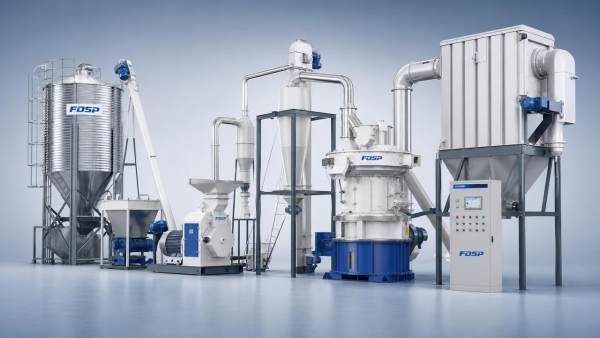
Many procurement teams evaluating Feed & Grain processing equipment focus on capacity and price, yet overlook critical factors that shape long-term performance, compliance, and operating cost. From material handling design to sanitation, automation compatibility, and supplier service depth, small technical gaps can create major downstream risks. This article highlights what buyers often miss and how to make more confident, cost-effective sourcing decisions.
For institutional buyers, mill operators, and industrial farming groups, the real purchase decision is rarely about one machine in isolation. Feed & Grain processing equipment must perform as part of a linked system that includes intake, cleaning, grinding, batching, pelleting, cooling, conveying, dust control, and maintenance access.
A line rated at 10 tons per hour on paper can underperform if transfer points bridge, changeover takes 45 minutes instead of 15, or spare parts require 6 weeks to arrive. In regulated and margin-sensitive operations, those overlooked details often matter more than headline throughput.
The hidden procurement gaps behind acceptable quotations
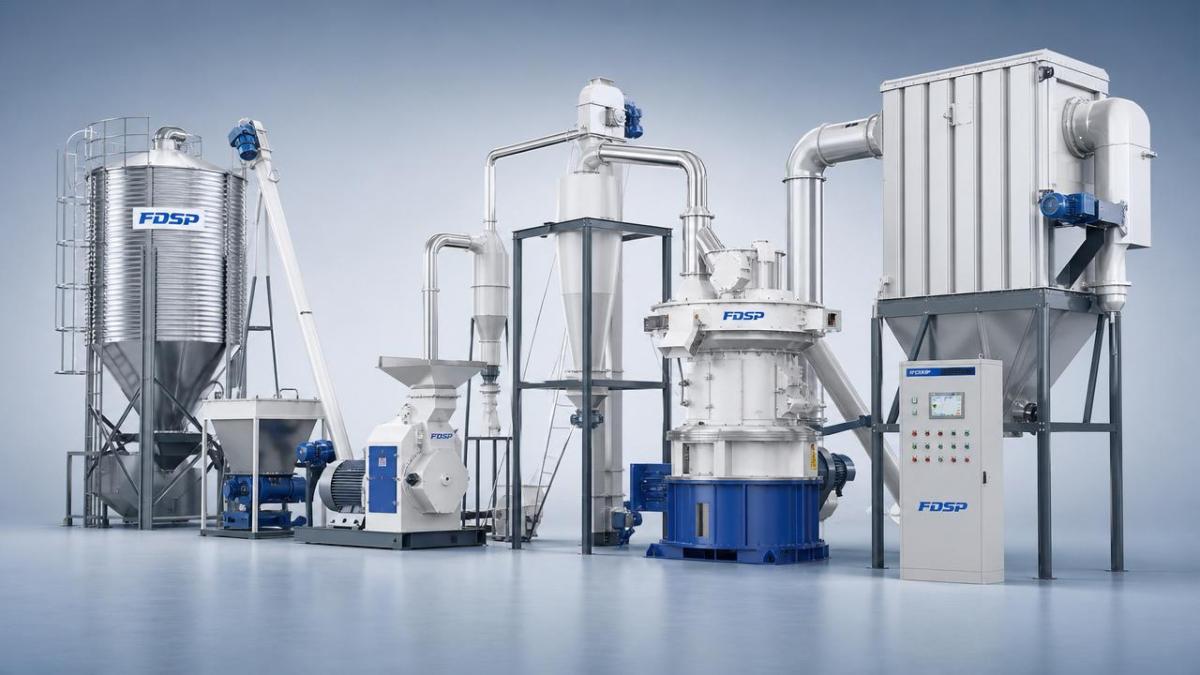
When buyers compare Feed & Grain processing equipment quotations, most spreadsheets begin with 4 visible metrics: price, capacity, power consumption, and delivery time. Those are necessary, but they do not fully explain lifecycle cost, production consistency, or audit readiness.
In practice, a low initial quote can become the highest-cost option within 12 to 24 months if wear parts are proprietary, sanitation zones are hard to reach, or automation integration requires unplanned control upgrades. Procurement teams should assess the line as an operating asset, not just a capital purchase.
Material flow design is often underestimated
Many feed plants lose efficiency not in grinding or pelleting, but in upstream and downstream movement. Hopper geometry, conveyor angle, gate design, aspiration balance, and discharge sequencing affect whether the line can sustain stable flow over 8 to 16 operating hours.
Poor flow design increases segregation, residue carryover, and unplanned manual intervention. Even a 2% to 4% loss in effective throughput can materially change payback, especially in facilities handling multiple formulations per day.
What to verify before order placement
- Minimum and maximum bulk density range the system can handle
- Number of transfer points from intake to finished storage
- Conveyor and elevator clean-out accessibility
- Bridging risk in bins handling moist or fibrous ingredients
- Expected residue level during formula changeover
Sanitation and cross-contamination control affect more than hygiene
Buyers often treat sanitation as a food safety issue only, but in Feed & Grain processing equipment it is also a productivity issue. Hard-to-clean mixers, dead zones in chutes, and poorly sealed dust extraction points can extend downtime and increase rework.
For operations switching between medicated and non-medicated feed, species-specific formulas, or export-sensitive ingredients, carryover thresholds become commercially significant. A line that takes 3 purge cycles instead of 1 can consume labor, materials, and storage space far beyond the quoted machine cost.
The table below outlines common overlooked factors and their operating implications during Feed & Grain processing equipment procurement.
The key lesson is simple: equipment value depends on maintainability, control, and material behavior under real plant conditions. A buyer who asks 8 to 10 deeper technical questions usually gets a more reliable line than one who negotiates price only.
How to evaluate performance beyond nameplate capacity
Nameplate capacity is one of the most misunderstood figures in Feed & Grain processing equipment sourcing. Suppliers may base it on a specific raw material, moisture level, screen size, pellet formula, or uninterrupted operating mode that does not reflect the buyer’s daily production reality.
A grinding line rated at 12 tons per hour with one grain type may drop to 8 to 9 tons per hour when ingredient variability increases. Likewise, pellet mill output can shift significantly with formulation fat content, die specification, and required durability.
Separate peak output from sustainable output
Procurement teams should request at least 3 performance references: peak capacity, sustainable 8-hour capacity, and expected range under mixed raw materials. This avoids planning around best-case numbers that disappear once the line is installed.
It is also useful to ask whether throughput assumes manual intervention, frequent screen changes, or ideal upstream flow. Sustainable output is the metric most closely tied to production planning and labor efficiency.
Ask for process-specific parameters, not generic claims
For Feed & Grain processing equipment, the same machine can perform very differently across mash feed, pellet feed, premix handling, or grain conditioning applications. Buyers should map equipment specifications to their own process windows instead of accepting generalized brochures.
- Moisture operating range, such as 10%–16%
- Particle size target, for example 600–900 microns
- Die change time, often 20–60 minutes depending on layout
- Typical bearing or hammer replacement interval
- Energy use per ton under standard operating load
The comparison table below helps buyers distinguish commercially attractive numbers from decision-grade operating metrics.
For serious procurement, operational ranges are more useful than absolute claims. Buyers who document acceptable performance bands usually reduce post-installation disputes and improve acceptance testing quality.
Supplier capability matters as much as machine specification
In Feed & Grain processing equipment projects, the supplier is not only a fabricator. The supplier may shape line layout, utility assumptions, installation sequence, training quality, commissioning speed, and spare parts readiness for the first 12 months.
A technically sound machine can still become a difficult asset if manuals are incomplete, startup support is delayed by 10 to 14 days, or no one clarifies which failures are operational versus warranty-related. Procurement teams should evaluate service depth before issuing final purchase orders.
Questions that reveal service maturity
- What spare parts are recommended for the first 6 and 12 months?
- What is the standard response time for remote technical support?
- Can the supplier support commissioning in phases if civil work shifts?
- What documents are supplied before shipment and before startup?
- Which components are sourced externally and what are their lead times?
These questions help identify whether a vendor understands industrial procurement expectations or only focuses on equipment sales. In complex lines, weak after-sales structure can erase the value of a competitive bid.
Documentation quality is a risk-control tool
Good documentation shortens installation, improves training, and supports compliance review. Buyers should expect clear GA drawings, utility lists, recommended foundations, lubrication schedules, electrical diagrams, and operator guidance. Missing or late documents can delay site readiness by 1 to 3 weeks.
For multinational procurement teams, it is also worth confirming document language consistency, revision control, and the format of digital files. A well-documented project is usually easier to maintain and easier to audit.
A practical sourcing framework for lower-risk buying
The most effective way to buy Feed & Grain processing equipment is to move from product comparison to process validation. That means defining what success looks like in throughput, hygiene, uptime, recipe flexibility, labor demand, and service support before final commercial negotiation.
A structured sourcing workflow often reduces change orders, speeds acceptance, and helps procurement defend the decision internally. The framework below is widely applicable across new plants, capacity expansion, and retrofit projects.
Five-step evaluation approach
- Define the operating envelope: raw materials, moisture range, target output, and changeover frequency.
- Translate plant needs into technical checks: sanitation, automation, wear access, utilities, and dust handling.
- Request line-specific quotations with exclusions, assumptions, and commissioning scope clearly stated.
- Score suppliers across 4 dimensions: technical fit, lifecycle cost, service depth, and documentation quality.
- Use acceptance criteria before contract signing, including trial targets, training scope, and spare parts package.
Common buying mistakes to avoid
- Selecting by lowest bid without clarifying what is excluded
- Assuming automation can be integrated later at minimal cost
- Ignoring cleaning time in multi-formula production economics
- Failing to stock critical wear parts for the first quarter
- Accepting generic performance promises without test conditions
For procurement leaders in primary processing industries, better sourcing decisions come from disciplined questions, not only stronger negotiation. Feed & Grain processing equipment should be evaluated for system fit, sanitation practicality, realistic throughput, and supplier support over the first year of operation.
Buyers that focus on these deeper factors typically reduce hidden downtime, improve cost predictability, and shorten the path to stable production. If you are comparing suppliers, planning a new line, or upgrading an existing facility, contact AgriChem Chronicle to explore tailored insights, technical content partnerships, or procurement-focused solution guidance.
Related Intelligence
- Milling MachineryCan Agricultural Scientists Validate Grain Processing Machinery?Can agricultural scientists validate process machinery performance? Discover how grain equipment testing verifies throughput, quality, and efficiency before you invest.
- Milling MachineryGrain Processing Explained: From Cleaning and Milling to Finished Product QualityGrain Processing explained: discover how cleaning, conditioning, milling, and quality control turn raw grain into safe, consistent flour, feed, and food ingredients.
- Milling MachineryGerman Grain Processing Plants: Evaluating Automation and Energy-Efficiency UpgradesGrain processing Germany: evaluate automation and energy-efficiency upgrades to improve throughput, quality, safety, and lifecycle value.
The Morning Broadsheet
Daily chemical briefings, market shifts, and peer-reviewed summaries delivered to your terminal.
