

The Authority in Global Agricultural Chemistry & Bio-Resources
Why feed & grain processing technology affects product consistency
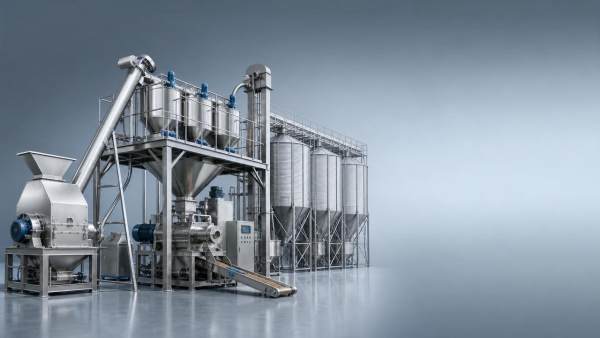
In modern milling and handling operations, Feed & Grain processing technology plays a decisive role in product consistency, safety, and regulatory confidence. For quality control and safety managers, even minor variations in grinding, dosing, conditioning, or storage can lead to measurable shifts in nutritional value, contamination risk, and batch performance. Understanding these processing variables is essential for maintaining stable output and meeting stricter industry expectations.
What does product consistency mean in Feed & Grain processing technology?
Product consistency means each batch performs the same way in nutrition, texture, moisture, density, and safety. In feed and grain systems, that stability is never accidental.
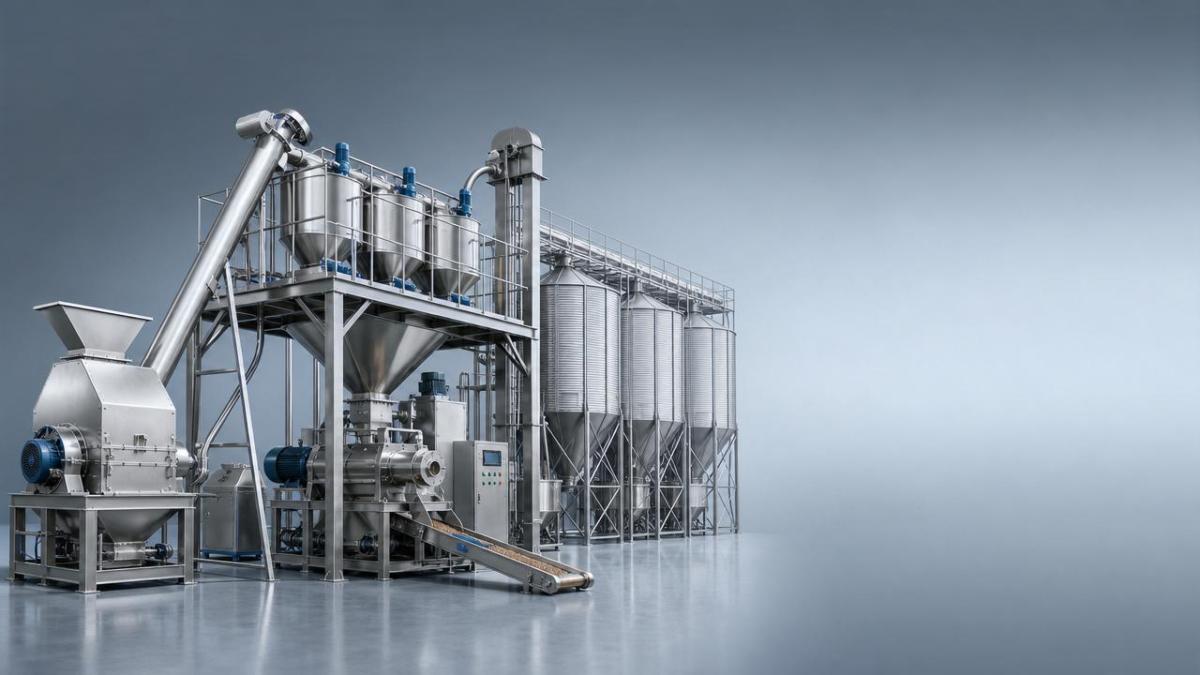
Feed & Grain processing technology shapes how raw materials are received, cleaned, ground, blended, conditioned, pelleted, cooled, and stored. Every step influences final batch uniformity.
A consistent product supports predictable downstream use. It also reduces complaints, rejects, reformulation events, and unnecessary waste across integrated agricultural and industrial operations.
In practical terms, consistency includes several measurable indicators:
- particle size distribution
- mixing uniformity and dosing accuracy
- moisture stability
- pellet durability or finished form integrity
- microbial and foreign material control
When Feed & Grain processing technology is optimized, these indicators stay within specification. When controls drift, variation spreads quickly through the full production sequence.
Why do grinding and particle size have such a strong effect on batch uniformity?
Grinding is one of the most influential stages in Feed & Grain processing technology. It determines how ingredients mix, absorb moisture, and behave during thermal treatment.
If particles are too coarse, nutrient distribution may become uneven. If too fine, flowability can decline, dust increases, and segregation may appear during transport or storage.
Consistent particle size improves more than appearance. It affects energy use, pellet quality, digestibility, and process repeatability under fixed equipment settings.
Common sources of particle size variation
- worn hammers, rollers, or screens
- inconsistent feed rate into the mill
- different grain hardness or moisture levels
- poor screen selection for target formulation
- insufficient preventive maintenance
A frequent mistake is measuring only average particle size. Distribution matters more. Two samples can share one average value while performing very differently in mixing and conditioning.
For better control, sieve analysis should be paired with equipment trend monitoring. Power draw, throughput, vibration, and temperature often reveal developing inconsistency earlier than final inspection.
How do dosing, mixing, and conditioning influence nutritional consistency?
Even with stable grinding, poor dosing accuracy can undermine the entire formula. Micro-ingredients, liquids, and functional additives require precise delivery every production cycle.
Feed & Grain processing technology must therefore combine formulation control with mechanical repeatability. Software accuracy alone cannot compensate for bridging, pulsation, or calibration drift.
Mixing time also matters. Under-mixing leaves nutrient pockets. Over-mixing can damage particles, raise heat, and increase the chance of separation after discharge.
Why conditioning deserves closer attention
Conditioning changes moisture and temperature before pelleting or other finishing steps. Small shifts here can alter starch behavior, binding response, and microbial reduction outcomes.
Unstable steam quality is a hidden problem in many facilities. Pressure may appear acceptable, yet steam dryness or distribution can still vary across production runs.
That variation affects moisture uptake, pellet durability, and final shelf stability. As a result, Feed & Grain processing technology should be evaluated as a connected system, not isolated machines.
Which contamination and storage risks most often disrupt consistent output?
Consistency is not only about nutrition or texture. It also depends on controlling contamination pathways that can change quality, trigger recalls, or violate regulatory standards.
Feed & Grain processing technology includes aspiration, magnetic separation, screening, sanitation design, and storage management. These elements help keep product integrity stable over time.
The most common risk categories include:
- cross-contamination between formulations
- metal, stone, or foreign material inclusion
- moisture migration in bins or silos
- mold growth and mycotoxin development
- residue buildup in conveyors and transfer points
Storage is often underestimated. A well-processed batch can degrade quickly if airflow is uneven, retention time is excessive, or temperature stratification is ignored.
This is especially important when dealing with variable climates, seasonal grain changes, or long transport intervals. Product consistency depends on post-process control as much as in-process efficiency.
How can facilities judge whether their Feed & Grain processing technology is truly effective?
The best evaluation method links process parameters with finished product results. Looking only at throughput or uptime can hide quality instability.
A practical review should compare target settings, actual machine behavior, and laboratory outcomes over multiple batches. This reveals whether variation is random or systematic.
An effective Feed & Grain processing technology review should also include traceability. When deviations occur, records must show where the shift began and how it spread.
What are the most common mistakes when improving Feed & Grain processing technology?
Many improvement programs focus on one machine while ignoring process interaction. That approach often moves the problem instead of solving it.
For example, finer grinding may improve uniformity but create higher moisture sensitivity during storage. Faster mixing may raise output while weakening blend precision.
Frequent implementation errors
- Changing equipment settings without baseline data.
- Ignoring raw material variability across suppliers or seasons.
- Treating sanitation as separate from process control.
- Relying only on end-product testing.
- Underestimating operator training and maintenance discipline.
Another common issue is assuming automation guarantees consistency. Automated Feed & Grain processing technology still depends on sensor accuracy, clean signal flow, and correct alarm limits.
The most reliable gains usually come from combining process mapping, preventive maintenance, validated sampling, and targeted upgrades based on actual variance data.
How should a practical consistency improvement plan be structured?
A workable plan starts with measurable priorities. Identify whether the main concern is nutrient variation, contamination control, pellet quality, storage loss, or audit readiness.
Then map the process from intake to dispatch. Record where variation enters, where it amplifies, and where it can be detected early.
A strong action sequence often looks like this:
- standardize raw material inspection criteria
- verify mill and feeder calibration
- set acceptable PSD and mixing variance limits
- monitor conditioning temperature and moisture in real time
- improve sanitation and storage turnover routines
- review trend data weekly and adjust based on evidence
This stepwise method turns Feed & Grain processing technology into a controllable quality system. It also supports compliance with stricter food, feed, and environmental expectations.
Consistency improves fastest when operational teams connect machine behavior with laboratory data, sanitation records, and storage conditions instead of treating them separately.
Feed & Grain processing technology affects product consistency because every mechanical and thermal decision changes how ingredients behave, combine, and remain stable over time.
The most dependable results come from controlling grinding, dosing, mixing, conditioning, contamination barriers, and storage as one integrated process chain.
For the next step, review one month of batch data against process settings. That single comparison often reveals where consistency is being lost and where improvement should begin.
Related Intelligence
- Commercial Feed PelletHow to Build a Sanitary Feed Production Plan That Reduces Cross-ContaminationSanitary feed production planning: reduce cross-contamination with smarter sequencing, validated flushing, material segregation, and traceable sanitation controls.
- Commercial Feed PelletFeed Pellet Mill Sourcing: How to Vet Suppliers for Capacity, Quality, and SupportFeed pellet mill sourcing made smarter: vet suppliers for proven capacity, pellet quality, lifecycle cost, factory controls, commissioning, and reliable after-sales support.
- Commercial Feed PelletFeed Production System Price Trends: Cost Drivers and Budgeting for New LinesFeed production systems price trend insights: compare cost drivers, automation, utilities, compliance, and total ownership costs to budget smarter for new feed lines.
The Morning Broadsheet
Daily chemical briefings, market shifts, and peer-reviewed summaries delivered to your terminal.
