

The Authority in Global Agricultural Chemistry & Bio-Resources
Vietnam Enforces IoT Rule for Feed Pellet Imports

Vietnam’s Ministry of Agriculture and Rural Development put a new compliance threshold into effect on July 9, 2026 that directly affects imported commercial feed pellet machines with capacities of 500 kg/h or above. The core change is no longer limited to machine performance alone: eligible equipment must arrive with a pre-integrated VINA-IO-2.1 certified IoT remote monitoring module capable of transmitting production, energy, temperature, and raw material batch data to Vietnam’s national feed regulatory platform. For exporters, OEM manufacturers, distributors, importers, and delivery teams, this is worth close attention because non-compliant equipment cannot complete customs clearance or registration filing.
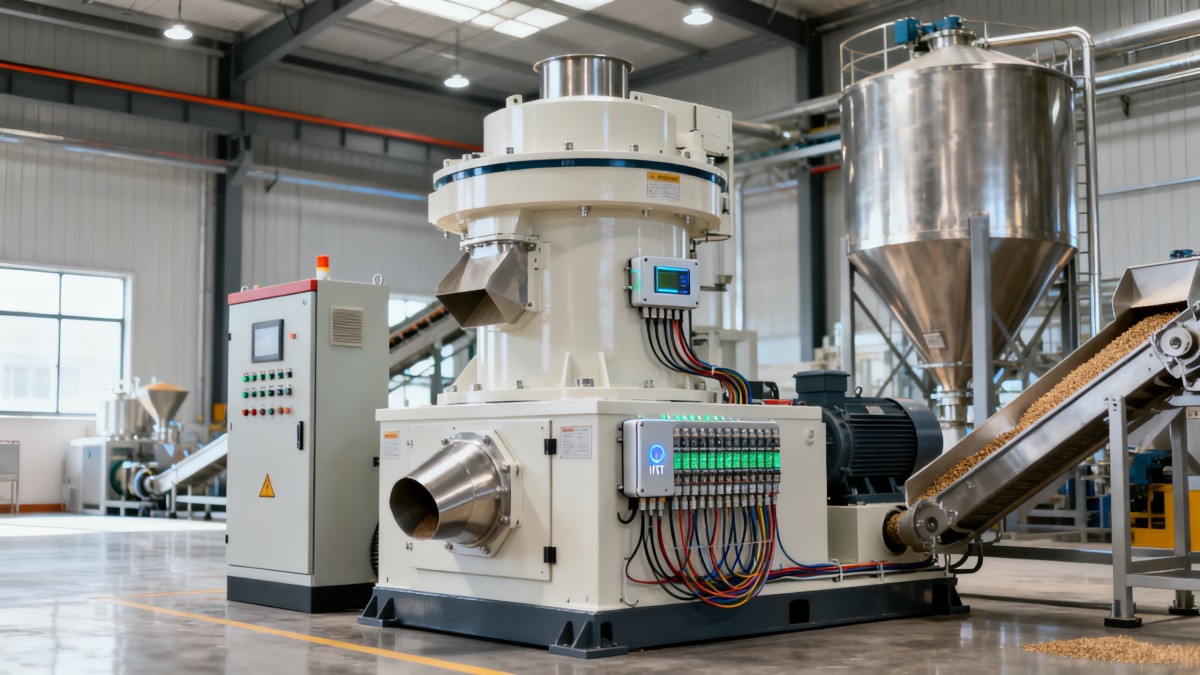
What the rule now requires
According to MARD Circular No. 22/2026/TT-BNNPTNT, formally implemented on 2026-07-09, all imported commercial feed pellet machines with rated capacity at or above 500 kg/h must be pre-installed with an IoT remote monitoring module certified under VINA-IO-2.1.
The required module must support direct transmission of real-time production capacity, energy consumption, temperature, and raw material batch data to Vietnam’s national feed regulatory platform.
The event summary further states that equipment shipped without the pre-installed module will be unable to complete customs clearance and registration filing in Vietnam. It also states that this disrupts delivery by Chinese OEM manufacturers to Vietnamese distributors.
Where the pressure will appear first in the supply chain
Export deliveries now depend on equipment-side compliance
From an industry perspective, direct trading companies and OEM exporters are likely to feel the impact first because the rule applies at the point of import compliance, not as a post-delivery retrofit matter. The practical pressure point is whether the machine reaches Vietnam already equipped with a VINA-IO-2.1 certified module.
Vietnamese importers and distributors face a registration bottleneck
For importers and local distributors, the immediate risk is procedural rather than purely commercial. If a machine cannot complete customs clearance or registration filing, inventory planning, handover schedules, and downstream customer commitments may all be affected. What deserves closer attention is the relationship between pre-installation status and document readiness during import processing.
Manufacturing and integration teams may need to adjust delivery sequencing
Processing and manufacturing participants involved in configuration, assembly, and final shipment preparation may be affected because the new requirement changes what counts as a deliverable machine. Observably, the compliance boundary now includes the certified IoT module and its data transmission function, which means shipment preparation and export readiness may need to be aligned around that requirement.
Supply chain service providers may see added coordination demands
Logistics, customs support, and compliance service providers may also be drawn into the change because failure at the import stage can interrupt the movement of equipment even when the core machine itself is otherwise ready. The business issue to watch is whether all parties are working from the same understanding of the mandatory pre-installation condition.
What companies should track right now
Whether each affected model falls within the stated capacity threshold
The rule, as provided, applies to commercial feed pellet machines with capacity of 500 kg/h or more. Companies should therefore verify which product configurations and model specifications fall inside that threshold before shipment arrangements are finalized.
Whether the IoT module is both pre-installed and certified
Analysis shows that the requirement is not only about having a monitoring function in general. The stated condition is pre-integration of a VINA-IO-2.1 certified IoT module. For suppliers and buyers, the operational focus should be on avoiding any gap between technical integration and certification status.
Whether contract and delivery communication reflects the new import condition
For OEM manufacturers, distributors, and procurement teams, this development makes commercial communication more sensitive. Delivery timing, acceptance conditions, and import readiness discussions may need to reflect the fact that a non-preinstalled machine cannot complete customs clearance and registration filing under the rule described in the input.
Whether future official wording changes the implementation edge cases
What deserves closer attention is the difference between the confirmed rule and any later clarification that may affect implementation details. Businesses should continue to watch for official wording that could further define certification presentation, filing practice, or other practical compliance points, while recognizing that such details were not included in the input provided here.
Why this looks like more than a one-off shipment issue
Analysis shows that this update is not merely a short-term customs disruption for a few delayed orders. It points to a more formal linkage between imported production equipment and regulatory data visibility in Vietnam’s feed sector. At the same time, it would be premature to describe the broader market outcome as settled, because the input only confirms the rule’s effective date, scope, technical requirement, and immediate clearance consequence.
It is more appropriate to understand this as a clear compliance signal that already has direct transaction consequences, while the wider commercial and operational effects still require observation.
How the market should read this development
The immediate industry meaning of this event is straightforward: for covered commercial feed pellet equipment entering Vietnam, pre-installed certified connectivity has become part of import eligibility rather than an optional upgrade. The rule therefore matters most at the intersection of machine design, export preparation, import procedure, and distributor delivery.
From an industry perspective, the most rational reading at this stage is that this is an effective regulatory change with immediate execution impact, and also a longer-term signal that equipment compliance may be increasingly tied to data reporting capability. That broader direction should still be monitored carefully rather than assumed beyond the facts provided.
Basis of this article and what still needs verification
This article is based on the user-provided news title, event date, and event summary concerning the implementation on 2026-07-09 of MARD Circular No. 22/2026/TT-BNNPTNT and its requirements for imported commercial feed pellet machines.
For this type of industry update, relevant source categories typically include official government notices, company disclosures, industry association releases, authoritative media reports, and standards-related documents. A specific official source link was not provided in the input, so the exact linked source still needs continued verification.
Further observation should focus on any later official clarifications related to implementation wording, filing practice, and operational compliance details, since those were not included in the input facts.
Related Intelligence
- Commercial Feed PelletHow to Build a Sanitary Feed Production Plan That Reduces Cross-ContaminationSanitary feed production planning: reduce cross-contamination with smarter sequencing, validated flushing, material segregation, and traceable sanitation controls.
- Commercial Feed PelletFeed Pellet Mill Sourcing: How to Vet Suppliers for Capacity, Quality, and SupportFeed pellet mill sourcing made smarter: vet suppliers for proven capacity, pellet quality, lifecycle cost, factory controls, commissioning, and reliable after-sales support.
- Commercial Feed PelletFeed Production System Price Trends: Cost Drivers and Budgeting for New LinesFeed production systems price trend insights: compare cost drivers, automation, utilities, compliance, and total ownership costs to budget smarter for new feed lines.
The Morning Broadsheet
Daily chemical briefings, market shifts, and peer-reviewed summaries delivered to your terminal.
