

The Authority in Global Agricultural Chemistry & Bio-Resources
India BIS Tightens Feed Pellet Rule Before July 12
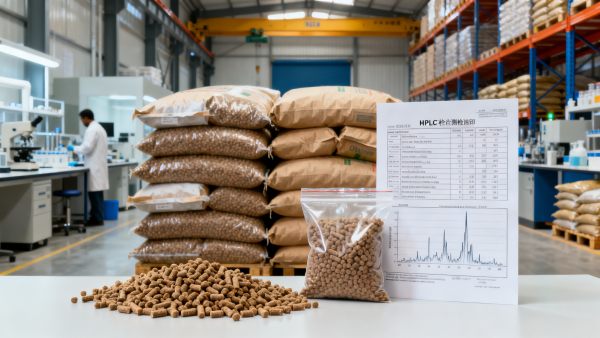
On July 8, 2026, India’s BIS moved to revise IS 15509:2026 for commercial feed pellets, introducing a near-term compliance change that directly affects imported shipments ahead of the July 12 enforcement date. The update centers on how vitamin D3 must be stabilized and how compliance must be evidenced, which makes this relevant not only for feed pellet exporters, but also for procurement teams, quality managers, testing partners, and logistics providers handling deliveries into India.
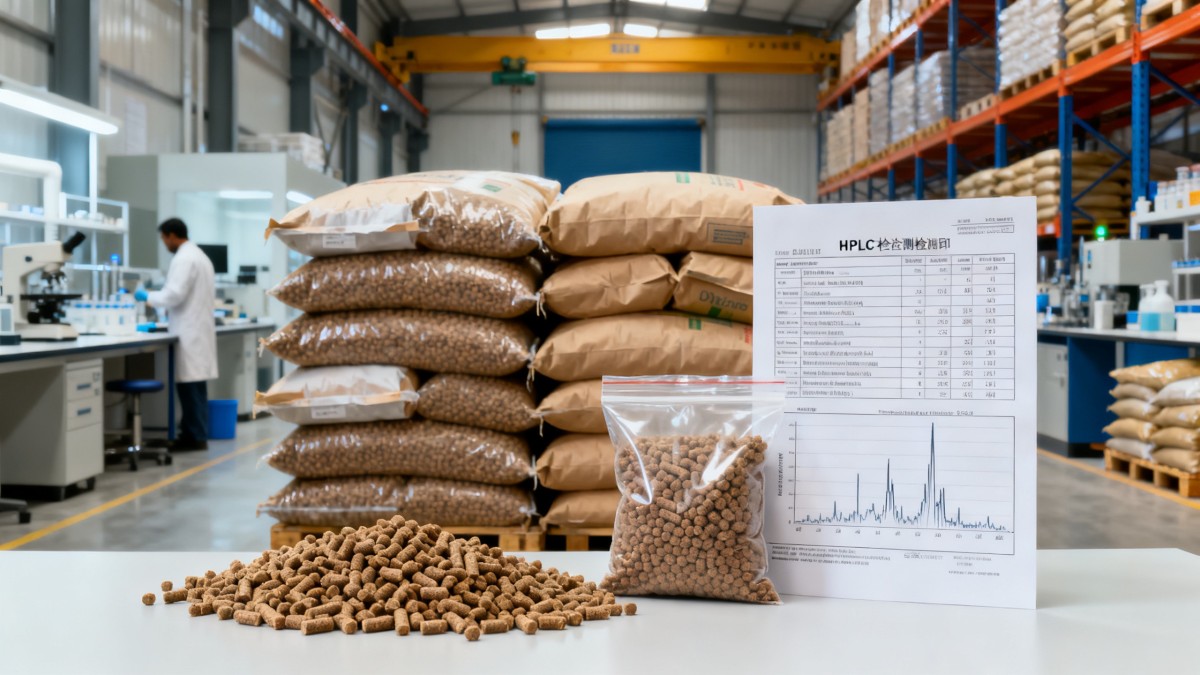
What the revised requirement now includes
According to the provided event summary, BIS urgently revised IS 15509:2026, the General Specification for Commercial Feed Pellets, on 2026-07-08. The revision adds a mandatory requirement that vitamin D3 must use a heat-sensitive microencapsulation coating process, with an encapsulation rate of at least 92%.
The same update also requires factory release test reports to include third-party HPLC verification chromatograms. The rule applies to all imported feed pellets. Shipments that do not comply will be automatically returned at Mumbai Port, and reinspection will not be accepted. Chinese exporters have also reported that delivery schedules are commonly being extended by five to seven working days.
Where the pressure is likely to appear first
Exporters face a narrower compliance margin
From an industry perspective, exporters are the first group likely to feel the impact because the revised rule combines a formulation requirement with a document requirement. The issue is not only whether the product contains vitamin D3, but whether the vitamin D3 uses the specified coating process and whether that condition can be supported by third-party HPLC evidence in the release documentation.
What deserves closer attention is that the summary describes automatic return at Mumbai Port and no option for reinspection. That raises the importance of pre-shipment review of production records, test reports, and supporting technical files before cargo leaves origin.
Procurement and sourcing teams may need to reassess supplier readiness
For buyers and sourcing teams, the immediate concern is supplier capability rather than price alone. If a supplier cannot demonstrate use of the required microencapsulation process or cannot attach the required third-party HPLC chromatogram to factory testing records, the risk shifts directly into shipment acceptance and delivery timing.
Analysis shows that procurement teams should pay closer attention to supplier documentation workflows, release timing, and whether product specifications and contract documents reflect the revised requirement before orders move into production or dispatch.
Testing and documentation functions become more central
The revision also gives testing and compliance documentation a more operational role. Third-party HPLC verification is no longer peripheral paperwork in this case; it becomes part of the evidence package tied to shipment acceptability. For laboratories, compliance coordinators, and certification-related service providers, the practical issue is whether the required chromatograms can be generated and attached in time to avoid disrupting shipment release.
Logistics planning is affected by compliance lead time
Supply chain service providers and delivery planners are likely to see the effect through longer pre-export preparation cycles. The reported five- to seven-working-day extension from Chinese exporters suggests that compliance preparation is already affecting dispatch timing. Observably, the trade impact is not limited to border clearance risk; it also reaches booking schedules, customer delivery commitments, and inventory planning for India-bound cargo.
Operational points companies should watch now
Check whether technical files fully match the revised standard
Companies handling India-bound feed pellets should review whether internal product specifications, supplier declarations, and release documentation clearly align with the updated BIS requirement for heat-sensitive microencapsulation of vitamin D3 and the stated minimum encapsulation rate.
Verify the completeness of shipment documents before dispatch
Because the provided summary specifically mentions third-party HPLC verification chromatograms, firms should pay attention to whether test reports are complete, consistent, and available before shipment. Analysis shows that documentation gaps may carry outsized risk when the consequence described is automatic return without reinspection.
Revisit delivery commitments and procurement timing
The reported five- to seven-working-day delay indicates that delivery planning may need adjustment even where suppliers remain active in the market. What deserves closer attention is whether current purchase orders, shipment schedules, and customer delivery promises still reflect the added compliance preparation time.
Continue monitoring how the rule is applied in practice
The confirmed facts establish the revised requirement and the stated port consequence, but they do not provide wider implementation detail beyond that. Companies should therefore keep watching for additional wording in official notices, contract specifications, inspection practices, and market feedback that may clarify how strictly individual document elements or technical descriptions are being checked.
How this change is best understood at this stage
Analysis shows that this development is better understood as an executed compliance signal rather than a distant policy discussion. The enforcement date is close, the requirement is technically specific, and the consequence described for non-compliant imports is immediate. At the same time, it is still necessary to observe how the rule is applied in routine trade practice, especially in documentation review, shipment handling, and supplier response times.
What this means for the market in practical terms
At this point, the BIS revision should be read as a concrete rule change affecting product formulation evidence, release documentation, and delivery planning for imported commercial feed pellets entering India. It does not by itself justify broad conclusions about the wider market, but it does clearly signal tighter compliance expectations for affected trade flows. The more appropriate reading for industry participants is that this is an active execution requirement with immediate operational implications and a need for continued monitoring of implementation details.
Basis of this article and what still needs verification
This article is generated from the user-provided news title, event date, and event summary. For developments of this kind, relevant source types typically include official notices, regulator releases, customs or trade authority information, standard-setting body documents, industry association communications, and reporting by established trade media.
No specific official source link was provided in the input, so the precise official publication path still needs to be verified on an ongoing basis. Observably, follow-up attention should remain on detailed implementation wording, certification and testing interpretation, changes in procurement or tender documentation, market feedback, and how affected companies are handling execution in practice.
Related Intelligence
- Commercial Feed PelletHow to Build a Sanitary Feed Production Plan That Reduces Cross-ContaminationSanitary feed production planning: reduce cross-contamination with smarter sequencing, validated flushing, material segregation, and traceable sanitation controls.
- Commercial Feed PelletFeed Pellet Mill Sourcing: How to Vet Suppliers for Capacity, Quality, and SupportFeed pellet mill sourcing made smarter: vet suppliers for proven capacity, pellet quality, lifecycle cost, factory controls, commissioning, and reliable after-sales support.
- Commercial Feed PelletFeed Production System Price Trends: Cost Drivers and Budgeting for New LinesFeed production systems price trend insights: compare cost drivers, automation, utilities, compliance, and total ownership costs to budget smarter for new feed lines.
The Morning Broadsheet
Daily chemical briefings, market shifts, and peer-reviewed summaries delivered to your terminal.
