

The Authority in Global Agricultural Chemistry & Bio-Resources
Singapore Port Cuts RAS Export Slots 40%
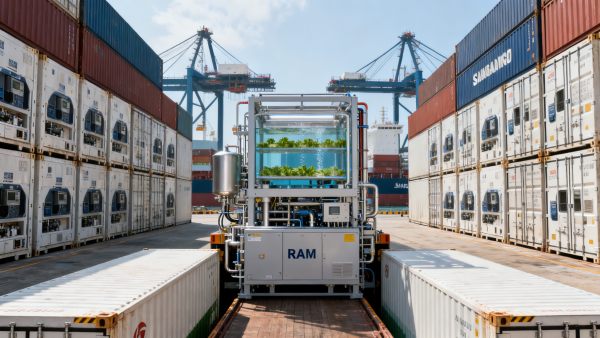
On July 9, 2026, Singapore’s port authority signaled a tighter operating environment for certain high-value agricultural equipment shipments by introducing a priority slot allocation system tied to refrigerated container constraints in the third quarter. For exporters of complete RAS Systems units, freight forwarders, procurement teams, and project delivery managers, the development matters because it changes both booking access and documentation thresholds at the point of shipment, with immediate implications from July 10 onward.
Tighter Rules for Protected Export Capacity
According to the information provided, the Maritime and Port Authority of Singapore (MPA) announced on July 9, 2026 that, due to tight refrigerated container resources in the third quarter, a “green priority slot quota” system would apply to high-value agricultural equipment including RAS Systems and Smart Greenhouse products. Under this arrangement, export slot availability for complete RAS Systems units was reduced to 60% of the level recorded in the same period last year.
International freight forwarders also confirmed that, starting July 10, bookings must be locked in 14 days in advance. They further stated that shippers must provide temperature-control and bio-isolation documentation for the equipment; otherwise, cargo will be moved into non-guaranteed slot allocation.
Where the Pressure May Be Felt First
Exporters of complete equipment face a narrower shipping window
From an industry perspective, companies shipping complete RAS Systems units are the most directly exposed because the confirmed change is not only about lower slot availability, but also about access conditions. The likely impact falls on shipment scheduling, dispatch readiness, and whether export documentation can be assembled early enough to secure protected capacity.
Freight forwarders and logistics coordinators must manage stricter booking discipline
For supply chain service providers, the practical change is the shift from flexible booking behavior to earlier slot commitment. Analysis shows that the 14-day lock-in requirement may affect how forwarders sequence cargo acceptance, document review, and customer communication, especially when a shipment risks being placed into a non-guaranteed category.
Procurement and project delivery teams may need to revisit lead-time assumptions
For buyers, import-side coordinators, and project teams waiting on equipment delivery, the issue is less about the port rule itself and more about schedule reliability. What deserves closer attention is whether internal delivery plans, installation windows, or procurement milestones were built on booking assumptions that no longer hold under the new quota and documentation regime.
What Companies Should Watch in the Near Term
Watch for any refinement in official wording or operating scope
Companies should closely track whether the announced quota mechanism remains limited to the categories already referenced or whether operational guidance becomes more specific around eligibility, processing rules, or proof requirements. The distinction between a policy announcement and day-to-day booking enforcement will matter in practice.
Prepare documentation before approaching carriers or forwarders
The current information indicates that temperature-control and bio-isolation proof has become a gating factor for protected booking treatment. In practical terms, exporters and logistics teams should verify document completeness earlier in the shipping cycle, because an incomplete file may push cargo into a non-guaranteed slot rather than merely delay review.
Recheck delivery promises made to customers and partners
Observably, the new requirement to lock bookings 14 days in advance can affect how confidently companies communicate dispatch dates. Sales, operations, and account teams should align customer-facing timelines with the updated booking reality, particularly for complete-unit exports that depend on protected capacity.
Separate policy signal from actual shipment execution
It is more appropriate to understand this development through two layers: the announced quota reduction and the actual ability to secure compliant bookings under the new rules. Businesses should therefore monitor not only the headline reduction, but also whether supporting documentation, forwarder handling, and internal approval processes are fast enough to match the new timetable.
Why This Looks Like an Operational Signal, Not Yet a Final Market Outcome
Analysis shows that the immediate meaning of this update is operational rather than structural: access to shipment capacity for certain equipment categories has tightened, and compliance requirements now play a larger role in determining whether cargo receives protected treatment. At the same time, the information provided does not confirm how long the pressure will persist beyond the stated third-quarter resource tightness, so it would be premature to treat this as a settled long-term shift.
What deserves closer attention is that the announcement links slot allocation to refrigerated container availability and equipment-specific proof requirements. That combination suggests companies should keep watching execution details, not just quota headlines, because documentation readiness may become as important as nominal booking demand.
How This Update Is Best Understood Now
At this stage, the development is best read as a near-term logistics constraint with immediate commercial consequences for exporters of complete RAS Systems units and related supply chain participants. It signals tighter control over protected capacity at Singapore port, but the broader industry outcome still depends on how the quota system is enforced in practice and whether booking conditions change again as the quarter progresses.
A neutral reading is that this is neither a minor procedural adjustment nor a confirmed long-cycle market reset. It is more appropriate to understand this as a live operating signal that requires continued monitoring by equipment exporters, freight intermediaries, and delivery planners.
Basis of This Article and Ongoing Verification
This article is based on the user-provided news title, event date, and event summary. For developments of this type, commonly relevant source categories may include official port or government notices, company announcements, industry association updates, authoritative media reporting, and related operational guidance documents.
No specific official source link was provided in the input, so the underlying announcement text and any subsequent implementation notices still require ongoing verification. Follow-up attention should focus on whether the quota scope changes, whether documentation standards are clarified further, and whether booking lead-time or protected-capacity rules are adjusted after the initial July 10 implementation point.
Related Intelligence
- RAS SystemsSustainable Aquaculture Practices That Cut Feed Waste and Protect Fish Farm Water QualitySustainable aquaculture for fish farms: reduce feed waste, protect water quality, and build resilient, efficient systems with practical strategies.
- RAS SystemsDrum Filter System Price: How Flow Rate, Micron Rating, and Automation Affect CostDrum filter system price depends on flow rate, micron rating, automation, materials, and lifecycle costs. Compare quotes confidently and choose the right system.
- RAS SystemsHow to Specify Large-Scale Fish Farming Equipment for High-Output RAS ProjectsLarge scale fish farming equipment guide for high-output RAS projects—specify tanks, filtration, oxygen, automation, and redundancy for reliable growth.
The Morning Broadsheet
Daily chemical briefings, market shifts, and peer-reviewed summaries delivered to your terminal.
