

The Authority in Global Agricultural Chemistry & Bio-Resources
BIS Expands Controls on RAS Sensor Exports
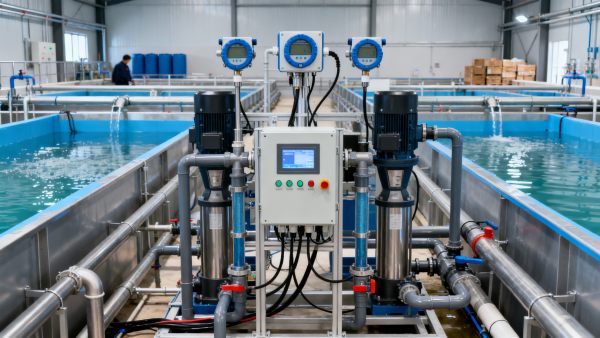
On July 8, 2026, the U.S. Bureau of Industry and Security (BIS) moved a key RAS sensing category into a temporary export control framework by requiring licenses for exports of dissolved oxygen/ammonia dual-parameter sensors with AI-based water-quality anomaly prediction functions. For RAS equipment makers, module suppliers, exporters, and buyers serving high-end aquaculture projects, this is worth close attention because the rule took effect immediately and directly raises delivery uncertainty for complete systems and modular components tied to the affected sensor class.
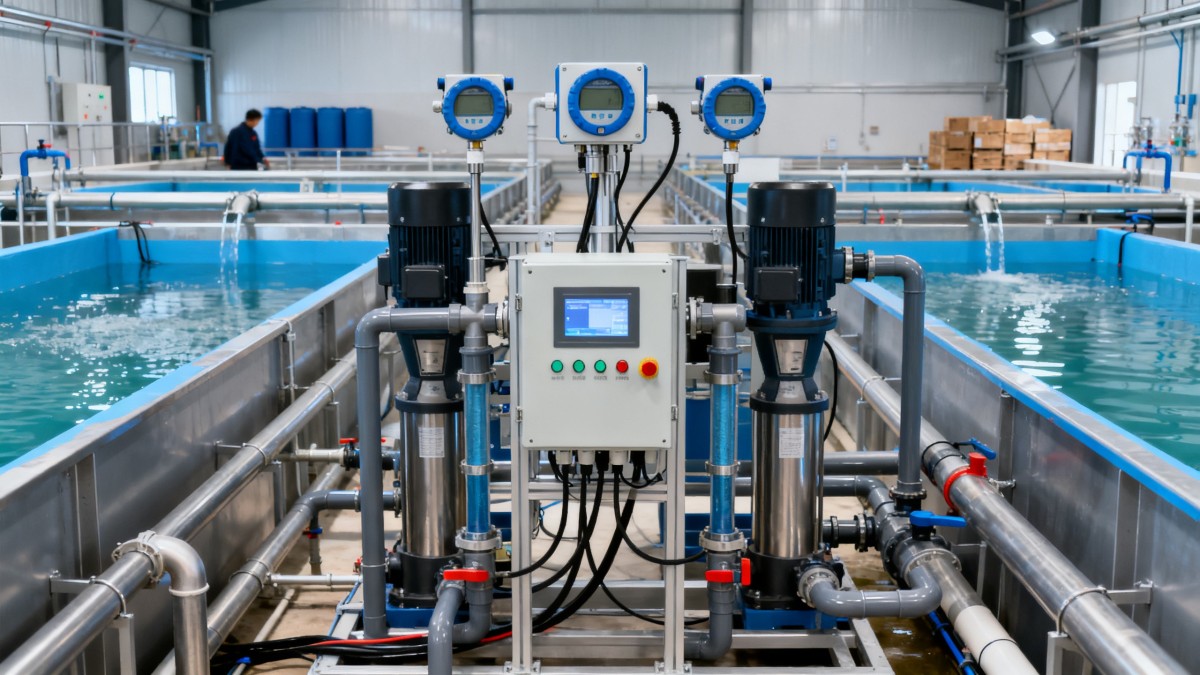
What the Rule Change Covers
According to the information provided, BIS issued EAR Supplement No. 4 on July 8, 2026 and placed dissolved oxygen/ammonia dual-parameter sensors with AI-driven water-quality anomaly prediction functions under a temporary export control list categorized as fishery-related AI monitoring under EAR 744.22. The scope includes the Chinese model series DOS-AQ200. Exports to all countries now require a BIS license, and the restriction became effective immediately.
The same information also indicates that the measure directly affects the delivery stability of China-made RAS complete systems and modular components for high-end aquaculture customers in the United States, the Middle East, and Southeast Asia.
Where the Pressure May Appear First
System exporters face immediate delivery risk
From an industry perspective, companies exporting complete RAS systems may be affected first because the controlled sensor is not a peripheral accessory in this context but part of the monitoring layer tied to higher-spec aquaculture deployments. The main pressure point is likely to be shipment timing, especially where contracts or project schedules depend on configuration with the affected sensor type.
Module and subsystem suppliers may see order uncertainty
Analysis shows that suppliers of modular RAS components may also be exposed if their products are sold with, integrated around, or commercially dependent on the listed dual-parameter sensors. What deserves closer attention is whether current orders, quotations, and technical specifications rely on the controlled functionality, since that can affect lead times and customer acceptance.
Overseas buyers and project operators may reassess procurement plans
For buyers in the U.S., Middle East, and Southeast Asia high-end aquaculture segments, the issue is not only product availability but also delivery predictability. Observably, procurement teams and end users may need to review whether existing project plans assume uninterrupted supply of the listed sensor category, particularly where water-quality monitoring architecture has already been defined around those functions.
Supply chain service providers may need tighter document control
Service providers involved in export processing, shipping coordination, and compliance support may face a more document-intensive workflow. The practical issue to watch is whether product descriptions, model identification, and transaction materials are sufficiently clear to determine whether a shipment involves a controlled item.
What Companies Should Watch Now
Track follow-up language from regulators
Analysis shows that the immediate rule text matters, but so do any follow-up clarifications, implementation notes, or adjustments in official wording. Businesses dealing with the affected sensor category should pay close attention to how the scope of AI-based water-quality anomaly prediction is described in subsequent official materials.
Review affected models, bundles, and contract commitments
What deserves closer attention is not only standalone sensor exports but also whether the listed products are embedded in broader RAS equipment packages or module sales. Companies should identify where the controlled sensor class appears in current product lists, pending shipments, and customer commitments that depend on a specific configuration.
Separate policy language from operational execution
Observably, a rule taking effect immediately does not answer every operational question by itself. Firms need to distinguish between the confirmed policy fact that BIS licenses are now required and the separate commercial question of how this will alter approval timing, delivery sequencing, and customer acceptance in real transactions.
Prepare for customer communication and documentation checks
From an industry perspective, near-term work is likely to center on compliance documentation, supplier confirmation, and customer communication. Exporters, integrators, and project teams should be ready to explain possible schedule changes, confirm model applicability, and align internal records with the controlled product descriptions referenced in the rule.
Why This Looks Like More Than a One-Day Update
Analysis shows that this development is important not only because a single sensor category has been restricted, but because it links aquaculture monitoring hardware to an AI-related export control framing. It is more appropriate to understand this as both an immediate operational issue and a policy signal that certain intelligent sensing functions in fishery applications are drawing closer scrutiny.
At the same time, it would be premature to treat the event as a fully settled long-term market outcome. The confirmed facts establish a licensing requirement and immediate effect; the broader commercial consequences still depend on how licensing, customer procurement decisions, and supply chain adjustments evolve from here.
How the Market May Need to Read This
In practical terms, this update is best read as a near-term compliance and delivery issue with wider strategic relevance. It does not by itself define the full future of RAS export trade, but it does indicate that sensor intelligence, not just core mechanical system hardware, can become a decisive factor in cross-border delivery stability. For industry participants, the rational conclusion is to treat the measure as an active development that requires close monitoring rather than as a one-off headline or a completed long-range trend.
Basis of This Article and What Still Needs Verification
This article is based on the user-provided news title, event date, and event summary. For this type of industry development, relevant source categories usually include official regulatory notices, company statements, industry association updates, authoritative media coverage, and standards-related documents. A specific official source link was not provided in the input, so the exact original publication path still needs continued verification.
Further observation should focus on any additional BIS wording, implementation clarifications, and practical changes affecting affected models, export procedures, and delivery arrangements in the RAS supply chain.
Related Intelligence
- RAS SystemsSustainable Aquaculture Practices That Cut Feed Waste and Protect Fish Farm Water QualitySustainable aquaculture for fish farms: reduce feed waste, protect water quality, and build resilient, efficient systems with practical strategies.
- RAS SystemsDrum Filter System Price: How Flow Rate, Micron Rating, and Automation Affect CostDrum filter system price depends on flow rate, micron rating, automation, materials, and lifecycle costs. Compare quotes confidently and choose the right system.
- RAS SystemsHow to Specify Large-Scale Fish Farming Equipment for High-Output RAS ProjectsLarge scale fish farming equipment guide for high-output RAS projects—specify tanks, filtration, oxygen, automation, and redundancy for reliable growth.
The Morning Broadsheet
Daily chemical briefings, market shifts, and peer-reviewed summaries delivered to your terminal.
