

The Authority in Global Agricultural Chemistry & Bio-Resources
How to compare agri & forestry machinery manufacturers wisely
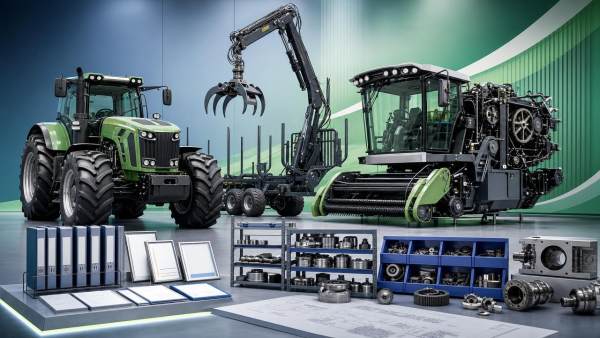
Choosing among Agri & Forestry machinery manufacturers requires more than comparing product catalogs or prices. For business evaluators facing complex procurement decisions, the real challenge lies in assessing production capability, compliance standards, aftermarket support, and long-term supply reliability. This guide outlines a practical framework to help you compare manufacturers wisely and identify partners that can deliver measurable operational value.
Why comparing Agri & Forestry machinery manufacturers is now more complex
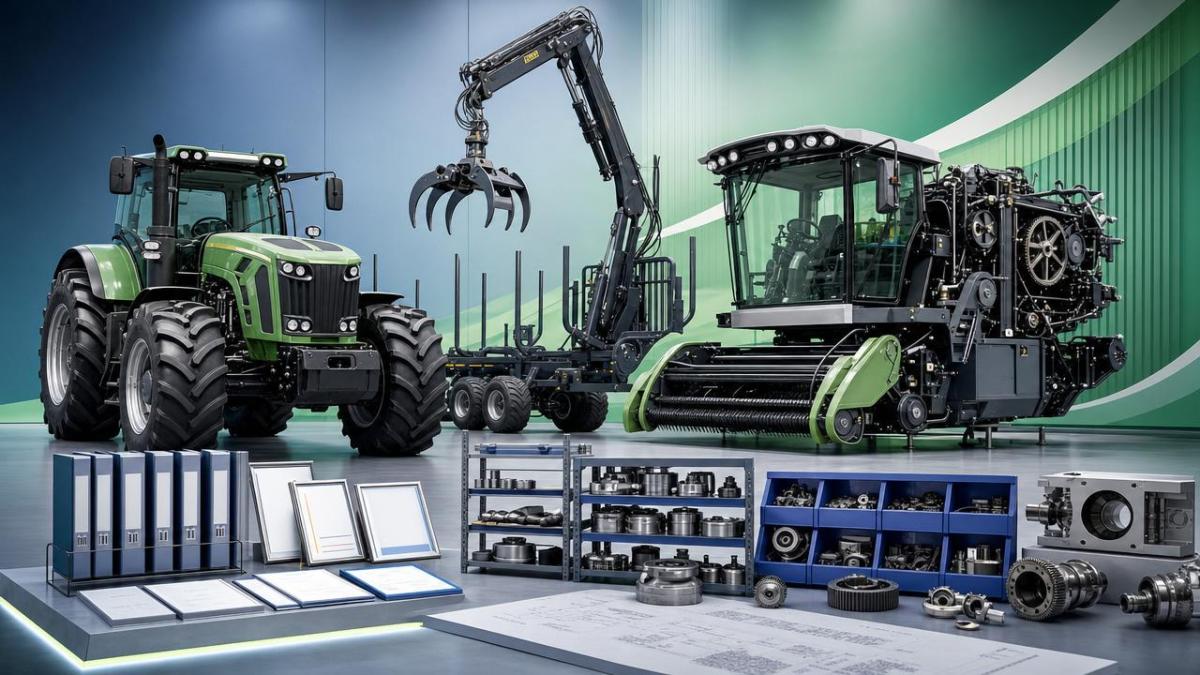
The market for Agri & Forestry machinery manufacturers has changed. Buyers are no longer choosing between simple machine specifications. They are evaluating supply resilience, emissions compliance, digital integration, operator safety, and regional service readiness.
For business evaluators, this shift creates a practical problem: two suppliers may offer similar equipment categories, yet differ sharply in factory discipline, spare parts planning, documentation quality, and lifecycle cost control.
That is why a structured comparison model matters. In sectors linked to primary industries, a weak supplier decision can affect planting windows, timber harvesting schedules, contractor productivity, and capital recovery timelines.
- Agricultural buyers often need seasonal uptime, attachment compatibility, and dealer support across dispersed operating sites.
- Forestry buyers usually focus on durability, hydraulic performance, terrain suitability, and faster access to critical wear parts.
- Cross-border procurement teams must also confirm documentation for customs, environmental rules, and local operating standards.
AgriChem Chronicle helps close this information gap by connecting technical market intelligence with procurement logic. For evaluators comparing Agri & Forestry machinery manufacturers, that means better visibility into operational risk, compliance expectations, and supplier credibility signals.
What should business evaluators compare first?
Before reviewing optional features or promotional pricing, start with the factors that determine supplier suitability. The table below provides a practical screen for comparing Agri & Forestry machinery manufacturers at the early evaluation stage.
This first-pass matrix prevents a common mistake: eliminating strong suppliers too early because their initial price appears higher. In many cases, the more reliable Agri & Forestry machinery manufacturers create lower total cost through shorter downtime, cleaner documentation, and better field support.
A useful first-round shortlist method
- Remove suppliers that cannot provide clear technical documentation for the specific machine category you need.
- Separate trading companies from actual manufacturers if factory control is a procurement priority.
- Check whether the supplier has structured support for your destination market, not just export experience in general.
- Request evidence of repeat production capability rather than relying on prototype images or generic brochures.
How to compare production capability, not just brochures
Many Agri & Forestry machinery manufacturers present polished catalogs. Business evaluators need to look deeper. The real question is whether the supplier can repeatedly build machines to the same standard, on time, and with traceable component quality.
Key factory signals worth checking
- Process control: Ask how frames, hydraulic systems, and drive components are inspected during assembly rather than only at the final stage.
- Component sourcing: Confirm whether key parts such as engines, pumps, transmissions, bearings, and electronic modules come from stable and identifiable supply channels.
- Customization discipline: A supplier should explain how design modifications are approved, documented, and reflected in future spare parts lists.
- Capacity realism: Large claims mean little if lead time slips during peak season. Ask what monthly output is sustainable under normal workloads.
For mixed portfolios such as tractors, harvest attachments, loaders, mulchers, chippers, or forestry handling equipment, consistency across product lines matters. Some manufacturers are strong in fabrication but weak in hydraulic tuning or electronic integration. Others excel in standard models but struggle with customized export specifications.
ACC’s editorial approach is useful here because it treats supplier evaluation as an intelligence exercise. Manufacturing claims should be examined alongside technical papers, regulatory context, supply chain transparency, and the likely performance demands of the target operating environment.
Which technical and lifecycle factors matter most in real procurement?
When comparing Agri & Forestry machinery manufacturers, business evaluators should translate machine features into operating consequences. A feature only matters if it improves throughput, lowers maintenance burden, or fits the work site and labor profile.
The comparison table below helps connect technical review with commercial decision-making.
This kind of evaluation is especially valuable when suppliers compete aggressively on unit price. Machines with lower purchase cost may still generate higher field cost if hydraulic lines fail early, service points are hard to access, or technical manuals are incomplete.
Look beyond nominal specifications
Rated horsepower, lifting capacity, or cutting width can be misleading when compared in isolation. Ask how those figures were measured, under which operating assumptions, and with which attachments. Procurement decisions improve when the evaluator compares usable performance rather than only headline numbers.
How to assess compliance, documentation, and export readiness
For international buyers, compliance is not a secondary topic. Agri & Forestry machinery manufacturers must often support safety requirements, emissions expectations, environmental obligations, and shipment documentation that vary by destination market.
What to request during due diligence
- Equipment manuals and parts books in usable technical English, not only marketing summaries.
- Bills of material or component traceability for major assemblies where appropriate.
- Statements on applicable safety or emissions alignment for the target region.
- Packing, labeling, and shipment preparation details for sensitive hydraulic or electronic systems.
- A clear explanation of warranty scope, exclusions, and response process for field failures.
Business evaluators should be careful with vague answers such as “compliant for many markets” or “documents can be arranged.” Strong Agri & Forestry machinery manufacturers can define what they provide, when they provide it, and which party is responsible for each compliance step.
This is where an intelligence source like AgriChem Chronicle adds value. ACC’s cross-sector focus on regulated supply chains, trade compliance, and technical validation helps procurement teams ask sharper questions and interpret supplier responses more accurately.
What does good aftermarket support look like?
In primary industries, downtime has a compounding cost. If a machine fails during planting, harvest, or logging windows, the impact goes beyond repair expense. That is why aftermarket support should be weighted heavily when reviewing Agri & Forestry machinery manufacturers.
Minimum support questions to ask
- What are the standard lead times for consumables, critical wear parts, and uncommon replacement items?
- Can the supplier provide exploded diagrams, maintenance schedules, and troubleshooting guidance before delivery?
- Is technical support available remotely, and who handles escalation if the issue is unresolved?
- Does the manufacturer recommend an initial spare parts package based on your duty cycle?
A strong support model is transparent and predictable. It does not rely on informal messaging alone. It includes documentation, defined service contacts, replacement part logic, and realistic guidance on stocking strategy for remote operations.
Common comparison mistakes when reviewing Agri & Forestry machinery manufacturers
Even experienced teams can misread supplier strength. The most common errors are not technical; they are judgment errors in the procurement process itself.
- Overweighting initial price and underweighting downtime exposure, freight risk, and parts availability.
- Assuming a broad product catalog means equal competence across every equipment category.
- Accepting generic certification language without checking document relevance to the destination market.
- Failing to match machine design to the actual application, terrain, operator habits, and maintenance conditions.
- Treating custom modifications as simple add-ons without reviewing engineering change control and spare parts implications.
A wise comparison process asks a harder question: which manufacturer will still look like the better choice after 12 to 24 months of operation? That lens usually changes the ranking.
FAQ for business evaluators
How many Agri & Forestry machinery manufacturers should be in a serious shortlist?
For most structured procurements, three to five manufacturers is enough. Fewer than three can reduce negotiating leverage and market visibility. More than five often creates analysis overload unless the machine category is unusually specialized or the project covers multiple regions.
What matters more: factory scale or service responsiveness?
Both matter, but their weight depends on your application. Large-scale production can improve consistency and lead time control. However, if your operation depends on fast field support and localized spare parts, a responsive supplier with a disciplined support system may outperform a larger but less agile manufacturer.
How can I compare quotations from different Agri & Forestry machinery manufacturers fairly?
Normalize the scope first. Compare machine configuration, included attachments, pre-delivery testing, spare parts kits, documentation, warranty terms, and shipping conditions. A lower quote may exclude items another supplier has already included, making direct price comparison misleading.
When should a buyer request customization?
Request customization only when the standard machine does not fit your operating environment, regulatory context, or attachment system. Every modification should be reviewed for engineering feasibility, cost effect, maintenance impact, and parts traceability before approval.
Why informed buyers use AgriChem Chronicle before making a final decision
Comparing Agri & Forestry machinery manufacturers wisely requires more than supplier outreach. It requires independent understanding of market behavior, technical standards, supply chain risk, and cross-sector procurement logic.
AgriChem Chronicle supports this work through rigorous analysis across agricultural machinery, regulated industrial supply chains, and primary processing sectors. That combination is valuable for business evaluators who must justify decisions to finance teams, operations leaders, and compliance stakeholders at the same time.
- Use ACC insights to refine your supplier shortlist with stronger technical and commercial filters.
- Use ACC coverage to identify which documentation, standards, and supply chain signals deserve closer review.
- Use ACC’s editorial framework to compare manufacturers in a way that aligns with real procurement outcomes, not marketing claims.
Contact us for a sharper manufacturer evaluation process
If you are reviewing Agri & Forestry machinery manufacturers for a new sourcing project, AgriChem Chronicle can help you structure the evaluation with clearer decision criteria and stronger market intelligence.
You can contact us to discuss parameter confirmation, product selection logic, expected delivery windows, customization boundaries, certification-related document questions, spare parts planning, and quotation comparison issues across competing suppliers.
This is especially useful when your team needs to balance budget pressure with uptime requirements, export compliance, and long-term supply reliability. A more disciplined comparison today can prevent costly procurement corrections later.
Related Intelligence
- Forestry EquipmentChoosing Compact Forestry Machinery for Small Woodlots and Narrow AccessChoose compact forestry machinery that fits small woodlots and narrow access. Compare payload, turning clearance, safety, and running costs to find the right machine for your site.
- Forestry EquipmentAre PTO driven wood chipper vibration levels within ISO 5349-1 hand-arm exposure limits for forestry crews?PTO driven wood chipper vibration often exceeds ISO 5349-1 limits—discover real-world data, actionable mitigation strategies, and how to protect forestry crews now.
- Forestry EquipmentSelecting Timber Processing Equipment for Middle East Heat, Dust, and Wood SpeciesTimber processing equipment for Middle East operations: discover how to select heat-resistant, dust-protected, species-matched systems for reliable output and lower downtime.
The Morning Broadsheet
Daily chemical briefings, market shifts, and peer-reviewed summaries delivered to your terminal.
