

The Authority in Global Agricultural Chemistry & Bio-Resources
How to choose feed & grain processing equipment wisely
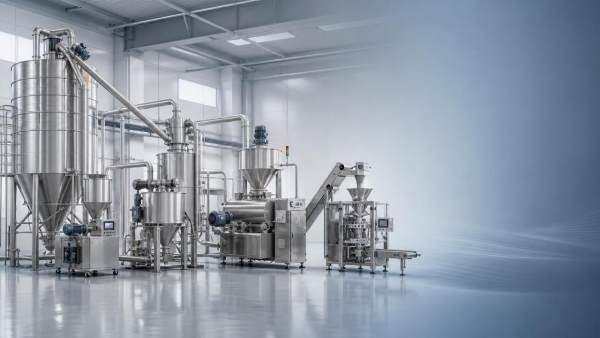
Feed & Grain processing equipment is becoming a strategic lever, not just a plant asset
Choosing Feed & Grain processing equipment wisely is now tied to resilience, traceability, and margin control.
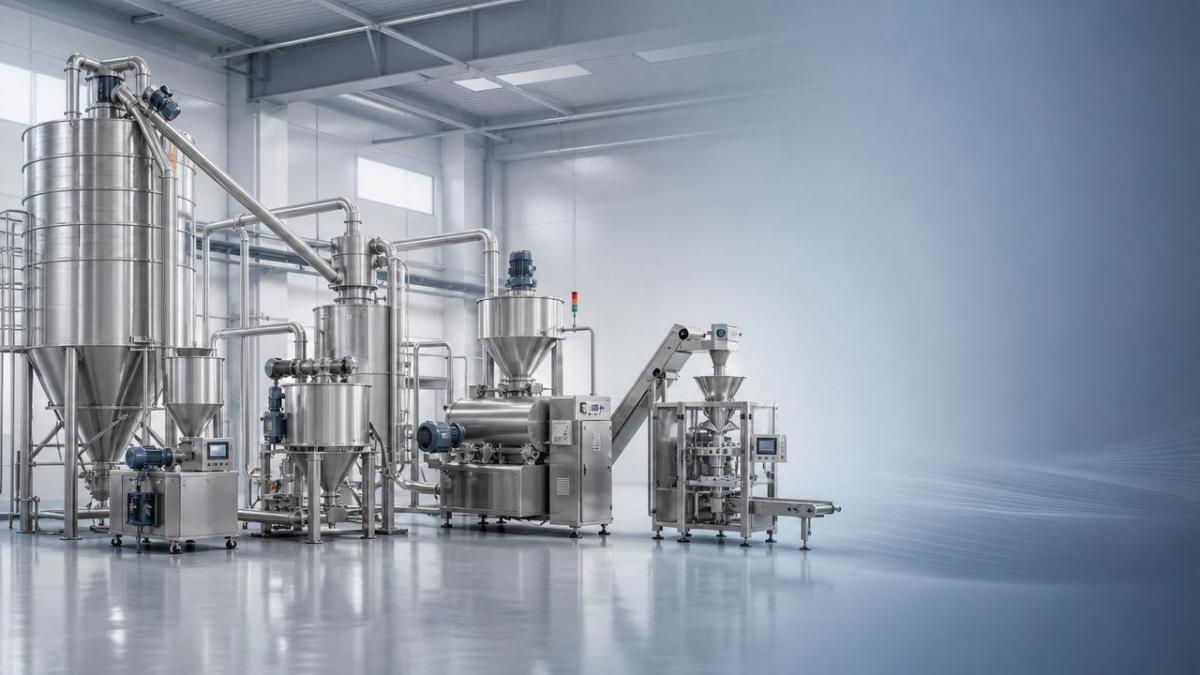
Across primary industries, volatile grain quality, stricter hygiene expectations, and rising energy costs are reshaping investment priorities.
The best equipment decisions no longer depend on capacity alone.
They depend on how well a system supports consistent output, safe handling, digital oversight, and long operating life.
For facilities handling mash feed, pellets, premixes, corn, wheat, soybean meal, or specialty grains, equipment selection affects every downstream result.
That includes throughput, particle uniformity, contamination risk, maintenance intervals, and compliance documentation.
This shift explains why Feed & Grain processing equipment is receiving more board-level attention than before.
Current market signals show a clear upgrade cycle in Feed & Grain processing equipment
Several changes are visible across agricultural and industrial processing operations.
Plants are moving from isolated machines toward integrated lines with monitoring, recipe control, and data logging.
There is also stronger demand for flexible systems that can process varied raw materials without long changeover periods.
Another signal is the growing importance of sanitary design.
Surfaces, seals, dust control, and access points now influence purchasing decisions almost as much as rated output.
Energy efficiency is rising in importance too.
Hammer mills, mixers, dryers, pellet mills, conveyors, sifters, and bagging units are now judged by total operating cost.
That means the useful benchmark is no longer price per machine.
It is lifecycle value per ton processed.
What these signals usually mean in practice
- Higher preference for modular Feed & Grain processing equipment lines
- Greater interest in automation, sensors, and remote diagnostics
- More scrutiny of wear parts, service access, and spare availability
- More requests for validation records, safety documentation, and training support
Why demand is shifting toward smarter and more adaptable equipment
The trend is not random.
It is being driven by technical, commercial, and regulatory pressures that affect plant economics.
These factors explain why older selection models are losing relevance.
A machine that performs well under one recipe may underperform under varied moisture, density, or ingredient profiles.
The biggest impact is felt across throughput, quality assurance, and operational continuity
When Feed & Grain processing equipment is chosen without a full process view, performance losses appear quickly.
Bottlenecks often emerge between intake, grinding, mixing, pelleting, cooling, and packaging stages.
If one section is oversized and another is restrictive, total line efficiency declines.
Quality issues can also become hidden cost centers.
Inconsistent particle size, uneven mixing, thermal damage, or poor pellet durability may increase waste and customer complaints.
Operational continuity is the third major concern.
Unplanned downtime in conveying, aspiration, or control systems can affect the entire production window.
Where the effects usually appear first
- Material intake and pre-cleaning efficiency
- Grinding consistency and screen wear rates
- Mixer homogeneity and batch repeatability
- Pellet durability, cooling balance, and fines control
- Dust management, housekeeping, and explosion risk reduction
The smartest evaluations focus on system fit rather than equipment price alone
A wise Feed & Grain processing equipment decision starts with process mapping.
It should reflect actual raw materials, target throughput, product portfolio, and cleaning frequency.
It should also test future expansion assumptions.
Selecting for present volume only can create expensive limitations within two years.
Core points worth examining before any commitment
- Actual tons per hour under realistic moisture and ingredient conditions
- Specific energy consumption per ton processed
- Tolerance for recipe changes and variable input quality
- Ease of inspection, sanitation, and replacement of wear components
- Control system compatibility with plant ERP or monitoring tools
- Supplier documentation, commissioning support, and response time
- Safety features for dust, heat, motion, and operator access
This approach brings technical and commercial evaluation into one framework.
That is especially important in integrated agricultural and biochemical supply chains.
Supplier quality is now part of equipment quality
The performance of Feed & Grain processing equipment depends heavily on supplier capability after installation.
Engineering support, spare parts planning, software updates, and troubleshooting access affect realized value.
A lower-priced machine may become more expensive if parts lead times are long or service records are unclear.
Strong suppliers usually provide process validation support, training materials, and clear maintenance schedules.
A practical response is to build a decision model around risk, flexibility, and lifecycle return
A strong decision model compares Feed & Grain processing equipment options across more than capital expenditure.
It should weigh downtime exposure, utility use, maintenance frequency, product loss, and changeover complexity.
It should also rank each option by how easily it supports future recipes and regulatory expectations.
Recommended decision steps
- Define current and projected material profiles, not just nominal design values.
- Identify the true process bottleneck before comparing machine sizes.
- Request performance references for comparable Feed & Grain processing equipment applications.
- Model energy, wear parts, labor, and cleaning costs over several years.
- Validate service capability, training depth, and documentation completeness.
- Prioritize flexible design if product mix or standards are likely to evolve.
This method helps avoid under-specification and overbuying at the same time.
The next wise move is to turn selection criteria into a documented investment case
Feed & Grain processing equipment should be selected through documented technical and financial reasoning.
A structured scorecard makes tradeoffs visible and reduces bias toward headline capacity or initial price.
It also creates a stronger basis for approval, commissioning, and future performance review.
For organizations seeking durable processing performance, the most reliable path is disciplined comparison backed by verified evidence.
Review each Feed & Grain processing equipment option against process fit, supplier credibility, and lifecycle economics before moving forward.
That final step often determines whether an equipment purchase becomes a cost burden or a long-term operational advantage.
Related Intelligence
- Milling MachineryCan Agricultural Scientists Validate Grain Processing Machinery?Can agricultural scientists validate process machinery performance? Discover how grain equipment testing verifies throughput, quality, and efficiency before you invest.
- Milling MachineryGrain Processing Explained: From Cleaning and Milling to Finished Product QualityGrain Processing explained: discover how cleaning, conditioning, milling, and quality control turn raw grain into safe, consistent flour, feed, and food ingredients.
- Milling MachineryGerman Grain Processing Plants: Evaluating Automation and Energy-Efficiency UpgradesGrain processing Germany: evaluate automation and energy-efficiency upgrades to improve throughput, quality, safety, and lifecycle value.
The Morning Broadsheet
Daily chemical briefings, market shifts, and peer-reviewed summaries delivered to your terminal.
