

The Authority in Global Agricultural Chemistry & Bio-Resources
Cassava Grating Machines: Which Types Fit Small Farms, Cooperatives, and Processing Lines?
Cassava Grating Machines: Which Types Fit Small Farms, Cooperatives, and Processing Lines?
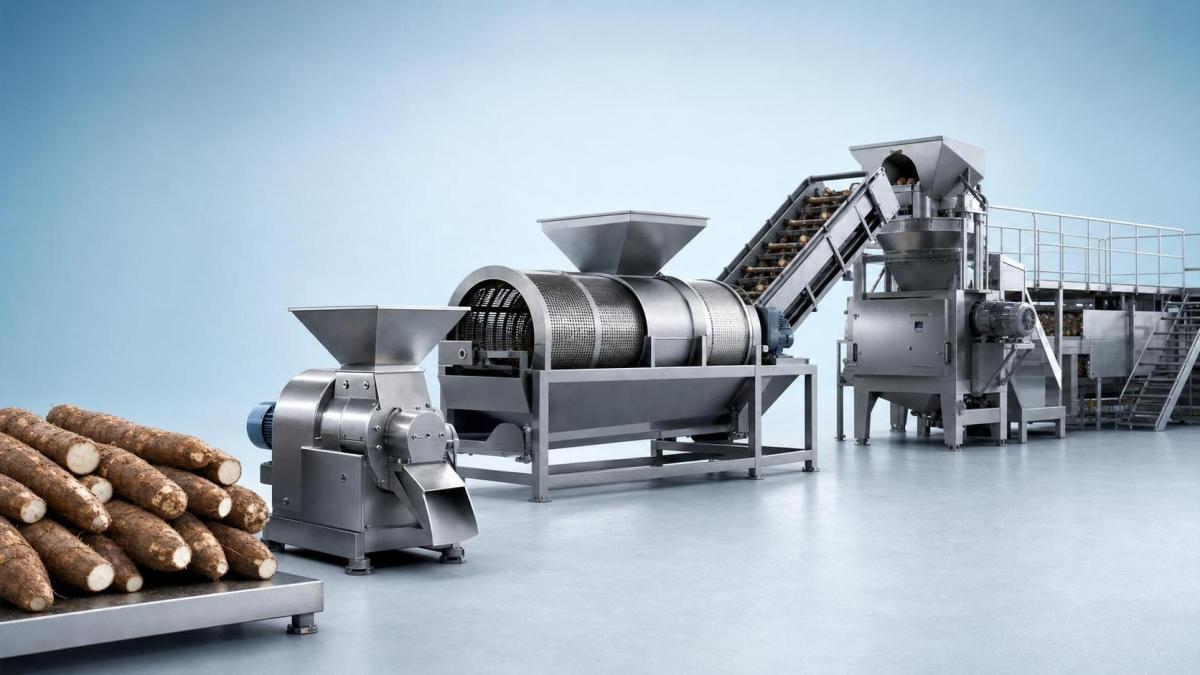
Choosing among cassava grating machines is rarely just a buying decision. It shapes output, labor use, downtime, hygiene, and product quality from day one.
That matters even more when production moves from farm-level handling to organized processing. A machine that works well for one site may fail badly in another.
In practical terms, the best cassava grating machines match feed volume, moisture conditions, operator skill, power stability, cleaning demands, and downstream process goals.
The key is not chasing the biggest unit. It is choosing the right grating system for the real operating environment.
Why machine fit matters before scaling
Cassava roots deteriorate quickly after harvest. That means grating capacity must align with harvest rhythm and transport timing, not only with weekly production targets.
If cassava grating machines are undersized, roots queue too long. Starch loss rises, texture changes, and operators start feeding uneven batches to catch up.
If they are oversized, utilization falls. Energy use, maintenance cost, and spare parts inventory become harder to justify.
A better planning approach starts with three questions.
- How many fresh roots must be processed per hour and per shift?
- What final product is the line targeting: mash, starch, flour, chips blend, or fermented products?
- How stable are labor, power, water, and maintenance support at the site?
Once those answers are clear, selecting cassava grating machines becomes much more disciplined.
The main types of cassava grating machines
Most cassava grating machines fall into a few practical categories. The difference is not only size. It is also rotor design, feed method, frame strength, and integration potential.
Manual-assist or compact motorized graters
These are entry-level cassava grating machines for low daily volume. They are often used where harvesting is scattered and investment discipline is tight.
They usually offer simple feeding, smaller motors, and easier movement. The trade-off is lower throughput and more dependence on operator consistency.
Medium-capacity drum or rasp grating units
This is often the sweet spot for organized community processing. These cassava grating machines can handle steadier loads without becoming overly complex.
They typically support better output consistency, more durable contact parts, and easier pairing with washing, dewatering, or pressing equipment.
Heavy-duty industrial grating systems
These cassava grating machines are built for continuous feed, integrated lines, and stricter sanitation control. They suit operations where stoppage cost is high.
They often include guarded inlets, stronger bearings, larger motors, and compatibility with conveyors, starch separation modules, or PLC-based control layouts.
Best-fit options for small farms
Small farms usually need cassava grating machines that are affordable, simple to clean, and tolerant of uneven root size. Reliability matters more than peak capacity.
In many cases, compact motorized models perform better than improvised equipment because they reduce product loss and shorten turnaround after harvest.
For this setting, look closely at the following points.
- Single-operator usability with safe feeding access.
- Low to moderate power demand.
- Replaceable grating surfaces and common bearings.
- Easy transport between storage and processing areas.
- Simple washdown after daily use.
The wrong choice here is often an overbuilt unit that sits idle. A leaner machine with dependable daily output usually creates a better return.
Best-fit options for cooperatives and shared facilities
Cooperatives face a different challenge. Their cassava grating machines must handle variable daily loads from multiple growers while staying fair, fast, and maintainable.
This is where medium-capacity systems often make the most sense. They offer enough throughput without forcing the site into full industrial complexity.
More importantly, they support standard operating routines. That reduces disputes over batch quality and waiting time.
- Choose a machine with stable throughput, not just a high nameplate rating.
- Confirm spare parts lead time before purchase.
- Check whether the frame and housing tolerate frequent cleaning.
- Plan operator rotation and basic maintenance training.
- Make sure the discharge suits pressing or screening steps.
From a project perspective, cassava grating machines in shared facilities should reduce coordination friction, not add new bottlenecks.
Best-fit options for industrial processing lines
Processing lines need cassava grating machines that work as part of a system. Standalone performance is not enough if upstream and downstream units lose balance.
In starch or flour plants, grating affects extraction efficiency, fiber behavior, dewatering load, and final particle uniformity.
That is why industrial buyers usually focus on integration criteria first.
- Continuous feed compatibility with washing and conveying equipment.
- Rotor durability under long shifts.
- Guarding, lockout access, and sanitation design.
- Motor efficiency and power matching.
- Downtime impact and service response speed.
For these sites, the best cassava grating machines are usually the ones that protect line balance hour after hour, not the ones with the most aggressive sales claims.
How to compare machine types in a practical way
A side-by-side evaluation helps separate marketing language from operating reality. Use a simple matrix before approving any purchase.
This kind of comparison keeps cassava grating machines tied to measurable operating value, not assumptions.
Common risks that affect performance
Several issues repeatedly undermine cassava grating machines after installation. Most are avoidable with better specification and startup planning.
- Feeding wet, muddy roots without proper washing.
- Using unstable power supply with undersized motors.
- Ignoring wear on rasp surfaces and bearings.
- Overloading machines during peak harvest days.
- Poor alignment with presses, screens, or conveyors.
A useful rule is simple. If the machine cannot be maintained with local skills and available parts, it may not be the right fit yet.
A smarter selection checklist for procurement
Before locking in a supplier, evaluate cassava grating machines against daily production reality, not brochure promises.
- Define hourly feed rate and target finished product.
- Map available power source, voltage stability, and fuel backup.
- Inspect food-contact materials and cleaning access.
- Confirm wear-part replacement intervals and local stock support.
- Check whether the machine suits present volume and near-term expansion.
- Request performance evidence under conditions close to your site.
The best buying outcome usually comes from matching cassava grating machines to a phased operating plan. That keeps capital deployment practical and scalable.
Final takeaway
There is no universal winner among cassava grating machines. Small farms need simplicity, cooperatives need balanced shared performance, and industrial lines need integration and uptime.
When machine type, capacity, power setup, and maintenance support are aligned early, processing becomes easier to scale and much easier to control.
Start with workflow, not equipment size. That is usually the fastest route to choosing cassava grating machines that actually perform in the field.
Related Intelligence
- Milling MachineryWhat Documentation Is Required to Import Grain Milling Equipment?What documentation do I need for importing grain milling equipment? Explore essential customs, technical, compliance, and shipping records for smooth clearance.
- Milling MachineryDo Agricultural Processing Operations Require Specific Environmental Permits?Does agricultural processing require specific environmental permits? Discover key air, wastewater, stormwater, waste, and chemical compliance requirements before expanding operations.
- Milling MachineryPellet Mill Vendor Comparison: Evaluate Capacity, Energy Use, and SupportPellet mill vendor comparison: evaluate sustainable capacity, energy use, pellet quality, controls, and lifecycle support to select a reliable, cost-effective solution.
The Morning Broadsheet
Daily chemical briefings, market shifts, and peer-reviewed summaries delivered to your terminal.
