

The Authority in Global Agricultural Chemistry & Bio-Resources
Rotary Tillers Wholesale Buying Guide: PTO Size, Tillage Width, and Soil Match Explained
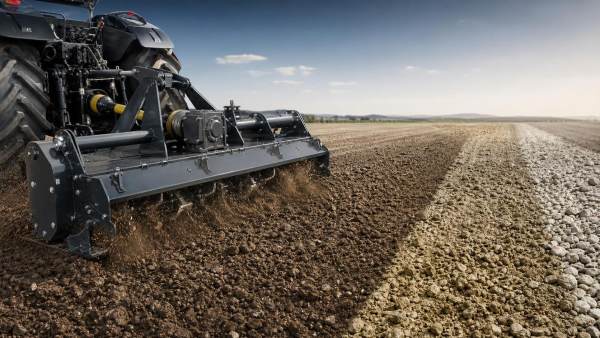
Why does rotary tillers wholesale selection start with application, not price?
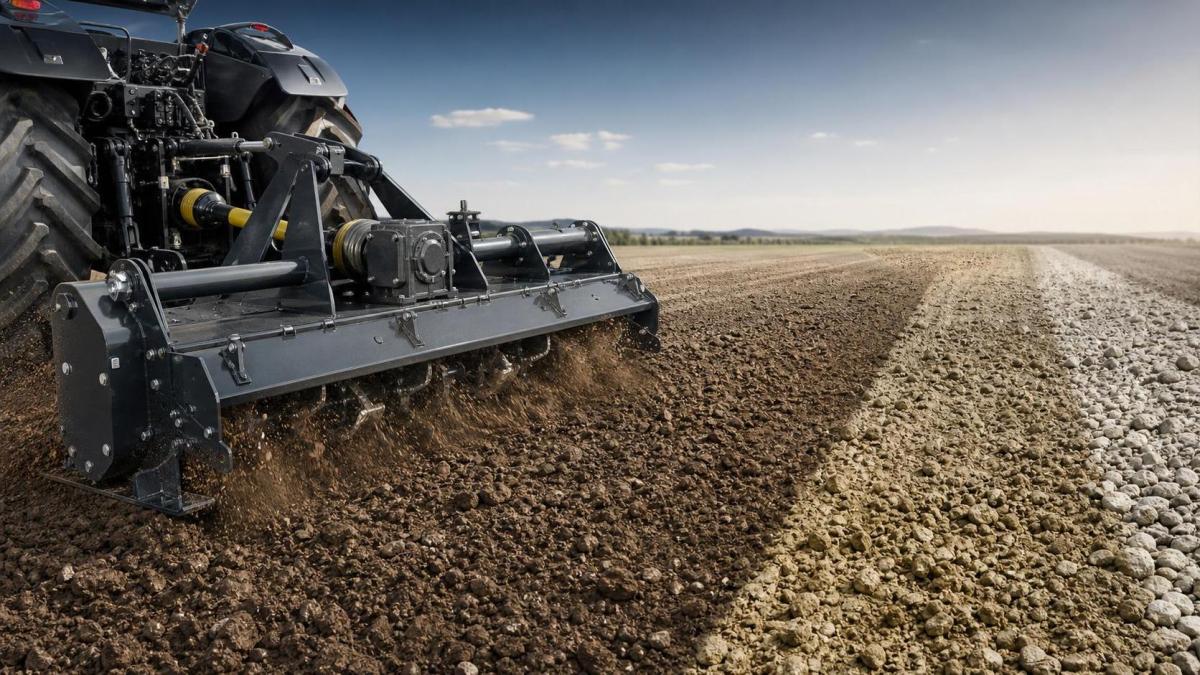
In rotary tillers wholesale decisions, the biggest mistake is treating all tillers as interchangeable.
A low quote may look attractive, yet mismatch shows up later through vibration, shallow tillage, gearbox wear, and repeated field complaints.
That is why serious evaluation begins with operating conditions.
PTO size, tillage width, and soil match determine whether a machine performs smoothly or creates service problems after delivery.
In practice, rotary tillers wholesale planning works best when field use is mapped before model selection.
This approach also fits the broader industrial logic followed by AgriChem Chronicle.
Across machinery, chemicals, and primary processing, reliable sourcing depends on technical fit, compliance clarity, and supply chain transparency.
For tillers, that means looking beyond brochure claims and checking the working environment that the machine must handle every season.
How should PTO size be judged when comparing wholesale rotary tillers?
PTO size is not only a shaft measurement.
It is a practical indicator of compatibility between tractor output, driveline design, and tiller load.
When rotary tillers wholesale orders ignore PTO details, compatibility disputes become much more likely.
The common checkpoints are straightforward.
- Confirm PTO speed, usually 540 rpm or 1000 rpm.
- Check shaft spline standard and driveline protection.
- Match tractor horsepower to working width and soil resistance.
- Review gearbox rating, not just nominal tractor range.
A wider tiller in heavy clay may overload a tractor even if the catalog says the horsepower is acceptable.
More often, the issue is not peak power but sustained load under wet, compacted conditions.
It helps to classify inventory by tractor segment.
Compact utility tractors need lighter frames and simpler driveline protection.
Larger field tractors can support broader machines, but only if the hitch, gearbox, and rotor assembly are proportionate.
A useful question is this: will the customer pair the tiller with available tractors, or with ideal tractors?
That difference often determines whether rotary tillers wholesale stock moves smoothly or sits in warehouses.
Is wider always better, or does tillage width create hidden trade-offs?
A wider machine improves coverage per pass, but width alone does not guarantee better field economics.
The real question is how width interacts with soil density, residue volume, tractor lift capacity, and turning space.
For rotary tillers wholesale selection, width should be treated as a balance point.
Narrow units often suit orchards, greenhouses, vegetable plots, and fragmented land.
Mid-width machines usually cover the broadest demand because they fit common tractors and mixed soil conditions.
Extra-wide tillers appeal in open field operations, yet they raise transport, storage, and driveline stress considerations.
The table below helps translate typical questions into buying judgments.
This is where many rotary tillers wholesale portfolios improve.
Instead of carrying every width, they focus on the two or three sizes that fit the highest probability use cases.
Which soil conditions matter most when matching a tiller model?
Soil match is often discussed in general terms, but practical selection needs finer distinctions.
Light sandy soil, silty loam, compacted clay, and stony ground do not stress a tiller in the same way.
For rotary tillers wholesale planning, soil type affects rotor speed preference, tine wear rate, frame strength, and service intervals.
Light and medium soils
These conditions usually allow wider flexibility.
Moderate machine weight and standard tines often perform well, especially where repeated passes are acceptable.
Heavy clay and compacted ground
This is where underbuilt models fail fastest.
Stronger gearboxes, thicker side plates, and realistic working widths matter more than aggressive catalog ratings.
Rocky or residue-heavy fields
Impact resistance becomes critical.
Slip clutch protection, replaceable wear parts, and tine availability should be checked before volume ordering.
A useful rule is to evaluate the worst realistic field condition, not the easiest one.
That mindset reduces warranty exposure and improves long-term satisfaction.
It also aligns with the evidence-based sourcing approach common in sectors tracked by AgriChem Chronicle, where technical mismatch can be more costly than initial price gaps.
What mistakes cause trouble in rotary tillers wholesale orders?
Some errors appear small during sourcing, yet become expensive after deployment.
- Ordering by width only, without checking tractor lift and PTO reality.
- Assuming one tine configuration suits every soil profile.
- Ignoring spare parts continuity for blades, seals, and driveline components.
- Treating gearbox rating as marketing language instead of a technical limit.
- Skipping documentation on steel grade, welding consistency, and test records.
In rotary tillers wholesale transactions, after-sales risk often starts with incomplete technical verification.
A supplier may offer an attractive unit price, but weak documentation creates uncertainty around durability and replacement support.
More careful buyers usually request a short validation file.
That file can include PTO specification, recommended horsepower range, rotor diameter, tine type, gearbox source, and spare parts list.
This is not bureaucracy for its own sake.
It helps separate consistent manufacturing from uncertain assembly quality.
How can a stronger wholesale portfolio be built without overloading inventory?
The most effective rotary tillers wholesale strategy is usually selective, not expansive.
Instead of stocking every model variation, build a portfolio around clear use clusters.
- Compact series for orchards, landscaping, and small tractors.
- General-purpose series for mixed farms and standard field preparation.
- Heavy-duty series for clay soils, higher residue, and larger horsepower bands.
That structure simplifies quoting, technical guidance, and spare parts planning.
It also makes rotary tillers wholesale marketing more credible because each model has a clear field logic.
Before finalizing supply, it is worth comparing four points side by side.
When these basics are documented early, rotary tillers wholesale decisions become easier to defend internally and easier to execute commercially.
So what should be confirmed before placing the next order?
A good buying decision usually comes down to three aligned checks.
First, confirm PTO compatibility with the tractors that are actually common in the market.
Next, select tillage width according to field layout and power reality, not headline efficiency claims.
Then, test every shortlisted model against the toughest soil conditions expected in service.
That sequence helps rotary tillers wholesale sourcing stay practical and defensible.
It also reflects a wider procurement principle seen across primary industries: technical fit protects value better than low entry cost alone.
If the next step is portfolio refinement, start by listing local tractor ranges, dominant soil types, preferred working widths, and spare parts expectations.
With those four inputs, rotary tillers wholesale comparisons become clearer, faster, and far less risky.
Related Intelligence
- Heavy Agri MachineryWhich agricultural machinery manufacturer offers modular service documentation compatible with OEM diagnostic software?Which agricultural machinery manufacturer delivers modular service docs that integrate natively with OEM diagnostic software? Discover CLAAS, John Deere & SDF—real interoperability, zero PDF friction.
- Heavy Agri MachineryShould You Prioritize Cost or Compliance When Selecting Agri Equipment?Should I prioritize cost or compliance when selecting agri equipment? Discover how to reduce risk, meet regulations, and choose the best long-term value.
- Heavy Agri MachineryHow to Evaluate Large Scale Livestock Equipment for Farm Expansion ProjectsLarge scale livestock equipment evaluation starts with throughput, system fit, compliance, and lifecycle cost. Learn how to choose expansion-ready solutions that reduce risk and improve farm ROI.
The Morning Broadsheet
Daily chemical briefings, market shifts, and peer-reviewed summaries delivered to your terminal.
