

The Authority in Global Agricultural Chemistry & Bio-Resources
Feed & grain processing technology costs more or saves more
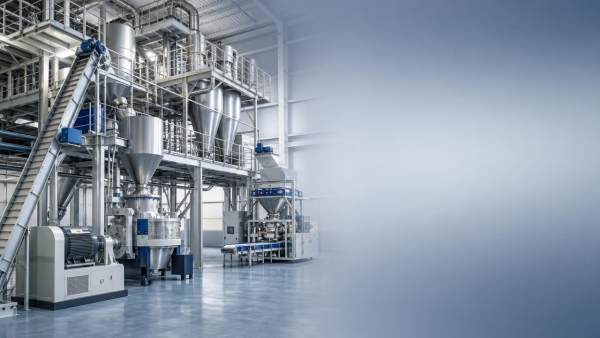
Feed & Grain processing technology is shifting from expense center to margin lever
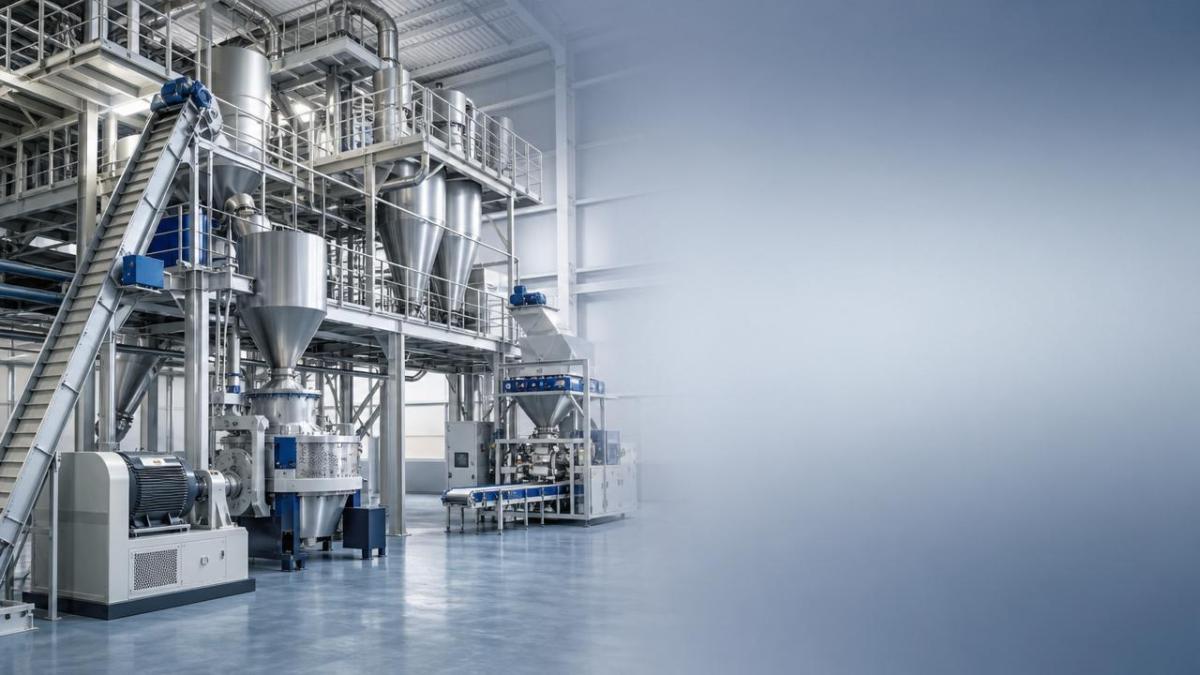
For financial decision-makers, Feed & Grain processing technology is no longer just an operational upgrade—it is a capital allocation question with measurable impact.
From energy efficiency and labor savings to yield improvement and compliance risk reduction, the right processing investment can either strain budgets or strengthen margins.
This article examines where costs rise, where savings emerge, and how to evaluate technology choices with greater confidence.
Across the broader industrial landscape, Feed & Grain processing technology now sits at the intersection of production economics, digital control, and supply chain resilience.
What once looked like a machinery decision now influences throughput stability, quality consistency, and long-term operating flexibility.
Current market signals show a more complex cost picture
The cost debate around Feed & Grain processing technology has become less binary.
New systems often require higher upfront capital, more integration planning, and stronger operator training.
Yet older lines increasingly carry hidden costs through downtime, product loss, excessive energy use, and manual quality corrections.
Volatile grain prices, stricter traceability rules, and tighter labor markets are exposing those hidden losses faster than before.
As a result, Feed & Grain processing technology is being assessed less on purchase price and more on total financial effect.
This shift mirrors broader capital trends across primary industries and fine chemical processing, where measurable efficiency now defines investment quality.
Why the economics of Feed & Grain processing technology are changing
Several factors are pushing Feed & Grain processing technology from a maintenance issue into a strategic budgeting issue.
- Energy costs remain unpredictable, making efficient grinding, pelleting, drying, and conveying more valuable.
- Labor availability is tighter, increasing the value of automation, remote monitoring, and simplified line control.
- Product specifications are becoming stricter, so consistency in moisture, particle size, and pellet quality matters more.
- Traceability and food safety requirements raise the cost of non-compliance and manual recordkeeping.
- Input variability demands adaptable systems that can process different grain conditions without excessive waste.
- Downtime is more expensive when supply chains are lean and delivery windows are tighter.
These pressures explain why Feed & Grain processing technology now affects both operating margins and risk exposure.
A practical breakdown of where costs rise and where savings appear
Not all savings in Feed & Grain processing technology show up in the same month
One common evaluation mistake is expecting every return from Feed & Grain processing technology to appear immediately.
Some savings are direct and visible, such as lower electricity use or reduced headcount per shift.
Other gains arrive indirectly through fewer stoppages, steadier output quality, and less urgent maintenance.
There are also strategic savings that matter during market stress.
Examples include lower exposure to contamination events, easier compliance evidence, and stronger ability to switch product formulations.
Feed & Grain processing technology delivers the strongest value when decision models include both short-cycle and long-cycle returns.
The biggest financial impact often comes from process stability
In many facilities, instability costs more than visible inefficiency.
Frequent changeovers, inconsistent raw material conditions, and unplanned stoppages create hidden losses across the entire line.
Modern Feed & Grain processing technology can reduce these losses through better automation, sensor feedback, and equipment synchronization.
When hammer mills, mixers, pellet mills, dryers, and packing stages communicate effectively, throughput becomes easier to forecast.
That predictability improves scheduling, inventory planning, and maintenance timing.
For diversified industrial operations, process stability can matter as much as nominal capacity increases.
Business areas most affected by process upgrades
- Raw material handling: less spillage, better dosing accuracy, lower contamination risk.
- Grinding and size reduction: improved uniformity, lower energy intensity, reduced wear.
- Conditioning and pelleting: better conversion efficiency and more stable product quality.
- Drying and cooling: moisture control improves shelf life and lowers spoilage exposure.
- Packaging and dispatch: cleaner traceability and fewer shipment errors.
How to judge whether Feed & Grain processing technology costs more or saves more
A useful decision framework starts with a baseline, not with vendor claims.
Measure current performance in cost per ton, downtime hours, energy intensity, yield loss, labor input, maintenance frequency, and compliance events.
Then compare those numbers against realistic upgrade scenarios.
The most relevant questions include the following.
- Does the proposed Feed & Grain processing technology reduce cost per ton under normal utilization?
- Can it maintain savings when raw material quality changes?
- What implementation downtime will be required?
- How much retraining and technical support are needed?
- Which savings are guaranteed, and which depend on operator discipline?
- Will the system still fit future compliance and traceability expectations?
This approach prevents overpaying for features that look advanced but do not improve actual economics.
The smartest investments usually target bottlenecks, not entire replacement
Full-line replacement is not always the best answer.
In many cases, selective upgrades in Feed & Grain processing technology produce faster payback.
Examples include variable-speed drives, moisture monitoring, automated batching, dust control improvements, or predictive maintenance tools.
Targeted modernization can reduce risk while preserving useful legacy equipment.
It also helps stage capital spending across multiple budgeting cycles.
For many operations, hybrid investment paths deliver a stronger balance between savings realization and cash flow discipline.
What deserves close attention before approval
- Integration with existing controls and reporting systems.
- Availability of spare parts and service support.
- Validated performance data under comparable production conditions.
- Cybersecurity and data access for connected equipment.
- Operational flexibility for new formulations or mixed grain inputs.
- Realistic commissioning timelines and disruption planning.
A disciplined next step turns Feed & Grain processing technology into measurable advantage
The key question is not whether Feed & Grain processing technology is expensive.
The better question is whether current processing losses already cost more than the upgrade under consideration.
A structured review can make that answer clearer.
- Audit the line for hidden losses across energy, yield, labor, and downtime.
- Rank bottlenecks by financial impact rather than by technical visibility.
- Model three cases: no change, targeted retrofit, and full upgrade.
- Use twelve-month and three-year payback views together.
- Stress-test assumptions against volatile input quality and compliance demands.
When assessed through total cost, process stability, and strategic resilience, Feed & Grain processing technology often proves less like an added burden and more like a controlled path to stronger margins.
That is why informed evaluation, grounded in operating data, matters more than ever.
Related Intelligence
- Commercial Feed PelletHow to Build a Sanitary Feed Production Plan That Reduces Cross-ContaminationSanitary feed production planning: reduce cross-contamination with smarter sequencing, validated flushing, material segregation, and traceable sanitation controls.
- Commercial Feed PelletFeed Pellet Mill Sourcing: How to Vet Suppliers for Capacity, Quality, and SupportFeed pellet mill sourcing made smarter: vet suppliers for proven capacity, pellet quality, lifecycle cost, factory controls, commissioning, and reliable after-sales support.
- Commercial Feed PelletFeed Production System Price Trends: Cost Drivers and Budgeting for New LinesFeed production systems price trend insights: compare cost drivers, automation, utilities, compliance, and total ownership costs to budget smarter for new feed lines.
The Morning Broadsheet
Daily chemical briefings, market shifts, and peer-reviewed summaries delivered to your terminal.
