

The Authority in Global Agricultural Chemistry & Bio-Resources
Why aquaculture & fishery projects fail in water control
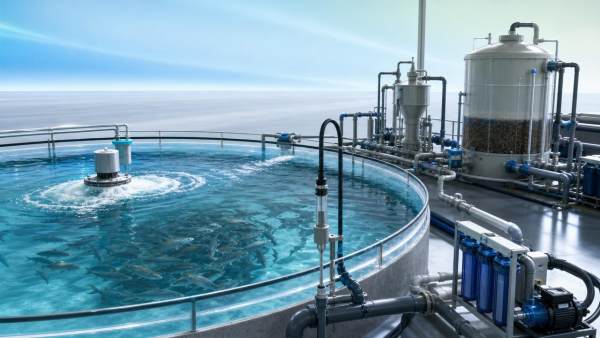
In aquaculture & fishery projects, water control is often the hidden variable that decides whether a system scales or fails. Biological performance, mechanical reliability, and regulatory compliance all depend on stable hydrodynamics, treatment capacity, and monitoring discipline. When aquaculture & fishery teams underestimate water control, losses appear first as slow growth, disease pressure, oxygen stress, and unpredictable operating costs. Soon after, those issues become structural failures that damage yield, delay expansion, and erode capital efficiency.
This article explains why aquaculture & fishery projects fail in water control and provides a practical checklist for evaluating vulnerable points. The goal is not abstract theory. It is to identify the repeat failure patterns that undermine ponds, tanks, raceways, recirculating systems, and hybrid installations.
Why checklist-based water control decisions matter
Water control problems rarely start with one dramatic mistake. In most aquaculture & fishery projects, failure emerges from several small gaps interacting at the same time. A pump may be undersized, a sensor poorly calibrated, and a solids loop badly placed.
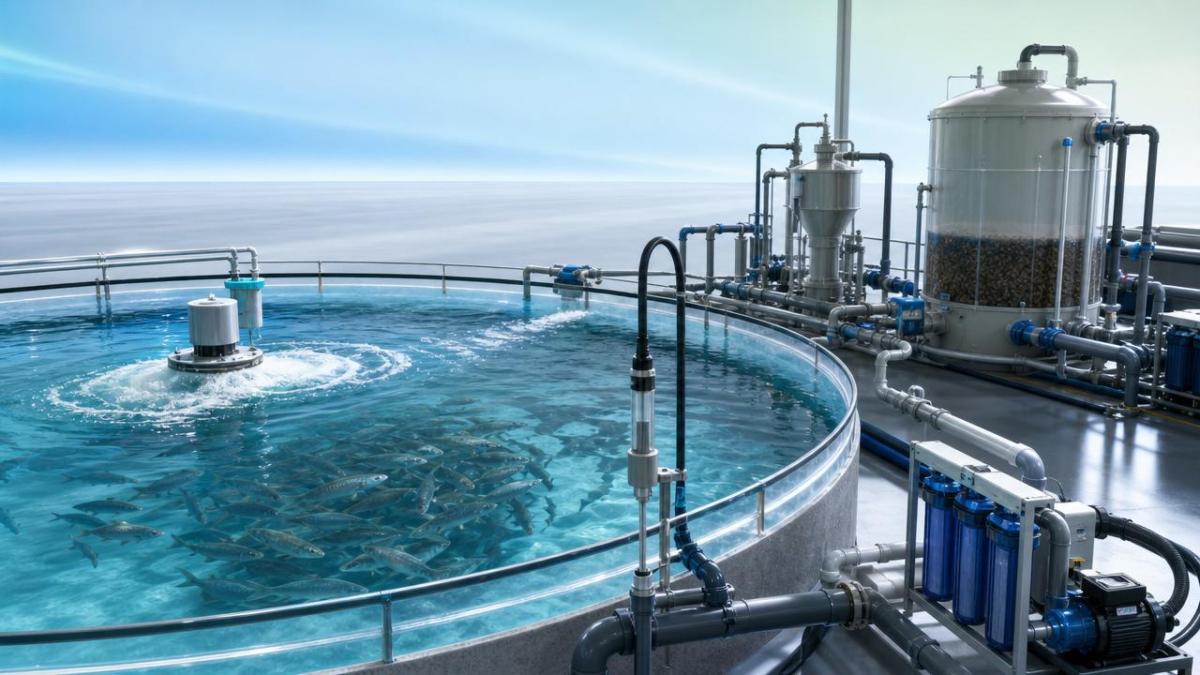
Because these systems combine biology, chemistry, fluid movement, and equipment duty cycles, teams need a checklist approach. Structured review reduces blind spots, supports documentation, and improves decisions before construction, commissioning, or scale-up.
For aquaculture & fishery operations, the cost of missing one water control factor is rarely isolated. It typically cascades into feed conversion loss, higher mortality, emergency chemical use, labor overload, and non-compliance with discharge or welfare limits.
Core water control checklist for aquaculture & fishery projects
- Verify hydraulic design against real biomass density, not only initial stocking assumptions, so circulation remains effective during peak feeding, waste output, and thermal stress periods.
- Match pump curves to pipe length, elevation change, valve loss, and future fouling resistance, because nominal flow ratings often collapse under actual operating conditions.
- Map dissolved oxygen distribution across the full system, including corners, bottom zones, and transfer points where stagnant water can form hidden low-oxygen pockets.
- Check solids capture efficiency at the point of generation, since delayed removal allows fine particles to break down, consume oxygen, and increase ammonia loading.
- Validate biofiltration capacity for normal and surge loads, especially after grading, feed changes, medication events, or temperature shifts that alter nitrification performance.
- Calibrate sensors on a fixed schedule and compare them with manual testing, because poor probes create false confidence in pH, oxygen, ORP, salinity, and temperature readings.
- Audit alarm logic and response protocols so operators react to trend deviation early, rather than waiting for absolute threshold failure during night or weekend hours.
- Review water source variability across seasons, because incoming turbidity, pathogens, mineral content, or salinity shifts can invalidate a previously stable treatment design.
- Separate redundancy from duplication by protecting critical control points, including aeration, backup power, oxygen supply, and control system communications.
- Document cleaning intervals for pipes, diffusers, screens, and sensors, since biofouling steadily reduces water control precision before obvious failure appears.
Where aquaculture & fishery water control fails most often
Poor circulation design
Many aquaculture & fishery systems are designed around target volume turnover rather than actual flow behavior. That is a major error. Water may circulate on paper while dead zones persist near tank bottoms, raceway ends, or pond edges.
Once dead zones develop, solids settle, bacterial load rises, and oxygen gradients widen. The visible symptoms may look biological, but the root cause is hydraulic. Without flow mapping and in-system verification, the problem often survives multiple corrective attempts.
Unstable water quality monitoring
A surprising number of failures come from data that looks precise but is operationally wrong. Sensors drift, probes foul, and installation points fail to represent the most stressed water zone. In aquaculture & fishery environments, this creates dangerous lag between condition change and response.
Teams may believe dissolved oxygen is safe because one probe reads normally near an inlet. Meanwhile, another part of the system experiences repeated nighttime depletion. Monitoring architecture matters as much as the instrument itself.
Undersized treatment capacity
Water treatment components are often specified for average conditions. Aquaculture & fishery projects do not fail under average conditions. They fail during biomass peaks, hot weather, heavy feeding, disease response, or temporary power and labor disruption.
When filtration, aeration, degassing, or disinfection lacks surge capacity, the system enters a compounding stress cycle. Fish weaken, feed intake changes, waste chemistry shifts, and recovery becomes more expensive than original oversizing would have been.
Scenario notes across common operating models
Pond-based systems
In ponds, water control failure often hides behind natural variability. Wind direction, thermal layering, runoff, and sediment accumulation can change oxygen distribution quickly. A pond may appear resilient while suffering chronic bottom-water deterioration.
For aquaculture & fishery pond operations, aerator placement and sludge management are more decisive than many planning models assume. Circulation patterns must be observed under real biomass and weather conditions.
RAS and tank systems
In recirculating systems, water control failure usually comes from complexity rather than scarcity. A small mistake in sensor logic, foam fractionation, carbon dioxide stripping, or biofilter loading can affect the whole loop.
Aquaculture & fishery RAS projects require tighter commissioning discipline. Each subsystem must be stress-tested under realistic loading. Paper design values are not enough once solids, temperature, and live biomass interact.
Open-water and flow-through sites
Flow-through sites can look simpler, but water control still fails through intake variability, fouling, pathogen transfer, and discharge limits. Abundant water does not guarantee controllable water.
In these aquaculture & fishery settings, upstream environmental change must be treated as an engineering variable. Intake protection, contingency bypass planning, and monitoring of source-water swings are essential.
Commonly overlooked risks
- Ignoring startup biology, which leaves biofilters immature when stocking or feed rates rise faster than nitrifying communities can stabilize.
- Placing sensors for convenience instead of representativeness, producing clean data from easy locations while stressed areas remain unmeasured.
- Treating maintenance as separate from water control, even though fouled diffusers and clogged lines directly change oxygen transfer and circulation.
- Assuming backup power alone solves resilience, while forgetting valve position, automation reboot sequence, and oxygen reserve duration.
- Scaling stocking density before validating water treatment response, causing control margins to disappear long before structural limits are reached.
Each of these risks appears minor in isolation. In practice, they are common precursors to major aquaculture & fishery losses. Water control failure is often cumulative, not sudden.
Practical execution steps
Start with a water balance and mass loading review. Confirm where oxygen enters, where solids accumulate, where ammonia spikes, and where emergency capacity becomes thin. This baseline prevents blind equipment upgrades.
Then run a failure-mode audit. Test pump loss scenarios, blocked screens, sensor drift, feeding surges, and nighttime oxygen demand. In aquaculture & fishery engineering, stress testing reveals weaknesses that normal operation hides.
Finally, convert observations into operating thresholds. Define intervention points for dissolved oxygen, carbon dioxide, suspended solids, ammonia, temperature, and flow variance. Clear action limits create faster, more consistent recovery.
Conclusion and next actions
Aquaculture & fishery projects fail in water control when design assumptions, monitoring discipline, and real biological loads stop matching each other. The result is not only poor water quality. It is unstable production economics and avoidable operational risk.
Use the checklist above to review circulation, treatment sizing, sensor reliability, source-water variability, and redundancy logic. Then validate those findings under realistic operating stress. In aquaculture & fishery systems, strong water control is not a support function. It is the foundation of survival, compliance, and scalable output.
Related Intelligence
- RAS SystemsSustainable Aquaculture Practices That Cut Feed Waste and Protect Fish Farm Water QualitySustainable aquaculture for fish farms: reduce feed waste, protect water quality, and build resilient, efficient systems with practical strategies.
- RAS SystemsDrum Filter System Price: How Flow Rate, Micron Rating, and Automation Affect CostDrum filter system price depends on flow rate, micron rating, automation, materials, and lifecycle costs. Compare quotes confidently and choose the right system.
- RAS SystemsHow to Specify Large-Scale Fish Farming Equipment for High-Output RAS ProjectsLarge scale fish farming equipment guide for high-output RAS projects—specify tanks, filtration, oxygen, automation, and redundancy for reliable growth.
The Morning Broadsheet
Daily chemical briefings, market shifts, and peer-reviewed summaries delivered to your terminal.
