

The Authority in Global Agricultural Chemistry & Bio-Resources
How to Choose Milling Machinery for Grain Processing by Capacity, Grain Type, and Output Quality
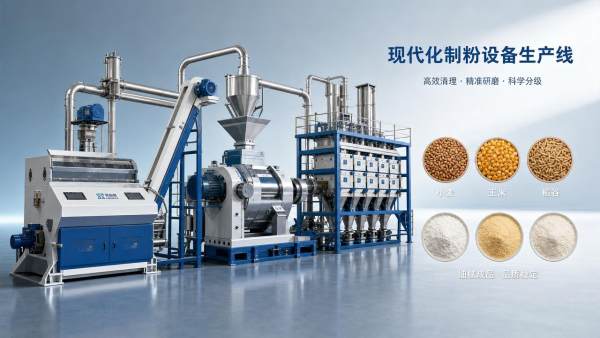
Choosing milling machinery for grain processing is a strategic equipment decision, not a simple comparison of hourly output. Capacity, grain type, and output quality interact with operating cost, maintenance demand, compliance risk, and product positioning. In feed, flour, and industrial grain applications, the right system supports stable throughput and consistent particle performance, while the wrong one creates waste, downtime, and uneven quality that is expensive to correct later.
Why the selection process has become more demanding
Across primary processing industries, equipment choices are being judged against tighter cost controls and higher traceability expectations. Grain processors are under pressure to keep lines flexible, document performance, and protect margins even when raw material quality shifts between seasons or suppliers.
That context matters because milling machinery for grain processing sits at the center of product conversion. It influences extraction rate, granulation consistency, energy use, dust generation, sanitation routines, and downstream packaging or blending stability.
For editorial platforms such as AgriChem Chronicle, this topic fits a broader industrial pattern. Buyers are no longer assessing machinery in isolation. They are comparing technical fit, supply chain transparency, service depth, and long-term operational resilience.
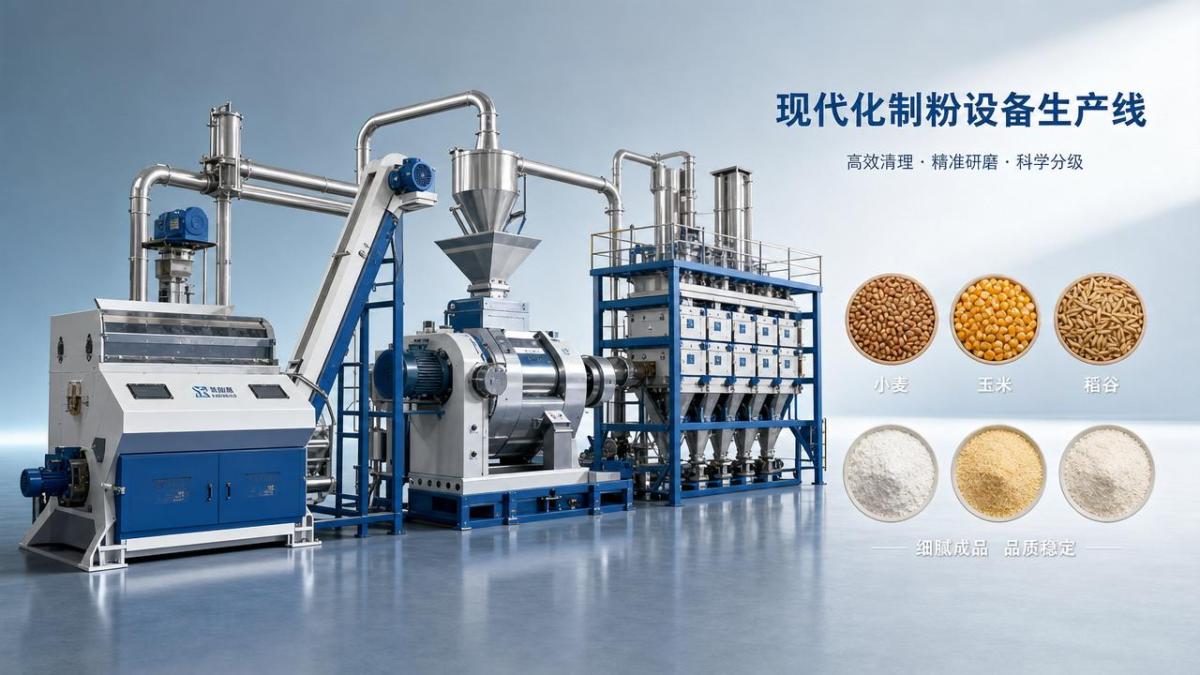
A useful starting point is to view milling equipment as part of a process system. The mill, feeder, cleaner, aspiration unit, separator, and control interface must work together under real production conditions.
What milling machinery for grain processing actually includes
The term covers several machine types, each suited to different grain structures and finished product targets. Common examples include hammer mills, roller mills, stone mills, pin mills, impact mills, and complete milling lines with cleaning and grading stages.
Hammer mills are often chosen for feed and coarse reduction. Roller mills are widely used where controlled particle size and flour quality matter. Specialty systems may be needed for oilseeds, legumes, or heat-sensitive grains.
In practice, milling machinery for grain processing should be evaluated by the performance of the full line rather than the machine name alone. A high-spec mill cannot compensate for poor conditioning, inconsistent feeding, or weak separation.
Core machine categories at a glance
Capacity should be matched to real production behavior
Capacity is often the first filter, but nameplate capacity can be misleading. Milling machinery for grain processing may perform very differently when grain moisture, cleanliness, hardness, or target fineness changes.
A line rated for one grain at a coarse grind may fall well below expectation when used for fine flour or dense kernels. That is why actual operating capacity matters more than brochure capacity.
It helps to assess capacity across three layers. The first is peak throughput. The second is stable daily throughput. The third is usable annual throughput after stoppages, cleaning, maintenance, and recipe changes.
Under-sizing creates bottlenecks. Over-sizing can be just as inefficient, especially when mills operate far below their optimal load range and produce unstable particle distribution.
Questions that sharpen capacity evaluation
- What is the required output per hour, shift, and season?
- How often will the line switch between grain types or grind targets?
- What feed consistency is available from upstream cleaning and storage?
- How much buffer is needed for future demand growth?
- Can utilities support full-load operation without hidden constraints?
Grain type changes the equipment logic
Not all grains fracture in the same way. Wheat, maize, barley, rice, sorghum, oats, and pulses each behave differently under compression, shear, and impact. Those differences affect mill design, roll configuration, screen selection, and wear rate.
For example, maize often demands robust reduction and careful heat control. Wheat flour lines depend more heavily on staged break and reduction passages. Oats and barley may call for attention to husk handling and aspiration efficiency.
When grain sourcing is variable, flexibility becomes important. Milling machinery for grain processing should tolerate reasonable shifts in kernel hardness, moisture, and impurity levels without sharp losses in quality or output.
This is also where supplier testing data matters. Pilot results based on actual grain samples reveal more than generic claims, especially for mixed sourcing regions or export-oriented operations.
Typical grain-specific considerations
Output quality is more than particle size
In many purchasing decisions, output quality is underestimated until trial production begins. Yet the value of milling machinery for grain processing is often measured by how predictably it delivers the required finished product specification.
Particle size distribution is important, but it is only one part of the picture. Ash content, starch damage, bran carryover, color, bulk density, fines ratio, and temperature rise may all influence commercial acceptability.
For feed applications, consistency affects mixing, pellet quality, and animal performance. For flour, it affects baking behavior and brand reliability. For industrial starch or ingredient production, it shapes process yield downstream.
A lower-cost machine can become expensive if it produces variable output that requires extra rework, screening, blending, or customer concessions.
Useful quality checkpoints
- Target particle distribution under normal load conditions
- Temperature rise during continuous operation
- Repeatability across different grain lots
- Ease of calibration and adjustment
- Compatibility with downstream conveying, mixing, or packing
Operational details often decide long-term value
The best milling machinery for grain processing is not always the machine with the most advanced specification sheet. Long-term value often comes from practical details that support daily reliability.
Wear parts availability is one example. Another is cleaning access. Dust control, energy efficiency, noise level, automation quality, and local service response can all shift total cost of ownership.
Documentation also matters. Technical drawings, test reports, maintenance schedules, and validation records improve comparison quality and reduce uncertainty during installation and acceptance.
This is consistent with the wider standards-driven environment covered by AgriChem Chronicle. In regulated and export-facing sectors, equipment credibility is increasingly linked to traceable data, not sales language alone.
A practical framework for comparing options
A structured comparison process usually produces better outcomes than feature-by-feature browsing. The goal is to separate essential process fit from attractive but non-critical extras.
Begin with the grain profile and finished product requirement. Then map realistic throughput, quality tolerances, utility limits, sanitation needs, and service expectations. Only after that should capital cost be weighed properly.
When comparing milling machinery for grain processing, a short technical matrix can keep the evaluation grounded in measurable conditions rather than broad claims.
- List the main grains, moisture range, and impurity profile.
- Define the acceptable output range, not only the ideal target.
- Request performance data under comparable operating conditions.
- Check spare parts lead times and commissioning scope.
- Review expansion options if volume or product mix may change.
Where to focus next
A sound decision on milling machinery for grain processing usually starts with a clearer internal brief. That brief should connect capacity targets, grain characteristics, output quality expectations, and lifecycle operating conditions.
From there, the next step is to narrow the field using verifiable trial data, process documentation, and realistic service support criteria. In most cases, that approach leads to better equipment alignment than selecting by price or nominal throughput alone.
When the comparison is disciplined, milling machinery for grain processing becomes easier to judge as a business asset. It is no longer just a machine purchase, but a decision about quality stability, operational control, and future processing flexibility.
Related Intelligence
- Milling MachineryChanging Hammer Mill Screens: Particle Size Control and DowntimeIs it easy to change the screen or adjust the output size of the hammer mill? Discover practical tips for smoother screen changes, consistent particle size, and less downtime.
- Milling MachineryHow Should Milling Machinery Be Maintained to Extend Its Service Life?Learn how to maintain processing machinery to extend service life with practical milling maintenance tips on cleaning, lubrication, and wear checks to reduce downtime.
- Milling MachineryWhat Is the Difference Between Primary and Secondary Grain Processing?What is the difference between primary and secondary grain processing? Compare key operations, equipment needs, and quality risks to choose the right investment for your business.
The Morning Broadsheet
Daily chemical briefings, market shifts, and peer-reviewed summaries delivered to your terminal.
