

The Authority in Global Agricultural Chemistry & Bio-Resources
China-Europe Rail Corridor Tops 2,000 Trains
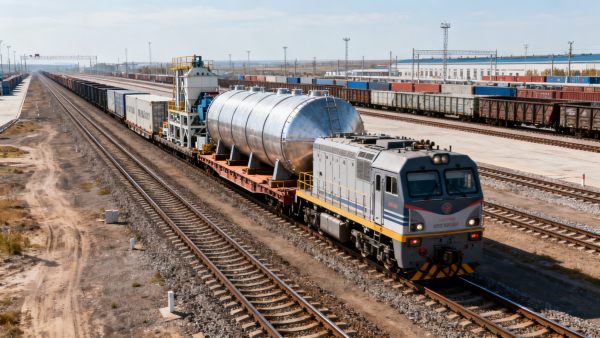
The timing of the underlying event is not explicitly stated in the provided information, but as of June 3, 2026, annual traffic on the central China-Europe rail corridor via Mongolia and Russia had exceeded 2,000 trains, up 37% year on year. For exporters of Grain Silos & Storage systems and Milling Machinery, this is worth watching because oversize cargo trains are taking a larger share of the route, while the corridor is described as faster than traditional sea freight and unaffected by the Red Sea crisis. That combination matters most for delivery planning, route selection, and customer commitments in Eastern Europe, Central Asia, and Black Sea coastal markets.
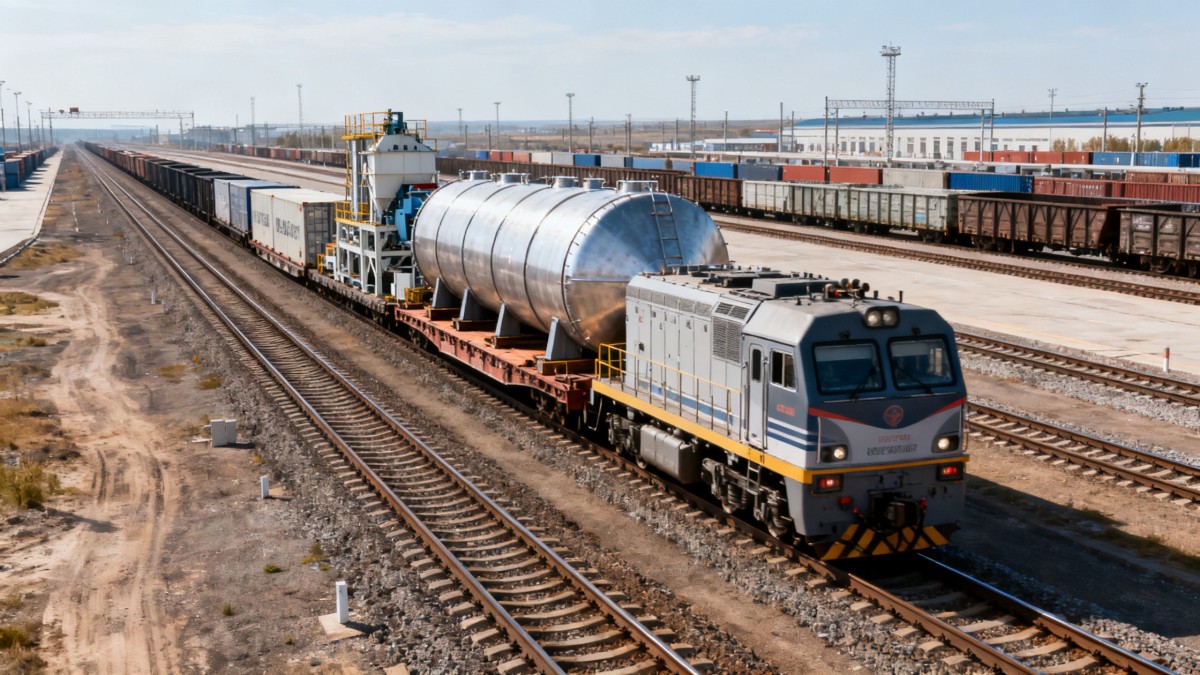
A rail route gaining weight in heavy equipment shipments
According to the provided summary, the central China-Europe rail corridor running through Mongolia and Russia had handled more than 2,000 trains for the year by June 3, 2026. The reported volume represents a 37% increase year on year.
The same information states that special trains carrying oversize cargo, including grain storage equipment and large flour milling units, accounted for 28% of traffic on this corridor. It also states that the route shortens transit time by 15 to 20 days compared with traditional sea transport.
The corridor is further described as not being affected by the Red Sea crisis and as becoming a core overland route for heavy equipment exports such as Grain Silos & Storage and Milling Machinery to Eastern Europe, Central Asia, and Black Sea coastal countries.
Why different market participants are watching this corridor
Exporters balancing lead time and route reliability
From an industry perspective, exporters of grain silos, storage systems, and large milling lines may be directly affected because these product categories often involve bulky or oversize cargo movements. The main impact is likely to be felt in shipment scheduling, customer delivery commitments, and route allocation decisions. What deserves closer attention is whether the corridor continues to support this higher share of oversize train traffic in practice.
Manufacturers managing project-based deliveries
For equipment manufacturers, the relevance is not only transport speed but also delivery stability for large, project-oriented orders. Analysis shows that when a route is presented as faster than sea freight and insulated from Red Sea disruption, production release timing, packing arrangements, and outbound coordination may need to be aligned more closely with rail capacity and handling requirements.
Supply chain service providers coordinating complex cargo
Rail operators, freight forwarders, and logistics service providers may see the most immediate operational implications in cargo organization, documentation flow, and handover coordination for oversize shipments. Observably, the rising share of special trains suggests that execution capability for non-standard cargo could become a more visible differentiator, especially for shipments moving toward Eastern Europe, Central Asia, and Black Sea coastal destinations.
Buyers and project owners focused on delivery certainty
Procurement teams and end users in destination markets may not control route choice directly, but they are likely to feel the effects through installation timelines, project sequencing, and acceptance planning. What deserves closer attention is whether suppliers begin presenting this corridor more frequently as a delivery option for heavy agricultural processing and storage equipment.
Practical points companies should track now
Separate route availability from route suitability
Analysis shows that a corridor can post strong traffic growth without that automatically meaning every shipment is easy to place. Companies dealing in Grain Silos & Storage or Milling Machinery should pay close attention to whether their cargo dimensions, handling needs, and documentation requirements align with actual rail execution conditions for oversize loads.
Recheck delivery promises market by market
Because the provided information links this corridor to Eastern Europe, Central Asia, and Black Sea coastal countries, exporters should review customer-facing lead times in those markets carefully. The key issue is not only the reported 15 to 20 day advantage over sea freight, but how that advantage is reflected in contract timelines, factory dispatch windows, and consignee coordination.
Watch for changes in official wording and operating practice
Observably, there can be a gap between a route being described as a core channel and the day-to-day conditions faced by shippers. Companies should therefore monitor subsequent official statements, operational notices, and service updates related to the central corridor, especially where oversize cargo handling or train availability is concerned.
Prepare customer communication and contingency options
For sales, logistics, and project teams, the practical task is to keep routing discussions grounded in confirmed shipment conditions rather than assumptions. That includes preparing supporting documents, validating fulfillment cycles, and maintaining alternative delivery discussions where customer projects are sensitive to timing.
What this signal likely means at this stage
Analysis shows that this development is more meaningful as a logistics signal than as a standalone traffic milestone. The increase in annual train volume and the higher share of oversize cargo suggest that the corridor is becoming more relevant to heavy equipment exporters, particularly those serving agricultural storage and milling projects.
At the same time, it is more appropriate to understand this as an evolving industry dynamic rather than a fully settled outcome. The provided information indicates stronger usage and clearer positioning for the route, but continued observation is still needed before treating it as a universal solution across all shipments and destination markets.
How to read the update without overextending it
The most balanced reading is that the central China-Europe rail corridor is gaining practical importance for Grain Silos & Storage and Milling Machinery exports where delivery time and route resilience matter. For the industry, the key takeaway is not simply that train counts are rising, but that heavy and oversize equipment is taking a more visible place within that growth.
Current signals point to a meaningful shift in logistics preference for certain cargo types and destinations, but not to a definitive conclusion for every exporter or project. It is more appropriate to understand this as a strong operational indicator and a trend that merits continued verification.
Basis of this article and what still needs verification
This article is generated based on the user-provided news title, event timing note, and event summary. The specific official source link was not provided in the input, so the underlying details still require ongoing verification against source materials.
For this type of development, commonly relevant source categories may include official transport announcements, company disclosures, industry association updates, authoritative media reports, and related operational documents. Follow-up attention should focus on whether later official updates add more detail on route use, cargo categories, operating conditions, or market coverage.
Related Intelligence
- Grain Silos & StorageIraqi Trade Minister Reviews Grain Silo Project at Bühler HeadquartersIraq grain silo project: Trade Minister Atheer Daoud reviews progress at Bühler headquarters. Explore how five planned silos could expand grain storage and support food security.
- Grain Silos & StorageGrain Silos vs. Flat Storage: Comparing Usable Capacity and Space NeedsExplore a category comparison by storage capacity for grain silos vs. flat storage. Compare usable tonnes, site space, and operating needs to choose the right system.
- Grain Silos & StorageHow Modular Feed and Grain Systems Support Scalable Storage and Processing ExpansionModular feed and grain systems enable smarter, scalable expansion across storage, conveying, processing, and loadout. Discover how to eliminate bottlenecks, protect future capacity, and keep operations moving.
The Morning Broadsheet
Daily chemical briefings, market shifts, and peer-reviewed summaries delivered to your terminal.
