

The Authority in Global Agricultural Chemistry & Bio-Resources
How Remote Monitoring Helps Feed Mills Prevent Downtime and Control Production Quality
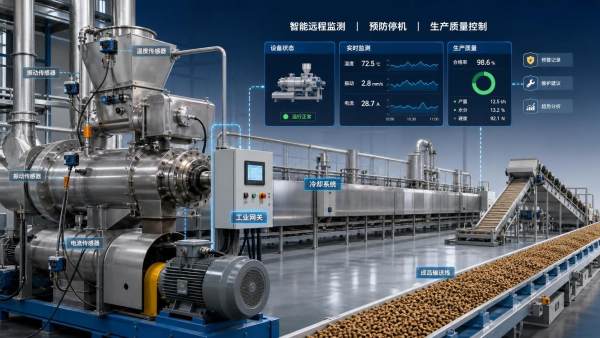
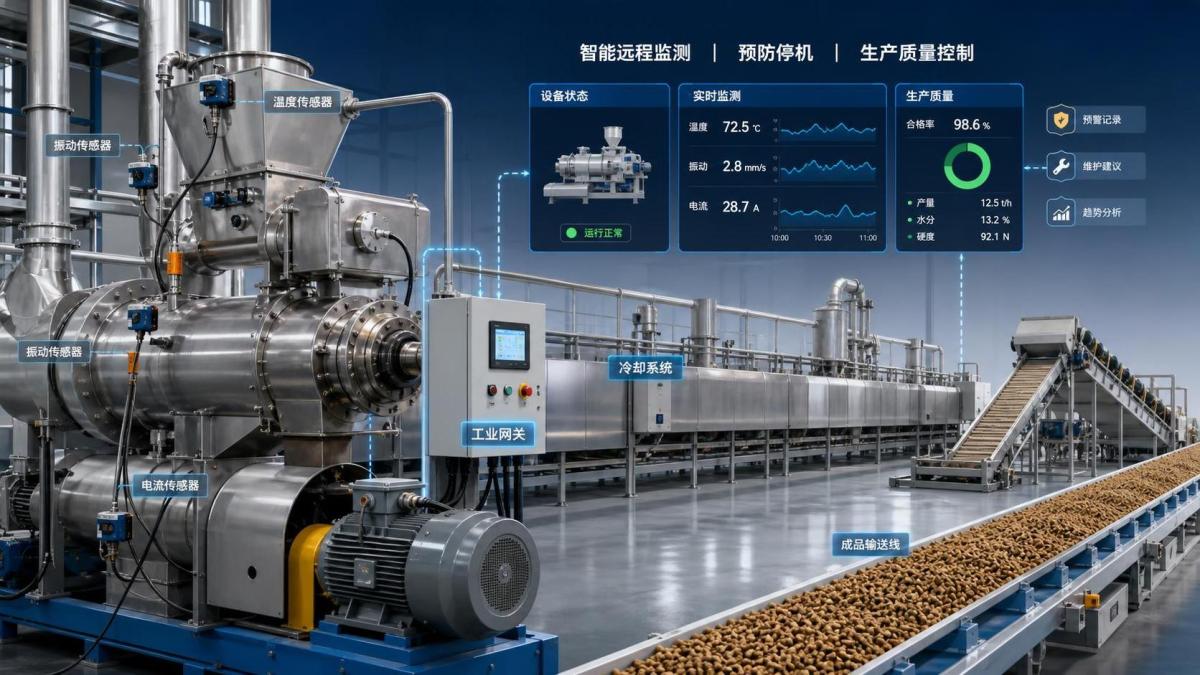
Unplanned stoppages in a feed mill rarely begin as a complete equipment failure. A pellet mill may show a small rise in main-motor load, a hammer mill may require slightly longer grinding time, or a conveyor drive may cycle at an unusual temperature before the line stops. Remote monitoring feed milling equipment turns these early deviations into usable operating signals. When the right measurements are collected, compared with the intended recipe and reviewed in context, maintenance work can be scheduled before a weak component affects throughput, pellet quality, or dispatch commitments.
The practical value comes from linking asset condition to the process sequence. Grinding, batching, mixing, conditioning, pelleting, cooling, crumbling, screening, and finished-feed handling are interdependent. A fault at one stage can appear elsewhere as poor physical quality, unexpected rework, high energy draw, or delays in loading. Remote visibility should therefore be designed around production consequences rather than around a collection of disconnected sensor readings.
Start with the failure paths that interrupt production
A monitoring scope should begin with a line-by-line review of how production can be constrained. The objective is not to instrument every motor immediately. It is to identify assets where a developing fault can stop material flow, compromise a batch, create a sanitation problem, or force a prolonged restart.
For a typical pelleting line, these points often include the grinder drive and screen condition, dosing equipment, mixer discharge, conditioner steam supply, pellet mill main drive, die and roller assembly, cooler fans, and the conveyors that carry finished material to storage. In a mash line, scale performance, screw conveyor condition, mixer uniformity indicators, and bin level reliability may matter more than pellet durability variables. The priority changes with the process, the feed formula, and the available redundancy.
Each monitored point needs a defined decision behind it. A bearing-temperature signal is useful when a rising trend triggers inspection, lubrication review, alignment verification, or a planned replacement window. It has limited value when it merely creates an alarm that no one can interpret during production. The same principle applies to vibration, current draw, speed feedback, pressure, differential pressure, moisture, level, and steam parameters.
Criticality should also account for restart time. A low-cost sensor on a difficult-to-access elevator head bearing can be more useful than an elaborate measurement package on a drive that can be exchanged within a short planned pause. Spare-part lead time, lifting access, lockout requirements, and the need to empty process equipment before repair all influence monitoring priorities.
Build a signal model around the material path
Raw-material variation can resemble mechanical deterioration unless process data is interpreted with care. Corn, wheat, soybean meal, bran, mineral premixes, fats, and liquid additives differ in bulk density, moisture, particle behavior, and flow characteristics. A higher grinder load may be entirely normal for a harder grain lot; a larger pellet mill load can follow a formula change, altered die specification, or different conditioning moisture. A useful monitoring arrangement records these production conditions alongside the equipment signals.
Batch and lot identifiers should be available at the same time as key trends. At minimum, the data model should distinguish recipe, production order, line, shift window, product form, and major raw-material changes. Where controls are available, it may also capture target throughput, actual feed rate, grinder screen size, die configuration, conditioner temperature, steam pressure, and cooler discharge temperature. This context prevents a maintenance alert from being treated as a defect when it is actually a predictable response to a legitimate operating change.
Time synchronization deserves attention during design and commissioning. If the historian, programmable logic controllers, drive monitors, laboratory records, and remote gateway use inconsistent clocks, it becomes difficult to connect an alarm with the relevant batch or event. A few minutes of timestamp drift can obscure whether a motor-load increase occurred before a feeder blockage, after a recipe transition, or during restart. Using a common time source and documenting the handling of communication outages makes later investigations more reliable.
Measurements that commonly reveal developing problems
- Electrical load and power quality: Current, kilowatts, power factor, voltage imbalance, and drive fault codes can expose overloaded grinders, restricted conveyors, slipping belts, abnormal pellet mill demand, or weak electrical connections. These readings need to be compared with rate and product conditions; load alone is not a direct measure of wear.
- Vibration and bearing temperature: Trend data from motor and gearbox bearings can indicate imbalance, misalignment, lubrication degradation, looseness, or bearing damage. Sensor mounting location and sampling method matter. A poorly mounted vibration sensor may produce changes caused by the mounting surface instead of the machine.
- Speed, position, and zero-speed feedback: These signals are particularly useful on elevators, drag conveyors, screws, rotary valves, and dosing systems. They can distinguish a commanded run state from actual material movement, reducing the risk of continuing upstream feed into a stalled transfer point.
- Process temperature, pressure, and moisture: Conditioner temperature, steam pressure, cooler discharge temperature, ambient conditions, and where applicable moisture measurements form part of pellet-quality control. Individual values have limited meaning without residence time, throughput, formula, and equipment condition.
- Level and flow confirmation: Bin level trends, weigh feeder deviations, flow switches, and mass-flow signals help locate bridging, rat-holing, feeder starvation, and transfer restrictions before they become a line-wide interruption.
Protect product quality without creating false confidence
Remote monitoring can tighten process control, but it does not replace physical sampling, laboratory testing, calibration, or sanitation procedures. A screen may report a stable motor load while its apertures are worn. A mixer may run for the programmed time while carryover from a previous formula remains in a discharge zone. A moisture value can be within its expected range even though sampling location, sensor fouling, or calibration drift has made the measurement unreliable.
The most useful arrangement connects live signals to quality-relevant boundaries. For pelleted feed, this can include a controlled relationship among grind size, conditioning temperature, retention time, steam condition, mill load, die condition, cooling behavior, and finished moisture. The relationship will differ by formulation. A high-fat ration, a fibrous product, and a feed with heat-sensitive ingredients may require different process windows. Limits should therefore be established from approved production practice and validated operating evidence, not copied across unrelated formulas.
Alarm design must separate protection trips from investigation alerts. Safety and equipment-protection trips need deterministic local control behavior; they cannot depend on a cloud connection or a remote dashboard. Investigation alerts can be less urgent, using rate-of-change logic, persistence periods, or deviations from a recipe-specific operating band. For example, a short current spike during a normal startup may not need action, while a gradual rise sustained through several runs could justify an inspection request.
Alarm flooding weakens response. When every fluctuation generates a notification, meaningful changes are buried among low-value messages. Rationalization should document the source tag, normal range, alarm threshold, delay, priority, expected response, escalation path, and reset condition. It should also specify which alarms are suppressed during cleaning, maintenance, startup, grade change, or known empty-run conditions. Suppression rules need auditability so that a legitimate fault is not silently hidden by an old maintenance setting.
Use remote access as an extension of local control, not a substitute
Remote dashboards are most effective when they present a limited set of decision-ready views. A line overview can show running state, bottlenecks, critical alarm status, material location, and current rate. A drill-down view can show motor load, vibration trend, temperature, speed feedback, and maintenance notes for a selected asset. A quality view can align process conditions with batch records and hold-status information. Displaying every available tag on one screen usually makes abnormal patterns harder to see.
Remote access permissions should be deliberately separated. Viewing data, acknowledging an alert, changing an alarm limit, modifying a setpoint, and issuing a start or stop command carry different operational risks. Control authority for start, stop, bypass, or recipe actions should remain governed by site procedures, physical safety interlocks, and clear handover rules. Network loss must leave the local process in a defined condition, with control functions continuing according to the approved local logic.
Cybersecurity is part of availability. A remotely connected monitoring system introduces gateways, user accounts, network paths, and software dependencies that require ownership. Segmenting industrial control networks, using named accounts rather than shared credentials, applying least-privilege permissions, maintaining secure remote-access methods, and recording configuration changes reduce avoidable exposure. Updates should be tested against compatibility requirements and scheduled so that a failed update does not coincide with a critical production period.
Commission the system against real operating conditions
Installation quality determines whether remote data can be trusted. Temperature sensors need appropriate contact and insulation from ambient heat sources. Vibration sensors need correct orientation, a rigid mounting point, and protection from washdown or impact. Level devices must be selected for the material and vessel geometry; dusty, low-density, or bridging ingredients can defeat an unsuitable technology. Cable routing should avoid electrical noise sources where possible, and enclosure ratings should suit dust, humidity, cleaning practices, and local temperature.
Before release, every signal should be tested from field device to displayed value and alarm response. This includes simulated high and low conditions, lost communication, power restoration, sensor disconnection, invalid reading behavior, and handback after maintenance. The commissioning record should identify sensor type, location, engineering units, scaling, calibration reference, alarm settings, installation date, and associated asset. Without this baseline, later troubleshooting becomes dependent on memory rather than evidence.
Baseline collection should cover representative recipes, normal startup, steady operation, planned shutdown, and cleaning transitions. A single shift of data is rarely enough to define normal behavior. Seasonal ambient changes, ingredient moisture, production rate, and wear progression can alter the expected profile. Trend limits may need refinement after sufficient observations, but revisions should be controlled and traceable rather than adjusted informally to silence repeated alarms.
Turn findings into maintenance work that can be closed
Monitoring becomes operationally useful when an abnormal trend produces a clear workflow. A condition alert should identify the affected asset, signal behavior, supporting trend, production context, and suggested inspection scope. The resulting work request should include the relevant safety isolation needs, access requirements, suspected parts, and a preferred maintenance window. When a task is completed, the record should capture the observed condition, corrective action, parts used, alignment or lubrication findings, and whether the signal returned to its expected pattern.
This feedback loop is necessary because the same symptom can have several causes. Elevated gearbox temperature may follow low lubricant level, overfill, viscosity mismatch, a blocked breather, high ambient temperature, coupling misalignment, or internal wear. Replacing a component without recording the actual cause only resets the trend temporarily and leaves the failure mode poorly understood.
Maintenance planning also benefits from comparing recurring alerts with production constraints. If a recurring feeder deviation happens only on a certain high-fiber formulation, the response may involve hopper geometry, agitation settings, feeder calibration, or formula handling characteristics rather than a standard motor repair. If a pellet mill load trend rises after a die change, die condition, roll adjustment, steam quality, and feed distribution may warrant review together.
Reliable remote monitoring is built through disciplined boundaries: meaningful measurements, accurate context, local protection independent of remote connectivity, and a documented response to each significant deviation. When those elements are in place, the system supports earlier intervention while preserving the process evidence needed to protect consistent feed production.
Related Intelligence
- Milling MachineryCan Agricultural Scientists Validate Grain Processing Machinery?Can agricultural scientists validate process machinery performance? Discover how grain equipment testing verifies throughput, quality, and efficiency before you invest.
- Milling MachineryGrain Processing Explained: From Cleaning and Milling to Finished Product QualityGrain Processing explained: discover how cleaning, conditioning, milling, and quality control turn raw grain into safe, consistent flour, feed, and food ingredients.
- Milling MachineryGerman Grain Processing Plants: Evaluating Automation and Energy-Efficiency UpgradesGrain processing Germany: evaluate automation and energy-efficiency upgrades to improve throughput, quality, safety, and lifecycle value.
The Morning Broadsheet
Daily chemical briefings, market shifts, and peer-reviewed summaries delivered to your terminal.
