

The Authority in Global Agricultural Chemistry & Bio-Resources
Urea Spike Pressures Feed Pellet Export Pricing
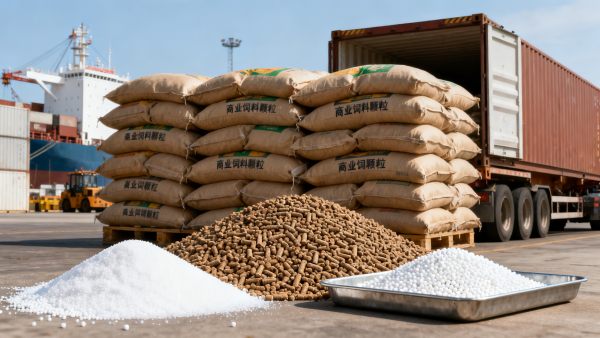
On 2026-02-28, the IEA’s Global Hydrogen Review 2026 brought a supply-chain disruption into sharper commercial focus for the feed sector: restricted passage through the Strait of Hormuz and production stoppages at urea plants in Iran and Qatar coincided with a sharp rise in global urea and methanol prices. For Commercial Feed Pellet producers, especially exporters using urea in formulations for aquaculture and ruminant feed, this is not just a raw-material story; it is a trade and execution issue tied to nutrient consistency, quotation validity, procurement timing, and customer review of cost assumptions.
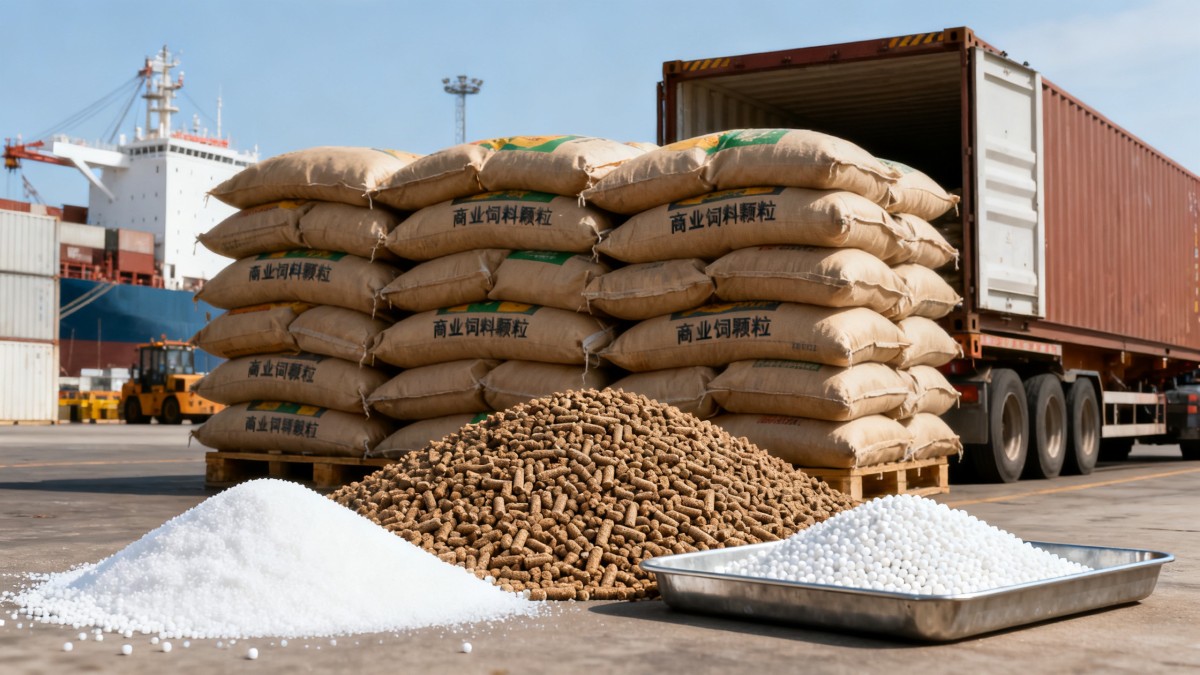
What the IEA report actually confirms
According to the IEA’s Global Hydrogen Review 2026, conflict in the Middle East at the end of February 2026 disrupted passage through the Strait of Hormuz. The report states that urea plants in Iran and Qatar stopped production. It also states that global urea prices doubled between January and May, while methanol prices rose by 60%.
The provided summary further confirms that urea is a key nitrogen-source additive in Commercial Feed Pellet. It also notes that some domestic export-oriented pellet plants have already received inquiries from customers in Southeast Asia and Latin America regarding nitrogen-content stability and the reconsideration of costs. The same summary indicates that this trend will continue to affect the international quotation window for urea-containing aquaculture and ruminant feed pellets.
Why the pricing issue is moving into trade execution
Export quotations are facing tighter review
From an industry perspective, exporters are likely to feel the first impact in quotation management rather than only in plant economics. When a key nitrogen input becomes more volatile, buyers may pay closer attention to whether offered prices still match the formulation basis initially discussed. What deserves closer attention is the possibility that quotation validity, adjustment clauses, and product specification language may receive more scrutiny during order negotiation.
Nutrient consistency is becoming a customer-side compliance question
Analysis shows that inquiries about nitrogen-content stability are commercially important because they touch on specification compliance, not only price. For pellet manufacturers, any product sold on a defined nutritional basis may face closer customer checks on whether the declared formulation and delivered batch remain aligned as input costs move. This places more pressure on technical documents, product specifications, batch records, and any test materials used to support export transactions.
Procurement and delivery teams may face a narrower operating window
Observably, procurement teams, production planners, and delivery coordinators could all be affected if urea-linked costs remain unstable during the quotation period for aquaculture and ruminant feed pellets. The practical issue is not simply paying more for one ingredient; it is managing the timing between raw-material purchasing, formula control, customer confirmation, and shipment execution. In cross-border business, that can also influence how companies review contract terms, delivery schedules, and supporting documents tied to the agreed product basis.
What companies should watch in the coming period
Recheck formulation-linked documents
Analysis shows that companies selling urea-containing pellets should closely review product specifications, nutrient declarations, internal formula references, and any customer-facing technical sheets. Where customers have raised nitrogen-content questions, the consistency between commercial descriptions and actual batch control deserves immediate attention.
Track how customers redefine cost discussions
It is more appropriate to understand current customer inquiries as an early execution signal rather than a final market-wide rule change. Even so, exporters should monitor whether buyers begin asking for revised pricing language, shorter quotation periods, or more detailed breakdowns supporting cost adjustments linked to urea and methanol movements.
Prepare for closer review of test and traceability materials
From an industry perspective, if price pressure continues, disputes are more likely to center on whether delivered goods match the agreed nutrient profile and supporting paperwork. Companies should therefore pay closer attention to test reports, batch traceability materials, and technical files that may be requested during delivery review or after-sales discussion.
Watch the international quotation window for sensitive formulas
Observably, the most immediate commercial sensitivity appears to sit in export windows for aquaculture and ruminant feed pellets that include urea in the formula. That does not by itself confirm a uniform market response, but it does suggest that businesses active in these product lines should watch changes in inquiry behavior, order pacing, and customer negotiation language very closely.
Why this looks more like an execution signal than a settled rule change
Analysis shows that this development should not be read as a newly published feed regulation or a formal certification rule by itself. Instead, it is better understood as a market and supply-chain event that can trigger stricter commercial interpretation of existing product commitments, especially around nutrient consistency, cost review, and delivery terms. What deserves closer attention is whether these customer questions begin to appear more often in technical specifications, procurement documents, or tender language.
Observably, the current information points to pressure building across procurement and export execution, but it does not yet establish a fully defined new compliance framework. For that reason, the sector still needs to watch how market participants translate raw-material volatility into document requirements, acceptance standards, and negotiation practice.
How the sector may best read the current development
The reported surge in urea and methanol prices matters to Commercial Feed Pellet because it affects a formulation-sensitive input that can influence export pricing and customer confidence at the same time. A neutral reading is that the event has already moved beyond raw-material volatility and into practical trade management for some exporters, as shown by customer inquiries on nitrogen stability and cost reconsideration.
At the current stage, it is more appropriate to understand this as a live execution signal with possible implications for procurement discipline, specification management, and cross-border delivery control, rather than as a completed and uniform rule change across the whole market. Continued observation is still necessary.
Basis of this article and points still requiring verification
This article is generated from the user-provided news title, event date, and event summary. The core factual basis cited here is the IEA’s Global Hydrogen Review 2026 as described in the provided input. Specific official source links were not provided in the input and still need to be verified on an ongoing basis.
For this type of development, relevant source categories usually include official notices, regulator releases, customs or trade authority information, industry association updates, standards organization documents, and reporting by established media. Further observation is still needed on any detailed policy interpretation, certification practice, tender-document changes, market feedback, and how companies implement related procurement, specification, and delivery decisions.
Related Intelligence
- Commercial Feed PelletFeed Production System Price Trends: Cost Drivers and Budgeting for New LinesFeed production systems price trend insights: compare cost drivers, automation, utilities, compliance, and total ownership costs to budget smarter for new feed lines.
- Commercial Feed PelletHow to Troubleshoot Common Feed Machinery BreakdownsHow to troubleshoot common feed machinery breakdowns with practical checks for blockages, pellet mills, mixers, motors, and preventive maintenance.
- Commercial Feed PelletHow Can Feed Pellet Quality Be Kept Consistent Across Batches?Learn how to ensure feed pellet quality consistency across batches with proven controls for ingredients, conditioning, milling, cooling, testing, and traceable process data.
The Morning Broadsheet
Daily chemical briefings, market shifts, and peer-reviewed summaries delivered to your terminal.
