

The Authority in Global Agricultural Chemistry & Bio-Resources
Micro LED Gains Export Relevance as Smart Greenhouse Bids Tighten
The timing of this development is not specified in the provided information, but the signal is clear: severe overcapacity in China’s electrolyzer manufacturing base is emerging alongside a new procurement requirement in smart agriculture projects, where AR-enabled visual environmental control interfaces are being written into tenders. For manufacturers, exporters, component suppliers, procurement teams, and delivery partners, the issue is no longer only about technology progress; it is also about how bidding rules, technical specifications, compliance documentation, and export readiness may reshape which products can enter projects and which suppliers can execute them.
What the confirmed information shows
According to the provided summary citing IEA data, China’s electrolyzer manufacturing capacity is expected to exceed 35 GW per year in 2025, while domestic orders stand at only 4.7 GW, indicating serious overcapacity. Against that backdrop, Ennostar and Saphlux are accelerating mass production of semipolar Micro LED technology with a focus on AR near-eye display applications.
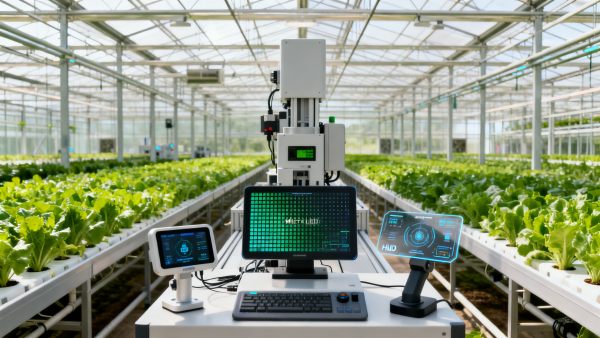
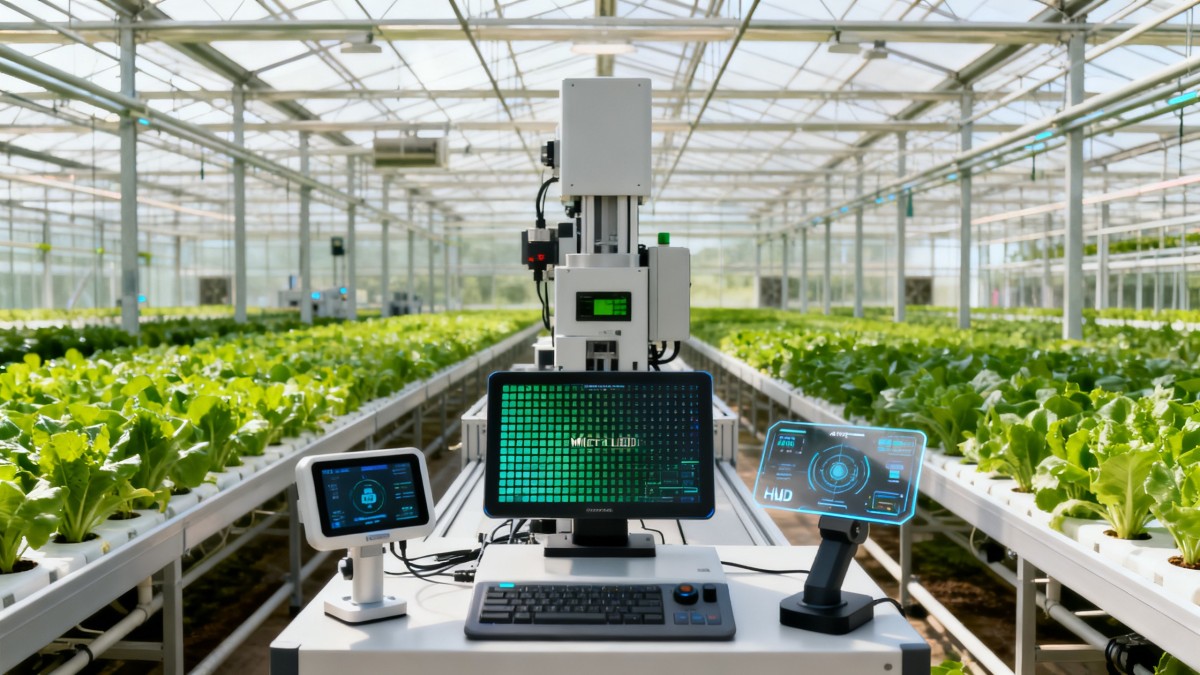
The same summary states that this technology is being introduced into Smart Greenhouse applications, including AR glasses for remote inspection, AI plant disease recognition terminals, and HUD interfaces for environmental regulation. It also states that newly built smart farming projects in Europe and the Middle East have listed “AR visualized environmental control interaction” as a mandatory tender requirement, creating a differentiated export entry point for Chinese suppliers.
Why procurement rules now matter more across the chain
For display and module manufacturers
These companies may be affected because the commercial value of Micro LED is no longer tied only to laboratory progress or consumer electronics narratives. From an industry perspective, once AR visualized control interfaces appear as mandatory bid conditions, suppliers must pay closer attention to whether their modules can align with project specifications, technical bid documents, and delivery expectations. The impact is likely to appear first in specification matching, document preparation, and product validation during pre-sales and tender participation.
For exporters targeting smart agriculture projects
Export-oriented firms may be affected because access to projects can increasingly depend on whether their product configuration matches mandatory interaction requirements rather than only price or basic hardware supply. Analysis shows that exporters should watch for changes in tender wording, technical annexes, and proof-of-compliance materials, especially where AR hardware, interface modules, and system integration are evaluated together as part of a project package.
For procurement and system integration teams
Procurement teams and integrators may be affected because mandatory interface requirements can alter supplier screening and component selection. What deserves closer attention is whether bid packages begin to require clearer technical documentation, interface compatibility statements, testing records, or after-sales support commitments for AR-enabled control modules. Even where formal certification details are not specified in the input, procurement-side compliance review is likely to become more document-driven.
For supply chain and delivery partners
Supply chain service providers and downstream delivery partners may be affected if project requirements shift from standalone equipment procurement to integrated interactive-control solutions. In practical terms, this can influence coordination of component sourcing, delivery sequencing, technical file handover, and post-delivery troubleshooting responsibilities, particularly when AR hardware is linked to inspection, disease recognition, and environmental control functions in one deployment context.
What companies should monitor now
Track mandatory language in bid documents
Analysis shows that the most immediate practical change is not a broad policy conclusion but a procurement signal. Companies should closely review whether “AR visualized environmental control interaction” appears as a mandatory condition, a scoring item, or a technical preference in project documentation, because each formulation changes the threshold for market entry and the structure of a compliant offer.
Prepare technical files around use-case alignment
Observably, suppliers involved in AR glasses, Micro LED display modules, AI recognition terminals, or HUD interfaces should be ready to organize technical descriptions, product specifications, testing materials, and interface documents around actual Smart Greenhouse functions. The provided information does not confirm a uniform execution standard, so companies should treat documentation readiness as a precaution rather than assume a settled compliance pathway.
Reassess export positioning under overcapacity pressure
From an industry perspective, severe electrolyzer overcapacity highlights a broader pressure on Chinese manufacturing to find differentiated overseas applications. For relevant suppliers, the key issue is not to assume immediate volume conversion, but to evaluate whether AR-enabled agricultural interaction modules can become a commercially viable export route when conventional domestic demand remains limited in adjacent manufacturing segments.
Plan for delivery and support expectations
What deserves closer attention is that project entry may depend not only on product availability but also on delivery coordination, technical support responsiveness, and traceable quality records. Because the input does not provide finalized enforcement details, companies should monitor how buyers and integrators translate mandatory interaction requirements into acceptance criteria, service obligations, or follow-up documentation requests.
How this signal is best understood at this stage
Analysis shows that this development is better understood as an execution signal from the market rather than as proof of a fully standardized regulatory framework. The confirmed facts point to a meaningful shift: a display technology advancing toward mass production is being linked to a bid-side requirement in Smart Greenhouse projects. At the same time, the available information does not establish a complete rulebook on certification, customs treatment, or uniform project acceptance standards, so continued observation remains necessary.
Observably, the combination of industrial overcapacity and stricter functional bidding requirements may push suppliers to compete through technical compliance and application fit rather than through output scale alone. That makes tender language, project specifications, and market feedback more important than broad narratives about technology commercialization.
A cautious reading of the market impact
The most reasonable conclusion at present is that the reported development marks a potentially useful export opening for Chinese suppliers with AR and Micro LED capabilities, especially where project owners treat interactive environmental control as a mandatory feature rather than an optional upgrade. It is more appropriate to understand this as an actionable market signal with compliance and procurement implications, not as a final rule settlement or a guaranteed demand outcome.
Basis of this article
This article is generated based on the user-provided news title, event timing, and event summary. The specific official source link was not provided in the input and still requires follow-up verification. For events of this kind, relevant source types typically include official notices, regulator releases, customs or trade authority information, industry association updates, standards documentation, tender materials, and reporting from established media outlets.
Further observation is still needed on detailed policy language, certification interpretations, tender document revisions, market feedback, and how companies actually implement compliance, delivery, and after-sales arrangements in response to these requirements.
Related Intelligence
- Smart GreenhouseSelecting Greenhouse Propagation Equipment for Hot, Humid Southeast Asian NurseriesGreenhouse propagation equipment Southeast Asia: discover how to select resilient irrigation, ventilation, benches, and automation for hot, humid nurseries.
- Smart GreenhouseWhat Are the Biggest Challenges in Agri-Tech Adoption in 2026?What are the biggest challenges in agri tech adoption for 2026? Explore cost, data, connectivity, skills, compliance, and ROI barriers.
- Smart GreenhouseHow Does Compact Greenhouse Technology Improve Yield in Space-Limited Growing Environments?Compact greenhouse technology improves yield in space-limited environments through better climate uniformity, vertical efficiency, precise irrigation, and repeatable crop performance.
The Morning Broadsheet
Daily chemical briefings, market shifts, and peer-reviewed summaries delivered to your terminal.
