

The Authority in Global Agricultural Chemistry & Bio-Resources
Livestock Feed Production Planning: How to Balance Output, Nutrition, and Cost?
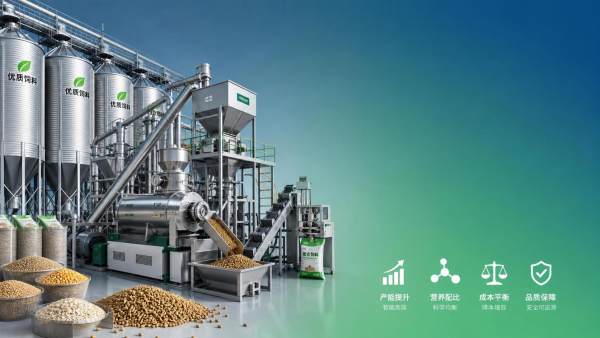
Where feed planning usually breaks first
Livestock feed production planning becomes difficult long before a mill runs out of capacity. In most plants, the first real constraint is the mismatch between formulation intent and factory reality. A nutrition team may approve a least-cost formula that looks efficient on paper, but the line may not be able to handle the inclusion rate of molasses, fats, fibrous meals, or fragile micronutrients without slowing throughput, increasing carryover risk, or forcing extra clean-down. That is where output, nutrient consistency, and cost stop being separate targets and become a single operating problem.
The planning conversation changes depending on whether the mill is serving poultry integrators, ruminant operations, swine units, or a mixed customer base. A broiler feed line running high volume starter and finisher diets behaves very differently from a plant producing multiple cattle concentrates with seasonal ingredient shifts. The production plan that works in one setting may be expensive or unstable in another, even if both facilities have similar nominal tons-per-hour ratings.
This is why experienced operators do not start with tonnage targets alone. They start with the question: what must remain stable, and what can move? In some plants, pellet durability and conditioner residence time are fixed because downstream farm performance is highly sensitive. In others, the priority is keeping a broad formula library available without building excess inventory. The best planning method is usually the one that respects those non-negotiables early, before purchasing, batching, and scheduling begin to pull in different directions.
The core of livestock feed production planning is not simply deciding what to make this week. It is deciding which constraints deserve to dominate the schedule on each run: nutrient accuracy, line efficiency, inventory exposure, contamination control, or delivered feed cost.
High-volume lines reward standardization, but only up to a point
In a high-output poultry or swine mill, the temptation is to compress the formula set as much as possible. Fewer changeovers, longer campaigns, simpler bin allocation, less flushing loss. There is sound logic in that. When operators can group feeds by similar raw material profiles, pellet diameter, medication status, and fat addition sequence, the line runs more predictably. Steam use stabilizes, die performance is easier to monitor, and the warehouse does not fill with small, awkward lots.
But standardization has limits. Once the planning team starts forcing unlike feeds into the same campaign logic, hidden costs appear. A formula with tighter amino acid tolerances or more heat-sensitive additives may need different conditioning intensity. A high-fat grower ration may challenge pellet quality in a way that a lower-fat maintenance feed does not. If those differences are ignored just to keep long runs intact, mills often pay through rework, higher fines, or field complaints that look nutritional but actually started as process drift.
Plants that handle this well usually separate “commercial similarity” from “process similarity.” Two products may be sold into the same market segment and still belong on different production days because they stress the line differently. That distinction matters more than many planning systems admit.
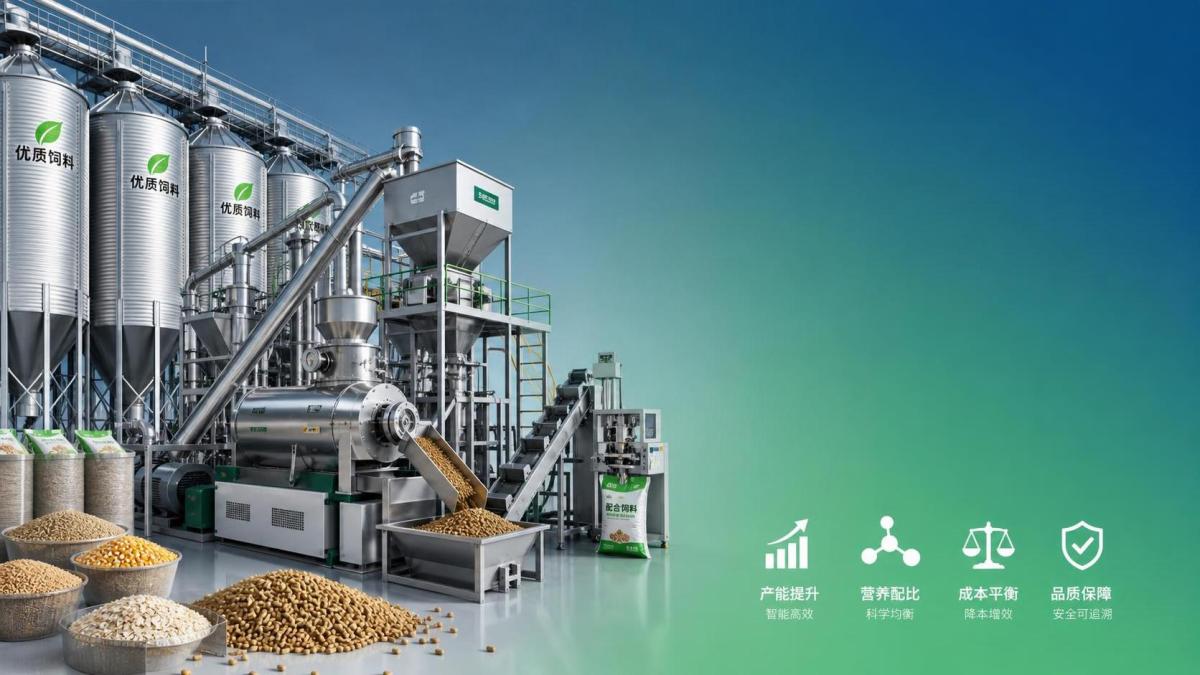
Another practical issue is bin architecture. A mill can only optimize sequencing if major ingredients, micro bins, and liquid systems support the formula mix being scheduled. When planners keep introducing short-run formulas that require uncommon premixes or low-use mineral packages, bin congestion becomes a serious limitation. The schedule may still look full on paper, but the plant loses time waiting on hand-adds, manual verification, and line clearance. The cost is rarely visible in the formulation model, yet it is very visible in labor and downtime.
Nutrition control is a planning issue, not only a laboratory issue
A common planning mistake is to treat nutritional consistency as something the quality team will catch after production. In reality, nutrient stability is shaped much earlier by ingredient selection, storage time, lot rotation, and run order. If a mill is using ingredients with wider variability in moisture, protein, or fiber, then production planning has to leave room for more frequent adjustments and more disciplined lot tracking. Otherwise, the plant may hit its tonnage target while drifting away from the formula’s intended feeding value.
This becomes more pronounced when procurement is under pressure. Lower-cost alternatives can be perfectly reasonable, but they often introduce processing consequences. Ingredients with inconsistent particle size may affect mixer performance and pellet quality. Variable moisture can change effective storage life and steam demand. Some by-products are economical only if the plant has the handling systems and process control to absorb that variability. Without those conditions, a cheaper ingredient may simply relocate cost from purchasing to manufacturing.
The stronger mills make formulation and scheduling talk to each other every day. If the nutrition team expects a formula to tolerate wider ingredient substitution, production should know which substitutions affect throughput, die wear, or liquid application. If the plant sees recurrent process instability around a specific formula family, nutrition should know whether the issue is ingredient chemistry, grind profile, or order sequencing. That feedback loop is often more valuable than chasing small theoretical savings in least-cost software.
Mixed-species and custom-order mills face a different planning burden
Not every facility can simplify around long campaigns. Regional feed mills serving multiple livestock categories often live with smaller batches, more formula variation, and tighter delivery windows. Here, the scheduling problem is less about maximum line speed and more about preserving control under complexity.
Medication status, allergen control, species-specific trace mineral limits, and customer-specific texture requirements can all influence run order. Mash, crumble, and pellet products may share upstream equipment while diverging later in the process. A planner who ignores these transitions will underestimate flushing requirements, packaging interruptions, and warehouse congestion. The result is usually a day that looks feasible at 8 a.m. and begins unraveling by midday.
For this type of operation, the most useful planning discipline is often segmentation rather than simplification. Group products by contamination risk, processing route, and service promise. A medicated line sequence should not be built the same way as a ruminant mineral schedule or a custom-texture horse feed run. Those distinctions are operational, not cosmetic.
By-products can improve economics, but only if the site can absorb them
Many feed businesses revisit the same question when raw material markets tighten: how far can by-products or alternative ingredients be pushed without destabilizing the mill? There is no universal threshold. The answer depends on storage conditions, unloading systems, climate, batch size, and how fast the plant can consume incoming material.
For example, ingredients with higher moisture or less predictable flow can be manageable in facilities with disciplined first-in, first-out control and suitable bins, but problematic in plants already struggling with bridging, residue buildup, or variable grinding performance. Fiber-rich materials may make sense nutritionally and economically in some ruminant feeds, yet they can still affect throughput if grinding and pelletizing systems are marginal. Wet or sticky ingredients can also complicate hygiene and housekeeping, which turns into a maintenance problem before it becomes a formulation problem.
The planning lesson is straightforward: evaluate an ingredient in the context of the full process path, not only its price and nutrient contribution. Purchasing savings are real only after the plant has absorbed handling losses, energy demand, potential quality drift, and any extra labor introduced by workarounds.
Inventory strategy often decides whether the plan is resilient
Some mills try to protect service levels by holding broad raw material coverage and large finished feed buffers. Others run lean and rely on precise inbound coordination. Both approaches can work, but neither solves planning weaknesses by itself.
Excess inventory is often mistaken for flexibility. In practice, it may hide poor formula rationalization, weak demand forecasting, or slow reaction to ingredient quality changes. On the other hand, aggressively lean inventories raise the penalty for late trucks, specification disputes, or sudden formula shifts. A plant with limited silo space and frequent customer-specific orders usually needs a more conservative sequencing approach than a dedicated mill producing a narrow product range.
What experienced managers watch closely is not just stock level, but inventory usability. Can the material be consumed in the next planned campaigns without compromising quality? Does the premix shelf life align with the real production calendar? Are there stranded partial lots that look available in the system but complicate batching in practice? These are ordinary questions on the floor, but they rarely appear clearly in high-level planning reports.
The costly mistakes are usually judgment errors
Most feed mills do not fail because they lack software or formulas. They struggle because someone made an incorrect planning assumption and nobody challenged it early enough. A line rated for a certain throughput is assumed to hold that rate across very different feed types. A cheaper ingredient is assumed to be operationally equivalent. A short production run is assumed to be harmless, even though it triggers flushing loss and scheduling friction across the entire shift.
A few questions usually expose weak assumptions quickly:
- Which formulas regularly reduce effective throughput, and is that caused by nutrition, particle size, liquid inclusion, or pellet mill behavior?
- Which ingredients create extra handling, sanitation, or storage pressure that is not visible in the purchase price?
- Where does the schedule rely on ideal timing from receiving, maintenance, or dispatch?
- Which customer commitments truly require high formula variety, and which persist only because legacy SKUs were never cleaned up?
Those questions are more useful than generic efficiency targets because they connect the plan to the conditions on site.
What a workable planning approach looks like
A workable approach to livestock feed production planning usually has three habits. It ties formulation choices to process behavior. It treats sequencing as a quality and cost tool, not just a scheduling task. And it forces inventory decisions to reflect what the plant can physically handle, not what planning software can theoretically optimize.
When reviewing a feed operation, it is often more revealing to map one unstable production week in detail than to study a month of summary metrics. Look at the formulas that caused slowdowns, the ingredients that needed manual intervention, the runs that required extra clean-out, and the orders that disrupted campaign logic. That is where the practical design of the system shows itself.
If output, nutrition, and cost seem to be fighting each other every day, the issue is rarely that the plant is chasing the wrong objective. More often, it has not decided which constraints deserve priority under specific operating conditions. Once that is made explicit, planning becomes less about compromise in the abstract and more about choosing the right trade-off for the feed, the factory, and the market being served.
Related Intelligence
- Commercial Feed PelletHow feed pellet machine wear rates vary with soybean meal inclusion and die temperatureFeed pellet machine die wear spikes with soybean meal—discover how real-time die temperature control cuts wear by up to 40%. Optimize now.
- Commercial Feed PelletHow to Build a Feed Mixing Plan That Improves Uniformity and Cuts WasteFeed mixing planning made practical: learn how to improve batch uniformity, reduce carryover, and cut feed waste with smarter sequencing, load control, and micro-ingredient handling.
- Commercial Feed PelletChina Beef Safeguard Notice Tightens Traceability Pressure on Feed Pellet ExportsChina beef safeguard notice may tighten traceability and GMP checks for feed pellet exports, raising compliance pressure and buyer scrutiny.
The Morning Broadsheet
Daily chemical briefings, market shifts, and peer-reviewed summaries delivered to your terminal.
