

The Authority in Global Agricultural Chemistry & Bio-Resources
India Sets New Label Rules for Imported Feed Pellets
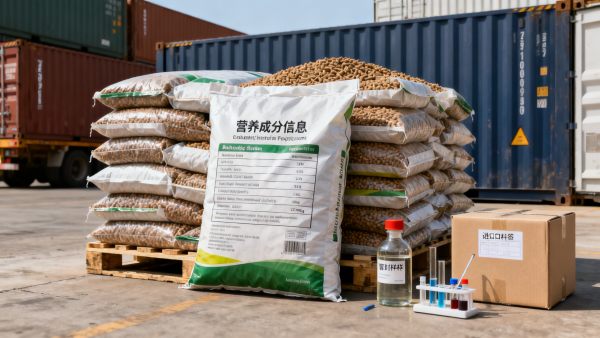
On June 26, 2026, India’s Ministry of Agriculture and Farmers Welfare issued a new compliance notice for imported Commercial Feed Pellet, combining bilingual labeling requirements with mandatory retesting before products can be sold. For exporters, importers, procurement teams, and supply chain service providers linked to shipments into India, the change is worth close attention because it affects customs clearance, labeling preparation, market entry timing, and landed cost from mid-July onward.
What the new import requirement includes
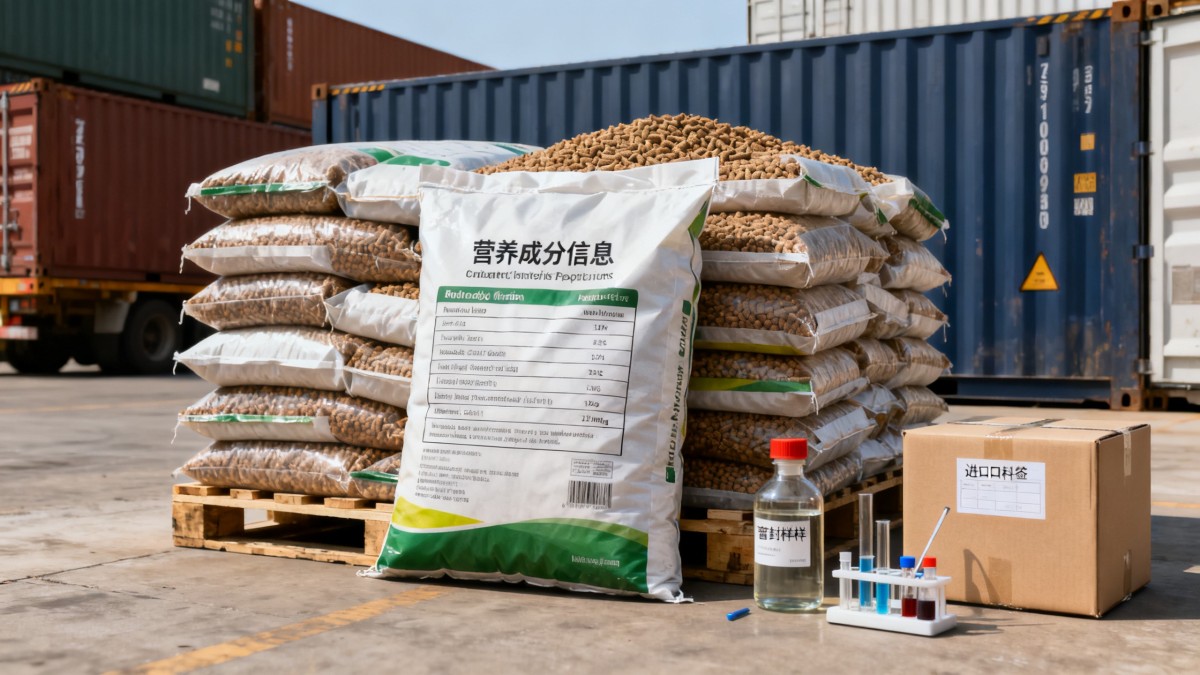
According to the information provided, MoA&FW released Notification GSR 482(E) on June 26, 2026. The rule requires all imported Commercial Feed Pellet to carry bilingual Hindi and English labeling. The label must state crude protein, lysine, methionine, the calcium-phosphorus ratio, and mycotoxin limit values.
The same notice also requires imported products to pass re-inspection by designated Indian laboratories before they can be placed on the market. The measure applies to major supplying countries including China, Vietnam, and Thailand. Based on the provided summary, the expected additional customs clearance cost is about USD 280 per container.
Where the pressure is likely to appear first
Export shipments facing a new market-entry checkpoint
From an industry perspective, exporters shipping Commercial Feed Pellet to India may be affected first because labeling now becomes part of market-access preparation rather than a downstream packaging detail. The practical impact is likely to fall on pre-shipment label review, product specification alignment, and release planning for cargo intended for the Indian market.
What deserves closer attention is whether existing packaging, artwork files, and product declarations already support the required Hindi and English nutritional presentation. Companies involved in export execution will also need to track how retesting by Indian designated laboratories interacts with shipment scheduling and final delivery commitments.
Importers and distributors dealing with timing and sell-through risk
Importers and downstream distribution businesses may face pressure in the interval between port entry and market release, because the products cannot be sold until the required re-inspection is completed. The main exposure is therefore not only in compliance cost, but also in possible changes to inventory turnover, release timing, and planning for customer delivery.
Observably, firms handling channel distribution should pay closer attention to label conformity, product documentation, and batch traceability, since any mismatch between shipment information and local compliance presentation could complicate the path to sale.
Procurement and supply chain teams managing cost and lead time
Procurement teams, trading companies, and supply chain service providers are also likely to feel the effect because the rule adds a defined compliance step and a stated cost increase per container. In practice, this can influence supplier selection, quotation structure, and delivery windows for India-bound business.
For these participants, the key issue is not only the added USD 280 per container noted in the provided summary, but also the need to reflect new labeling and retesting requirements in purchase terms, shipping instructions, and handover documents across the supply chain.
What companies should review now
Check whether product labels are ready for bilingual use
Analysis shows that one immediate task is to verify whether India-bound Commercial Feed Pellet packaging or affixed labels already contain the required Hindi and English fields for crude protein, lysine, methionine, calcium-phosphorus ratio, and mycotoxin limit values. Where current labels are not aligned, businesses should treat this as a compliance preparation issue rather than a simple translation task.
Review documentation tied to laboratory re-inspection
Because the products must pass re-inspection by designated Indian laboratories before sale, companies should pay attention to the supporting technical documents and shipment records that may be needed during that process. The provided information does not specify the detailed operating procedure, so this is an area where execution practice still needs to be watched closely.
Reassess delivery planning for India-bound orders
It is more appropriate to understand this change as one that may affect delivery rhythm as much as product compliance. Businesses handling contracts, purchase orders, and shipment commitments for India should therefore review whether current lead times and buffer assumptions remain suitable once relabeling and post-arrival re-inspection are factored in.
Watch for changes in commercial documents and buyer requirements
From an industry perspective, another practical point is whether buyers, distributors, or tender-related documentation begin to reflect the new labeling and re-inspection requirements more explicitly after the July 15 enforcement date. Even where the rule is already announced, the exact commercial expression of that rule may develop through contracts, checklists, and shipment acceptance requirements.
Why this matters beyond a labeling update
Analysis shows that this is not just a packaging adjustment. The combination of localized nutritional disclosure and mandatory local retesting turns compliance into a market-entry condition for imported Commercial Feed Pellet. That makes the development more relevant to trade execution and release control than to product presentation alone.
At the same time, it would be premature to treat every operational consequence as settled. The information provided confirms the rule content and enforcement direction, but not the full execution detail. It is therefore more appropriate to understand this as a landed regulatory change with immediate compliance implications, while still recognizing that implementation practice may become clearer only after enforcement begins.
How this update is best understood at this stage
In practical terms, the June 26 notice signals that India is tightening entry conditions for imported Commercial Feed Pellet through labeling localization and post-import verification. For affected suppliers and trade participants, the immediate significance lies in added compliance preparation, possible scheduling adjustments, and modest but direct cost pressure at the shipment level.
Current observation suggests this should be read as an enforceable rule change rather than a distant policy signal. Even so, the market will still need to watch how the requirements are applied in day-to-day clearance, testing, and product release before drawing firmer conclusions about the full operational impact.
Basis of this article and what still needs verification
This article is based on the user-provided news title, event date, and event summary. For developments of this kind, commonly relevant source types may include official notices, regulator releases, customs or trade authority information, industry association updates, standards documents, and reporting by established media.
No specific official source link was provided in the input, so the underlying document trail still requires continued verification. What remains worth monitoring includes detailed implementation guidance, the practical compliance approach taken by designated laboratories, any adjustment in tender or buyer document language, market feedback from affected trade participants, and how companies execute the new requirements after the July 15 enforcement point.
Related Intelligence
- Commercial Feed PelletFeed Production System Price Trends: Cost Drivers and Budgeting for New LinesFeed production systems price trend insights: compare cost drivers, automation, utilities, compliance, and total ownership costs to budget smarter for new feed lines.
- Commercial Feed PelletHow to Troubleshoot Common Feed Machinery BreakdownsHow to troubleshoot common feed machinery breakdowns with practical checks for blockages, pellet mills, mixers, motors, and preventive maintenance.
- Commercial Feed PelletHow Can Feed Pellet Quality Be Kept Consistent Across Batches?Learn how to ensure feed pellet quality consistency across batches with proven controls for ingredients, conditioning, milling, cooling, testing, and traceable process data.
The Morning Broadsheet
Daily chemical briefings, market shifts, and peer-reviewed summaries delivered to your terminal.
