

The Authority in Global Agricultural Chemistry & Bio-Resources
How to compare feed & grain processing equipment options
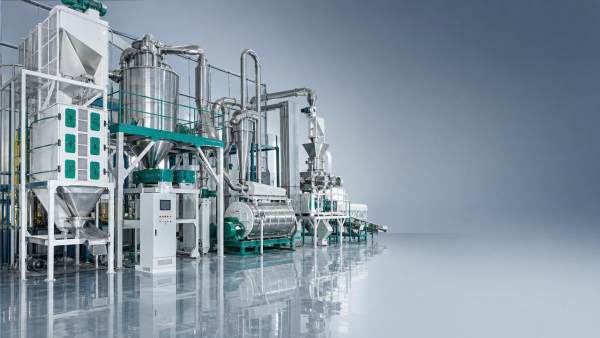
Selecting the right Feed & Grain processing equipment can determine throughput, product consistency, compliance, and long-term operating cost. For technical evaluators, comparing equipment options requires more than reviewing specifications—it demands a clear assessment of process fit, automation, energy efficiency, maintenance demands, and supplier credibility. This guide outlines the key criteria and practical benchmarks needed to make informed, risk-aware procurement decisions.
In commercial feed mills, grain handling lines, and integrated processing plants, equipment choices affect not only output per hour but also formulation accuracy, dust control, sanitation, operator workload, and spare-parts exposure over a 5- to 10-year lifecycle. A technically sound comparison framework helps procurement teams separate marketing claims from process reality.
For evaluators working in primary industries, the goal is rarely to find the cheapest machine. The real objective is to identify the most suitable processing system for the raw material profile, plant layout, target capacity, regulatory environment, and maintenance capability of the operating site.
Start with process fit, not brochure specifications
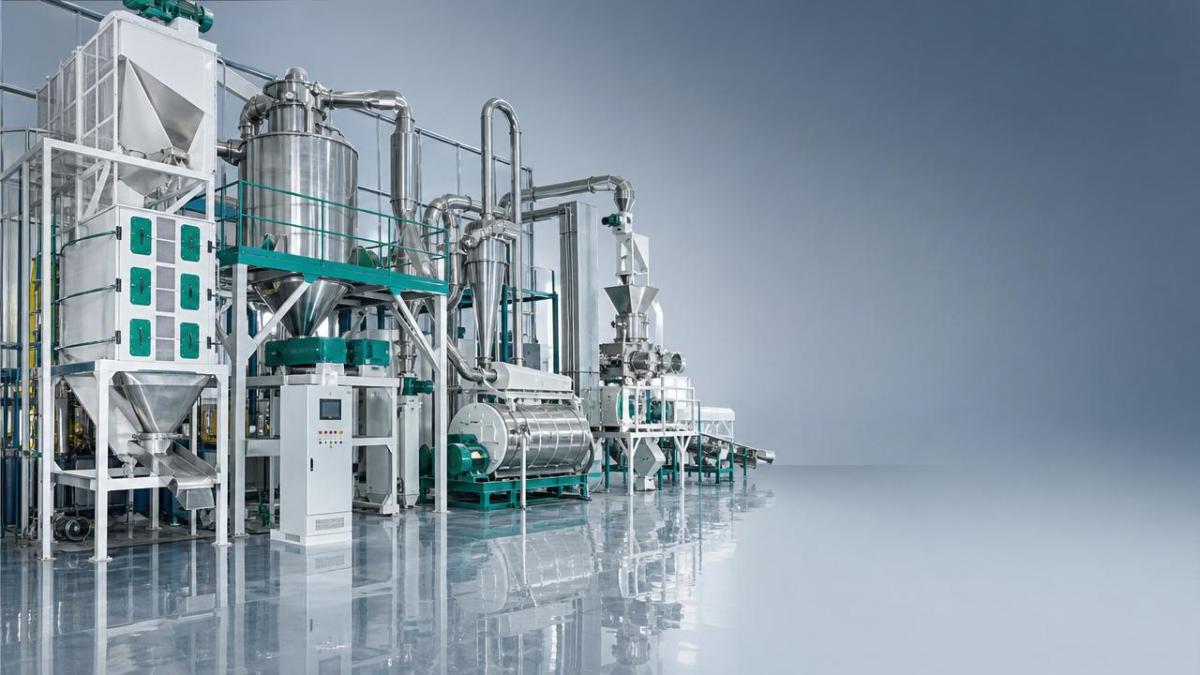
Many Feed & Grain processing equipment comparisons fail because teams begin with motor power, headline throughput, or unit price before mapping the actual process. Technical evaluation should start with 4 core questions: what material is being handled, what output quality is required, what capacity variation is expected, and what utilities are available on site.
A pelleting line for poultry feed, for example, has very different requirements from a grain cleaning and storage preparation line. Moisture range, bulk density, oil content, particle-size target, contamination risk, and ingredient variability all influence machine selection. A system that performs well at 12% moisture may become unstable at 16% to 18% if conditioning and drying are not properly matched.
Define the line around the material and end-product target
Before comparing suppliers, prepare a process brief with at least 8 data points: raw material types, hourly capacity target, daily operating hours, final particle size or pellet diameter, allowable moisture range, expected formulation variability, cleaning requirements, and available electrical load. Without this baseline, equipment quotations are difficult to compare on a like-for-like basis.
For example, hammer mills may be suitable for broad grinding duties, but roll mills may deliver tighter particle distribution for selected grain applications. In mixing, coefficient of variation targets below 10% may require different mixer design, batch timing, and liquid addition control than standard farm-scale systems.
Key process checkpoints
- Raw material variability across 3 to 5 seasons or supply batches
- Target throughput in t/h at normal and peak loading
- Required particle-size consistency and screening limits
- Conditioning temperature and retention time where applicable
- Dust, explosion, and sanitation control requirements
- Manual versus automated recipe and batching control
The comparison table below helps technical evaluators distinguish process-driven priorities across common Feed & Grain processing equipment categories.
The main takeaway is straightforward: each machine should be judged by its role in the total line. A grinder with strong rated output is still a weak choice if it creates too many fines for the downstream pelleting step or demands screen changes every 6 to 8 hours.
Match capacity claims to realistic operating conditions
Suppliers often quote capacity under favorable conditions, such as uniform grain size, controlled moisture, and uninterrupted feeding. Technical evaluators should request performance data at both nominal and stressed conditions, including load variation of plus or minus 10%, moisture shifts of 2% to 4%, and partial-load operation during product changeovers.
It is also useful to calculate effective throughput rather than nameplate throughput. If a line is rated at 12 t/h but loses 90 minutes per shift to cleaning, die changes, or manual batching delays, practical output may be 10% to 18% lower than expected. This affects payback calculations immediately.
Compare equipment on lifecycle cost, automation, and maintainability
Once process fit is established, the next step is to compare Feed & Grain processing equipment on long-term operating value. In most industrial environments, acquisition cost is only one component. Energy consumption, labor dependence, wear-part replacement, downtime frequency, and service response can outweigh a lower initial price within 12 to 24 months.
Energy use should be measured per ton, not per machine
A line that uses 8 to 15 kWh per ton less than an alternative can deliver substantial annual savings in medium- or high-volume operations. However, energy comparisons need context. Lower power draw is not automatically better if output quality declines or recirculation rates rise. Request energy data linked to actual product specification and stable throughput.
For technical review, ask suppliers for at least 3 operating scenarios: normal production, heavy-load production, and start-stop production. This reveals whether the control system and drive configuration remain efficient when the line is not running at ideal steady-state conditions.
Maintenance burden is a procurement issue, not just an operations issue
Maintenance complexity often determines whether a technically capable machine becomes a practical burden. Review wear-part life, lubrication frequency, bearing accessibility, screen or die replacement time, and fault diagnostics. A 20-minute service task performed twice per shift has a very different cost profile from a 2-hour intervention required every 10 days.
Where possible, compare the number of routine maintenance points per machine and the average mean time to restore production after common faults. In remote or multi-site agricultural operations, simple access to standard components can be more valuable than higher theoretical sophistication.
The table below provides a practical scoring structure for lifecycle evaluation across competing Feed & Grain processing equipment options.
This approach prevents low-capex decisions from becoming high-opex problems. It also gives cross-functional teams a common scoring method when engineering, procurement, and plant management weigh options differently.
Automation depth should reflect plant scale and compliance needs
Not every site needs advanced digitalization, but most modern plants benefit from at least basic batch traceability, alarm history, motor load visibility, and recipe control. If the operation handles multiple formulations, medicated feed, or regulated ingredients, auditability and controlled change management become more important than a simple run-stop interface.
A useful rule is to assess automation in 3 layers: machine-level controls, line-level integration, and management-level reporting. Evaluators should confirm whether process data can be exported, whether faults are timestamped, and whether remote support is available within a defined response window such as 24 to 48 hours.
Assess supplier credibility, commissioning quality, and risk exposure
Even well-designed Feed & Grain processing equipment underperforms when the supplier cannot support installation, tuning, training, or spare-part continuity. Technical evaluators should therefore review the supplier as rigorously as the machine. The relevant question is not only what is being sold, but how the supplier reduces implementation risk across the full delivery cycle.
Review engineering support before purchase approval
Ask for a documented scope covering layout review, utility requirements, foundation loads, control architecture, commissioning sequence, and operator training. A reliable supplier should be able to define what is included in pre-installation checks, startup support, and performance acceptance. If these points remain vague, project overruns are more likely.
On many projects, the delivery schedule for standard equipment may be 6 to 12 weeks, while customized systems can extend to 12 to 20 weeks. Commissioning may require an additional 3 to 10 days depending on line complexity. These timelines should be discussed early, especially when a plant shutdown window is fixed.
Risk indicators to check during supplier evaluation
- Unclear performance acceptance criteria
- Incomplete spare-parts list for the first 12 months
- Limited documentation on wear items and preventive maintenance
- No defined training plan for operators and technicians
- Weak transparency on subcontracted controls or fabricated components
Use structured factory and site acceptance criteria
A disciplined procurement process should include factory acceptance testing where practical, followed by site acceptance testing against measurable targets. For example, acceptance may include throughput range, product consistency, vibration level, utility consumption trend, alarm functionality, and safety interlock verification.
For higher-risk projects, it helps to divide acceptance into 3 stages: mechanical completion, dry commissioning, and process commissioning. This structure makes it easier to isolate issues related to installation, controls, or raw material behavior before full commercial operation begins.
A practical decision framework for technical evaluators
To compare Feed & Grain processing equipment objectively, build a weighted matrix rather than relying on informal impressions. A practical model may assign 30% to process fit, 25% to lifecycle cost, 20% to reliability and maintenance, 15% to automation and traceability, and 10% to supplier support. The exact weighting should reflect business priorities, but the structure keeps discussion evidence-based.
Recommended 5-step comparison workflow
- Define the process brief and target operating envelope
- Standardize quotation inputs for all shortlisted suppliers
- Score technical compliance, not just price and delivery
- Validate serviceability, spare-parts access, and commissioning scope
- Run total cost and operational risk review before final approval
This workflow is especially effective when multiple stakeholders are involved, such as plant engineering, production, procurement, finance, and compliance teams. It reduces the chance that a machine is selected on one strong feature while critical operational weaknesses remain hidden until startup.
Common mistakes that distort equipment comparison
A frequent mistake is treating all quoted capacities as equivalent. Another is ignoring changeover time, sanitation burden, or utility upgrades outside the equipment package. Technical evaluators also sometimes underestimate the cost of manual intervention. Saving on automation can increase labor dependency, recipe error risk, and quality drift over hundreds of batches per month.
Another avoidable error is failing to test assumptions about raw materials. Corn, wheat, soy meal, and additive-rich formulations do not behave identically in grinding, mixing, or pelleting. A system should be evaluated against the actual material mix the site expects to process, not against generic reference feedstocks.
For technical evaluators, the most effective Feed & Grain processing equipment comparison is one that connects machine design to process reality, lifecycle cost, service burden, and implementation risk. Strong decisions are built on measurable criteria: throughput under real conditions, energy per ton, maintenance frequency, automation depth, spare-parts lead time, and supplier execution capability.
AgriChem Chronicle supports industrial buyers and technical teams with sector-focused intelligence that helps turn specification reviews into sound procurement strategy. If you are comparing line upgrades, planning a new installation, or reviewing supplier options, now is the right time to obtain a more structured evaluation framework.
Contact us to discuss your application, request a tailored comparison checklist, or learn more solutions for selecting Feed & Grain processing equipment with greater confidence.
Related Intelligence
- Commercial Feed PelletHow to Build a Sanitary Feed Production Plan That Reduces Cross-ContaminationSanitary feed production planning: reduce cross-contamination with smarter sequencing, validated flushing, material segregation, and traceable sanitation controls.
- Commercial Feed PelletFeed Pellet Mill Sourcing: How to Vet Suppliers for Capacity, Quality, and SupportFeed pellet mill sourcing made smarter: vet suppliers for proven capacity, pellet quality, lifecycle cost, factory controls, commissioning, and reliable after-sales support.
- Commercial Feed PelletFeed Production System Price Trends: Cost Drivers and Budgeting for New LinesFeed production systems price trend insights: compare cost drivers, automation, utilities, compliance, and total ownership costs to budget smarter for new feed lines.
The Morning Broadsheet
Daily chemical briefings, market shifts, and peer-reviewed summaries delivered to your terminal.
