

The Authority in Global Agricultural Chemistry & Bio-Resources
Fish Feed Ingredients Bulk Buying: Protein Sources, Specs, and Quality Checks
Why Bulk Ingredient Decisions Carry More Risk Than They Used To
Buying fish feed ingredients bulk is no longer a simple exercise in securing volume at the lowest delivered price.
The decision now sits at the intersection of nutrition, residue control, supplier transparency, and regulatory exposure.
Protein sources shape feed conversion, growth rates, palatability, and farm-level economics across aquaculture systems.
At the same time, bulk raw materials can introduce pathogens, oxidized fats, heavy metals, mycotoxins, or undeclared substitutions.
That is why fish feed ingredients bulk procurement depends on evidence, not assumptions.
A practical review should connect ingredient specifications, supplier documentation, laboratory testing, and storage controls.
The following overview reflects the technical priorities often tracked in aquaculture feed and grain processing supply chains.
It also reflects a broader market reality: primary industries increasingly require chemical-grade discipline in material verification.
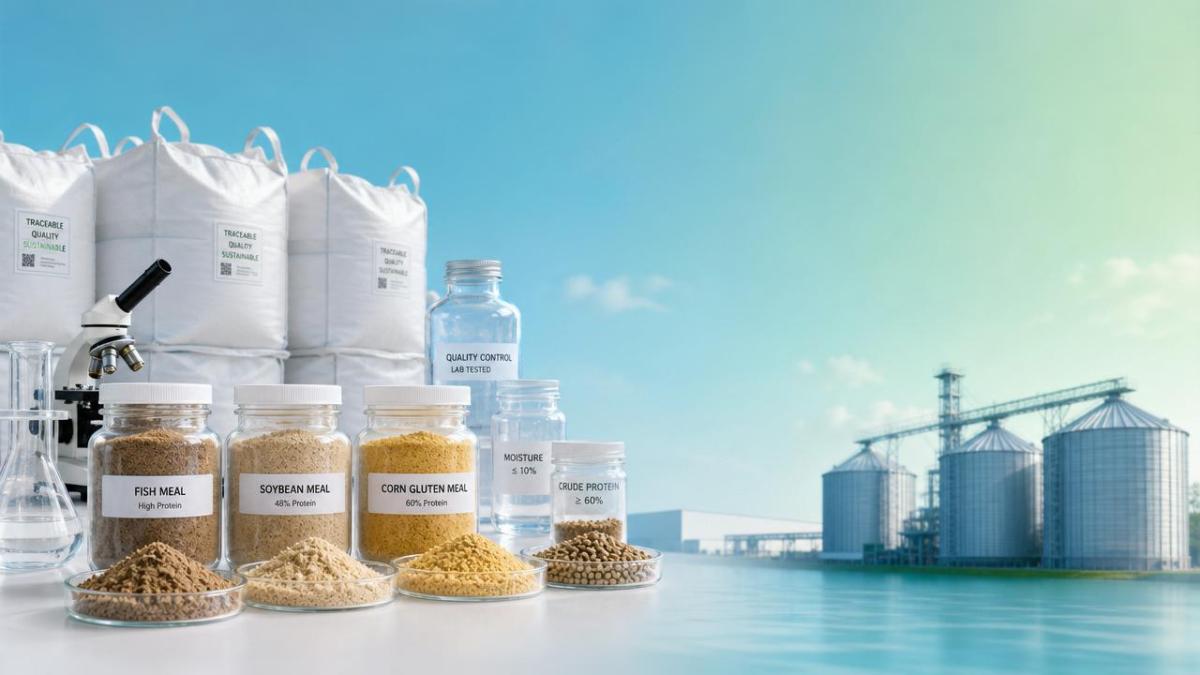
A simplified protein and quality workflow is shown below.
Understanding What Counts as a Protein Ingredient
In fish feed formulation, protein ingredients are valued by more than crude protein percentage.
A high-protein material may still underperform if amino acid balance, digestibility, or freshness is weak.
For fish feed ingredients bulk purchasing, the core question is usable nutrition under real production conditions.
Marine proteins remain important because they offer strong palatability and amino acid density.
Plant proteins are widely used to reduce cost and diversify sourcing.
Novel proteins are gaining attention where sustainability claims, consistent production, and traceable manufacturing can be verified.
Each category has advantages, but each also brings a different risk profile.
This comparison helps narrow the focus before negotiating fish feed ingredients bulk contracts.
Protein Sources Are Not Interchangeable
Substitution looks straightforward on paper, but aquatic species respond differently to ingredient changes.
Shrimp, salmonids, tilapia, carp, and marine fish all have distinct tolerance levels.
For fish feed ingredients bulk sourcing, species-specific performance data should carry more weight than generic nutrient tables.
Marine meals and rendered animal proteins
Fishmeal remains a benchmark ingredient because of its digestibility and amino acid profile.
However, supply volatility and sustainability requirements have made origin documentation increasingly important.
Rendered proteins may support cost control, but heat damage and ash levels must be watched closely.
When buying fish feed ingredients bulk, declared species origin and processing temperature records help reduce uncertainty.
Plant proteins and concentrated fractions
Soybean meal, pea protein, rapeseed meal, and wheat gluten can reduce reliance on marine raw materials.
Their limitations usually involve anti-nutritional factors, fiber, palatability, and amino acid gaps.
The practical issue is not whether plant proteins are acceptable.
It is whether each lot matches the formulation assumptions used by nutrition and production teams.
Novel ingredients and emerging production models
Insect meals, yeast proteins, bacterial biomass, and algae ingredients are moving from trials into commercial formulas.
These materials can support diversification, but their supply chains may be less familiar.
For fish feed ingredients bulk evaluation, production substrate, process controls, and residue testing deserve early review.
Specifications That Should Be Clear Before Purchase
A specification sheet should define measurable acceptance criteria, not broad marketing claims.
Good specifications reduce dispute risk when shipments arrive under pressure.
They also support internal consistency across purchasing, quality control, warehousing, and production planning.
For fish feed ingredients bulk orders, specifications should include nutritional, safety, physical, and documentary requirements.
- Crude protein, moisture, fat, ash, fiber, and amino acid profile.
- Digestibility data relevant to the target species or formula class.
- Limits for mycotoxins, heavy metals, dioxins, PCBs, and pesticide residues.
- Microbiological limits for Salmonella, Enterobacteriaceae, molds, and yeasts.
- Freshness indicators such as peroxide value, anisidine value, TVN, or free fatty acids.
- Particle size, flowability, color, odor, and caking tolerance.
- Required documents, including COA, origin declaration, traceability records, and certificates.
The best specification is strict enough to protect feed performance, yet realistic enough for routine supply.
If a supplier cannot support the specification with data, the price advantage may be temporary.
Quality Checks Across the Bulk Purchasing Cycle
Quality control begins before a shipment leaves the supplier facility.
In fish feed ingredients bulk purchasing, prevention is usually cheaper than rejection, rework, or feed performance claims.
Supplier qualification
Supplier review should cover facility controls, audit history, production capacity, and corrective action records.
Certifications can help, but they should not replace lot-level evidence.
Relevant systems may include HACCP, GMP, ISO 22000, FAMI-QS, or local feed safety approvals.
For cross-border fish feed ingredients bulk supply, import rules and labeling requirements should be checked early.
Sampling and laboratory testing
Bulk materials are rarely uniform unless sampling is well designed.
Composite samples should reflect different bags, container zones, silos, or truck compartments.
Testing frequency should rise for new suppliers, high-risk origins, seasonal changes, or abnormal market pricing.
Rapid methods are useful for screening, while accredited laboratory analysis remains important for dispute resolution.
Receiving inspection
Receiving checks should compare the shipment against contract terms and the approved specification.
Basic observations still matter: odor, visible mold, infestation, heat damage, moisture marks, and seal integrity.
For fish feed ingredients bulk deliveries, container history and fumigation records can also affect acceptance decisions.
Contaminants That Deserve Special Attention
Not all contaminants create immediate visible problems.
Some reduce growth slowly, compromise immunity, or create compliance issues in final aquaculture products.
This makes contaminant control central to fish feed ingredients bulk management.
A narrow test panel may miss the most likely hazard for a specific ingredient or origin.
Risk-based testing is therefore more effective than using the same checklist for every lot.
Documentation Is Part of the Ingredient
In regulated supply chains, a material is not fully acceptable until its records are acceptable.
Documents should show where the ingredient came from, how it was processed, and how the lot was tested.
For fish feed ingredients bulk transactions, the certificate of analysis should match the shipped lot number.
Generic or recycled documents create traceability gaps during audits or incident investigations.
Useful records include production date, batch code, transport route, storage conditions, and prior cargo declarations.
When sustainability claims are attached, chain-of-custody evidence should be reviewed with the same discipline.
This is especially relevant for marine ingredients, certified soy, insect protein, and algae-based materials.
Reliable documentation also supports faster release decisions when receiving windows are tight.
Storage and Handling Can Change the Final Quality
A good lot can deteriorate quickly under poor storage conditions.
Moisture, heat, oxygen, pests, and cross-contamination are common threats in bulk ingredient handling.
Fish feed ingredients bulk storage should separate high-fat materials from heat and sunlight.
Plant meals should be protected from moisture migration and insect pressure.
Silos, bins, containers, and bagged storage areas need clear cleaning and inspection routines.
First-in, first-out systems reduce aging risk, but only when labels and inventory data remain accurate.
Temperature logs, humidity checks, and pest monitoring records help defend acceptance decisions later.
Storage controls are not administrative details; they preserve the value purchased in the contract.
How to Compare Bulk Offers Without Chasing Price Alone
The lowest offer may not be the lowest-cost ingredient in production.
A more useful comparison includes digestible protein, rejection risk, testing burden, and supply continuity.
Fish feed ingredients bulk offers should be evaluated against formulation value, not only invoice value.
- Compare digestible amino acid contribution per delivered tonne.
- Review historical lot variation, not only one sample result.
- Include expected testing, segregation, and storage costs.
- Check whether supplier lead times match production schedules.
- Assess how quickly non-conforming lots can be replaced.
This broader view supports more stable feed manufacturing and fewer emergency substitutions.
It also makes supplier negotiations more technical and less dependent on spot-market pressure.
Building a Practical Review Framework
A workable framework does not need to be complicated.
It should connect ingredient risk, supplier reliability, laboratory evidence, and internal release rules.
For fish feed ingredients bulk programs, a tiered approach is often effective.
New suppliers receive deeper testing, tighter documentation review, and smaller initial volumes.
Approved suppliers may move to routine monitoring, while still facing periodic verification.
High-risk ingredients should remain under enhanced controls regardless of supplier history.
Market intelligence can strengthen this process when commodity shifts, disease events, or regulatory changes alter risk.
Specialized industry reporting, technical whitepapers, and verified laboratory data can add useful context to internal decisions.
This is where disciplined information sources in aquaculture, bio-ingredients, and feed processing become valuable.
A Smarter Next Step for Ingredient Control
Fish feed ingredients bulk purchasing works best when cost, nutrition, safety, and traceability are reviewed together.
The strongest programs define specifications before ordering, verify suppliers before scaling, and test lots before release.
They also treat documentation, storage, and transport as active parts of quality control.
The next useful step is to map current ingredients by risk, volume, and performance impact.
From there, compare supplier evidence, testing frequency, and acceptance limits against actual production needs.
A clear review standard makes fish feed ingredients bulk decisions more defensible, more consistent, and less vulnerable to market noise.
Related Intelligence
- Commercial Feed PelletHow to Build a Sanitary Feed Production Plan That Reduces Cross-ContaminationSanitary feed production planning: reduce cross-contamination with smarter sequencing, validated flushing, material segregation, and traceable sanitation controls.
- Commercial Feed PelletFeed Pellet Mill Sourcing: How to Vet Suppliers for Capacity, Quality, and SupportFeed pellet mill sourcing made smarter: vet suppliers for proven capacity, pellet quality, lifecycle cost, factory controls, commissioning, and reliable after-sales support.
- Commercial Feed PelletFeed Production System Price Trends: Cost Drivers and Budgeting for New LinesFeed production systems price trend insights: compare cost drivers, automation, utilities, compliance, and total ownership costs to budget smarter for new feed lines.
The Morning Broadsheet
Daily chemical briefings, market shifts, and peer-reviewed summaries delivered to your terminal.
