

The Authority in Global Agricultural Chemistry & Bio-Resources
Agri & Forestry Equipment Buying Guide: Key Machines, Uses, and Cost Factors
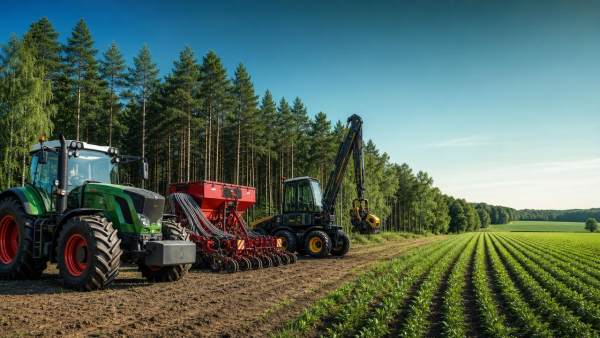
Selecting the right Agri & Forestry equipment is no longer a simple comparison of horsepower and price.
Every machine decision affects productivity, compliance, fuel efficiency, maintenance budgets, and long-term return on investment.
This Agri & Forestry buying guide outlines key machines, use cases, and cost factors before committing capital.
Why Agri & Forestry Equipment Needs a Checklist-Based Decision
Modern Agri & Forestry operations work across tighter labor markets, volatile fuel prices, and stricter environmental rules.
A checklist prevents attractive specifications from hiding weak service access, poor attachment compatibility, or high lifecycle cost.
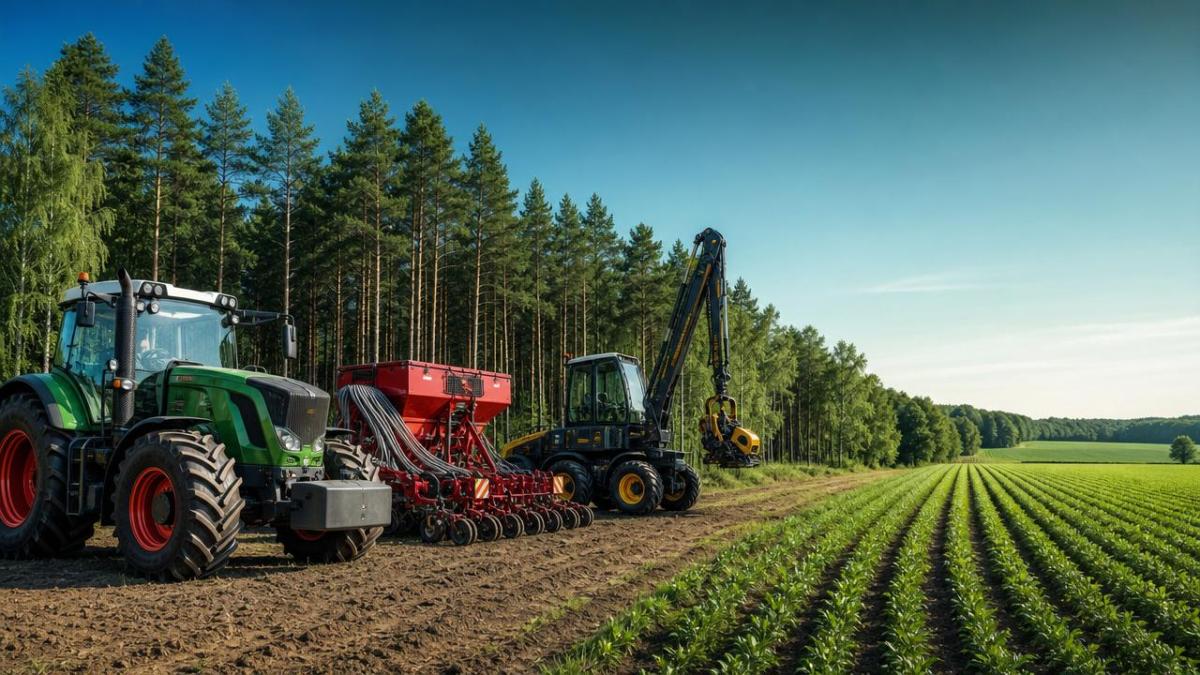
The right Agri & Forestry machine should match terrain, crop cycle, timber density, transport limits, and operator skill.
It should also support data capture, safe maintenance, and predictable uptime during narrow operating windows.
Core Agri & Forestry Equipment Categories to Evaluate
Tractors and Power Units
Tractors remain the foundation of Agri & Forestry work because they power tillage, hauling, mowing, spraying, and loader tasks.
Compare engine torque, PTO output, hydraulic flow, axle strength, ballast options, and transmission control under load.
Soil Preparation and Planting Machines
Plows, seed drills, planters, harrows, and strip-till units define seedbed quality and establishment accuracy.
Evaluate row spacing, downforce control, residue handling, metering precision, and field data integration.
Harvesting and Post-Harvest Equipment
Combines, forage harvesters, balers, sorters, dryers, and grain handling systems influence yield retention and quality.
Check crop-specific headers, cleaning capacity, moisture controls, throughput, loss monitoring, and storage interface compatibility.
Forestry Machines and Attachments
Forestry work may require harvesters, forwarders, skidders, feller bunchers, mulchers, chippers, loaders, and grapples.
In Agri & Forestry selection, prioritize ground pressure, boom reach, guarding, cooling capacity, and hydraulic duty cycle.
Agri & Forestry Buying Checklist
- Define annual workload by hectares, hours, tonnage, trips, or trees handled before comparing brands or engine ratings.
- Match machine size to soil bearing capacity, slope, access roads, row spacing, and turning radius.
- Calculate total ownership cost, including fuel, lubricants, tires, tracks, wear parts, insurance, storage, and financing.
- Verify attachment compatibility across PTO speed, hydraulic pressure, coupler type, electronic controls, and frame strength.
- Inspect safety systems, including rollover protection, guarding, emergency stops, lighting, cameras, and operator visibility.
- Review emission compliance against local diesel standards, forest access rules, and indoor grain facility requirements.
- Compare dealer support by parts availability, technician response time, field service coverage, and diagnostic tools.
- Request maintenance schedules and confirm whether routine service can be performed without specialized workshop equipment.
- Test productivity in representative conditions, not only on flat demonstration fields or clean yard surfaces.
- Check telematics, task logging, yield mapping, fuel reports, and integration with farm or fleet software.
Key Cost Factors Beyond Purchase Price
The lowest purchase price can become expensive when downtime occurs during planting, harvesting, thinning, or transport periods.
Agri & Forestry cost analysis should focus on value per productive hour, not only invoice price.
Financing structure also matters. Seasonal repayments should align with crop income, timber contracts, or service revenue.
For Agri & Forestry fleets, leasing may suit high-tech machines with fast depreciation or rapid emission changes.
Application Scenarios and Practical Fit
Row Crop and Broadacre Farming
Broadacre operations need strong field efficiency, accurate guidance, and fast implement changes.
Choose machines that reduce passes, protect soil structure, and document fertilizer, seed, and chemical application records.
Orchards, Vineyards, and Specialty Crops
Specialty crop sites often require narrow tractors, low-profile cabs, precision sprayers, pruning platforms, and gentle harvesters.
Agri & Forestry equipment here must protect canopy, fruit quality, and worker safety in confined rows.
Commercial Forestry and Land Clearing
Forestry machines face uneven ground, abrasive debris, heavy stems, and remote service conditions.
Specify underbody protection, heavy-duty cooling, fire suppression, tire selection, and emergency recovery procedures.
Mixed Agri & Forestry Estates
Mixed estates often need versatile platforms rather than highly specialized machines.
A loader tractor, mulcher attachment, trailer, mower, and sprayer may deliver stronger utilization than a single-purpose unit.
Commonly Overlooked Risks
Ignoring Transport Limits
Large Agri & Forestry machines can exceed bridge limits, road rules, trailer capacity, or farm gate dimensions.
Measure routes before purchase and confirm permits for seasonal movement.
Underestimating Parts Lead Times
A minor sensor, hose, bearing, or controller can stop an expensive machine.
Ask for local stock lists, critical spare kits, and realistic supply times during peak demand.
Buying More Power Than Needed
Oversized equipment increases fuel consumption, compaction, tire costs, and financing burden.
Right-sizing Agri & Forestry assets often improves utilization and protects margins.
Overlooking Data Ownership
Connected machines collect location, yield, fuel, error codes, and productivity data.
Confirm who owns the data, how it is stored, and whether export is available.
Practical Execution Steps Before Purchase
- Build a duty profile showing annual hours, peak tasks, terrain, climate exposure, and expected production targets.
- Shortlist machines using required performance thresholds before considering discounts, promotions, or cosmetic features.
- Run field trials with actual implements, loads, crop residues, slopes, and transport routes.
- Score each option on productivity, safety, serviceability, compliance, residual value, and operator feedback.
- Negotiate parts packages, training, warranty extensions, software access, and service response commitments.
- Document acceptance criteria before delivery, including hours, attachments, manuals, diagnostics, and registration paperwork.
For Agri & Forestry assets, the delivery inspection should be treated as a technical commissioning event.
Record serial numbers, software versions, fluid levels, tire pressures, attachment fit, and safety equipment condition.
Sustainability, Compliance, and Long-Term Value
Environmental rules increasingly influence Agri & Forestry equipment decisions, especially near waterways, protected forests, and processing sites.
Low-emission engines, precision application systems, reduced compaction designs, and efficient hydraulics can support compliance targets.
Sustainability should not be treated as a separate issue. It affects fuel use, soil health, permits, and market access.
Machines that document field operations can strengthen traceability for grain, biomass, timber, and specialty crop supply chains.
Conclusion and Next Action
A sound Agri & Forestry equipment decision balances productivity, maintenance, compliance, data capability, and lifecycle economics.
Start with workload definition, then compare machines against measurable operating conditions and documented ownership cost.
Before signing, request field validation, service guarantees, parts availability evidence, and a written commissioning checklist.
This structured approach reduces risk and turns Agri & Forestry investment into durable operational capacity.
Related Intelligence
- Heavy Agri MachineryHow Does Market Forecasting Help Plan Farm Machinery Procurement?How does market forecasting help agri procurement planning? Discover how to time machinery purchases, protect cash flow, and reduce delivery risks before critical farm deadlines.
- Heavy Agri MachineryIs It Safe to Source Farm Machinery from Emerging Markets?Is it safe to source agri machinery from emerging markets? Discover how to verify suppliers, check compliance, and secure parts support to protect your farm and avoid costly buying mistakes.
- Heavy Agri MachineryHow to Size a Combine Harvester for Acreage, Crop Mix, and Harvest WindowsCombine harvesters sized for your acreage, crop mix, and harvest window: calculate real field capacity, match headers, and avoid costly bottlenecks.
The Morning Broadsheet
Daily chemical briefings, market shifts, and peer-reviewed summaries delivered to your terminal.
