

The Authority in Global Agricultural Chemistry & Bio-Resources
China Pilots Faster Agri-Food Customs Clearance
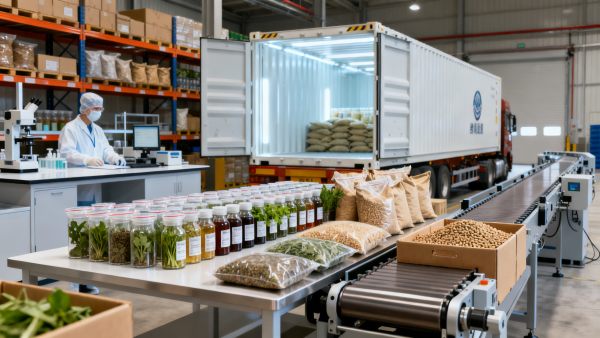
On June 1, 2026, China launched the 2026 Cross-Border Trade Facilitation Special Action in 45 key cities, with a pilot focus on differentiated customs supervision for import and export agri-food products. The measure deserves attention from companies involved in botanical extracts, natural ingredients, commercial feed pellets, agri-food processing, procurement, distribution, and supply chain services because eligible export goods with GMP or ISO22000 certification may enter a faster inspection and release channel.
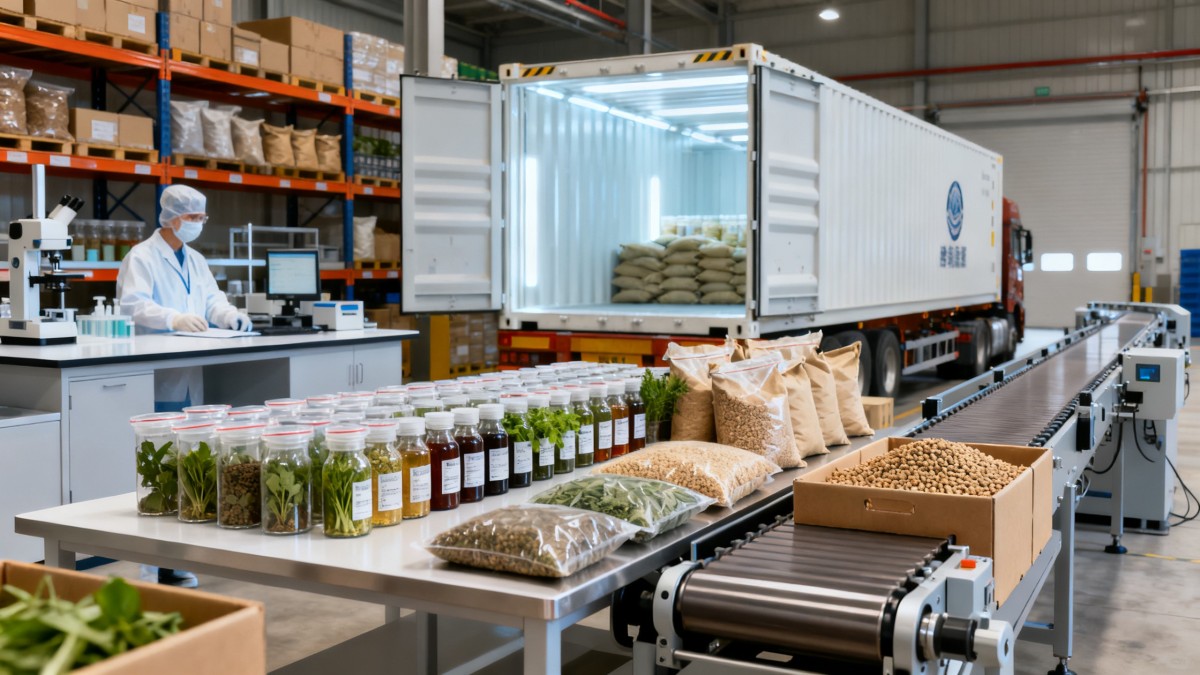
Event Overview
According to the available information, the General Administration of Customs of China and 23 other departments have jointly deployed the 2026 Cross-Border Trade Facilitation Special Action. Starting in June 2026, the action is being piloted in 45 key cities.
The pilot introduces “graded and classified” supervision for import and export agri-food products. Export goods such as botanical extracts, natural ingredients, and commercial feed pellets that meet GMP or ISO22000 certification requirements may qualify for a “priority inspection and release immediately after inspection” channel. The average customs clearance time for eligible goods is expected to be compressed to within 24 hours.
The currently available information identifies the policy direction, pilot scope, applicable product examples, certification conditions, and the stated clearance efficiency target. Further operational details, including city-level implementation procedures and specific product classification standards, remain areas to watch.
Which Segments May Be Affected
Direct Import and Export Traders
Direct agri-food import and export companies may be among the first affected because the pilot is specifically linked to customs supervision and clearance efficiency. For exporters of botanical extracts, natural ingredients, and commercial feed pellets, the key impact may lie in whether their goods meet the stated GMP or ISO22000 certification conditions.
From an industry perspective, the impact is likely to appear in shipment scheduling, customs declaration preparation, and customer delivery commitments. However, companies should distinguish between the policy signal and actual implementation at each pilot city before adjusting delivery promises too aggressively.
Raw Material Procurement Companies
Companies purchasing agri-food raw materials for cross-border supply chains may also be affected. If upstream goods fall within the pilot’s relevant product scope and meet the certification conditions, customs clearance predictability may improve for some export flows.
Analysis shows that procurement teams may need to pay closer attention to supplier certification status, product classification, and documentation consistency. The value of GMP or ISO22000-related documentation may become more visible in procurement decisions, especially where clearance time directly affects production or shipment planning.
Processing and Manufacturing Enterprises
Processing manufacturers using botanical extracts, natural ingredients, or feed-related materials should monitor the pilot because customs clearance speed can influence inventory planning and production continuity. The announced channel applies to eligible export goods, so manufacturers involved in export-oriented production may need to review whether their product lines and certification systems align with the pilot requirements.
Observably, the measure may encourage more disciplined documentation management within factories. This does not mean all manufacturers will automatically benefit, but it does suggest that certified production and traceable quality management may become more relevant to customs facilitation.
Channel and Distribution Enterprises
Channel companies, distributors, and cross-border buyers may be affected through delivery timelines and order fulfillment expectations. If eligible goods are cleared faster under the pilot, downstream planning may become more predictable for certain agri-food categories.
What deserves closer attention now is the difference between faster inspection channels for qualified export goods and the broader logistics process. Customs clearance within 24 hours does not, by itself, determine the entire delivery cycle. Distribution companies should therefore avoid treating the pilot as a guarantee for all orders or all product categories.
Supply Chain Service Providers
Customs brokers, freight forwarders, warehousing operators, and compliance service providers may see more demand for accurate classification, certification review, and pre-declaration coordination. The pilot’s “graded and classified” approach means that service providers may need to help clients identify whether goods meet the stated requirements before shipment.
From an industry perspective, the service value may shift further toward compliance preparation rather than only transport execution. The more clearly a shipment’s product scope, certification status, and declaration documents are organized, the easier it may be to use the available facilitation channel where applicable.
What Companies Should Watch and How to Respond
Track Official Follow-Up and Local Implementation
Companies should monitor follow-up statements from customs and related departments, especially implementation details in the 45 pilot cities. The announced action provides the overall direction, but actual procedures may depend on local customs practices and published operational guidance.
It is more appropriate to understand this as a facilitation pilot rather than a fully uniform nationwide operating result. Enterprises should confirm local requirements before changing declaration processes or shipment schedules.
Review Product Scope and Certification Readiness
Enterprises dealing with botanical extracts, natural ingredients, and commercial feed pellets should review whether their export goods are within the pilot’s relevant scope and whether GMP or ISO22000 certification documents are valid, complete, and consistent with shipment information.
Analysis shows that the immediate practical task is not to broaden product claims, but to verify documentation. Product names, certification records, quality management documents, and customs declaration materials should be aligned before shipment.
Separate Policy Signals from Business Commitments
The announced target of average clearance within 24 hours applies to eligible goods under the stated channel. Companies should avoid converting this into a blanket delivery promise to customers, especially before confirming whether a specific shipment qualifies.
Observably, the pilot is a positive signal for qualified agri-food exports, but operational results may still depend on product category, inspection requirements, documentation accuracy, and local execution. Sales teams, logistics teams, and compliance teams should use the same internal interpretation to avoid overcommitting.
Prepare Procurement, Supply Chain, and Communication Plans
Companies should prepare practical response plans around procurement timing, shipment booking, document collection, and customer communication. For eligible product lines, it may be useful to create a checklist covering certification status, product classification, inspection requirements, and city-level customs procedures.
What deserves closer attention now is coordination across departments. Procurement teams should confirm supplier documents, production teams should verify quality system records, logistics teams should confirm declaration requirements, and commercial teams should communicate clearance expectations cautiously.
Editor’s View / Industry Observation
From an industry perspective, this action points to a more differentiated customs supervision approach for agri-food trade. It does not simply indicate faster clearance for all agri-food products; rather, it highlights that qualified goods with clearer certification and compliance foundations may receive more efficient treatment in pilot cities.
Analysis shows that the measure is better read as both a policy signal and an operational pilot. It has already defined a facilitation direction for specific certified export goods, but the broader industry effect will depend on how the 45 cities implement the system and how companies prepare their documentation and compliance processes.
Observably, the industries that need sustained attention are those where customs clearance time, certification status, and product classification directly affect export delivery. For these companies, the pilot may raise the practical importance of compliance readiness in everyday trade operations.
Conclusion
The 2026 Cross-Border Trade Facilitation Special Action may be significant for agri-food exporters, especially companies handling botanical extracts, natural ingredients, and commercial feed pellets that meet GMP or ISO22000 certification requirements. Its main industry meaning lies in the shift toward graded and classified supervision and the possibility of faster clearance for eligible goods.
It is more appropriate to understand this development as a targeted facilitation pilot rather than a universal change for all agri-food trade. Companies should respond by verifying product scope, strengthening document readiness, tracking local implementation, and keeping customer commitments aligned with confirmed customs procedures.
Information Source Statement
Main source: Publicly available information on the 2026 Cross-Border Trade Facilitation Special Action jointly deployed by the General Administration of Customs of China and 23 other departments.
Items for continued observation: detailed implementation rules in the 45 pilot cities, specific product classification standards, local customs operating procedures, and the practical application of the priority inspection and immediate release channel for eligible certified export goods.
Related Intelligence
- Natural IngredientsBotanical Ingredient Prices in Europe: Comparing Quotes by Grade and Order VolumeCompare Europe botanical ingredients price quotes by grade and order volume. Discover how potency, testing, delivery, and inventory costs reveal real savings before you buy.
- Natural IngredientsMayonnaise vs. Salad Dressing: Ingredient and Texture DifferencesMayonnaise vs. salad dressing: discover key ingredient, texture, stability, and application differences to choose the right product for every recipe.
- Natural IngredientsIndustrial-Scale Agricultural Sourcing: Key Criteria for Reliable SupplyIndustrial scale agri sourcing made reliable: assess supplier capacity, traceability, landed cost, logistics, and resilience to protect production continuity.
The Morning Broadsheet
Daily chemical briefings, market shifts, and peer-reviewed summaries delivered to your terminal.
