

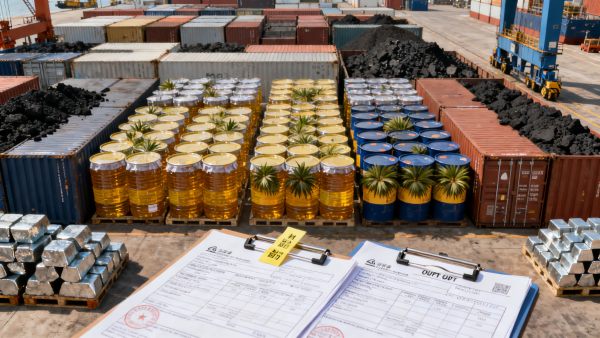
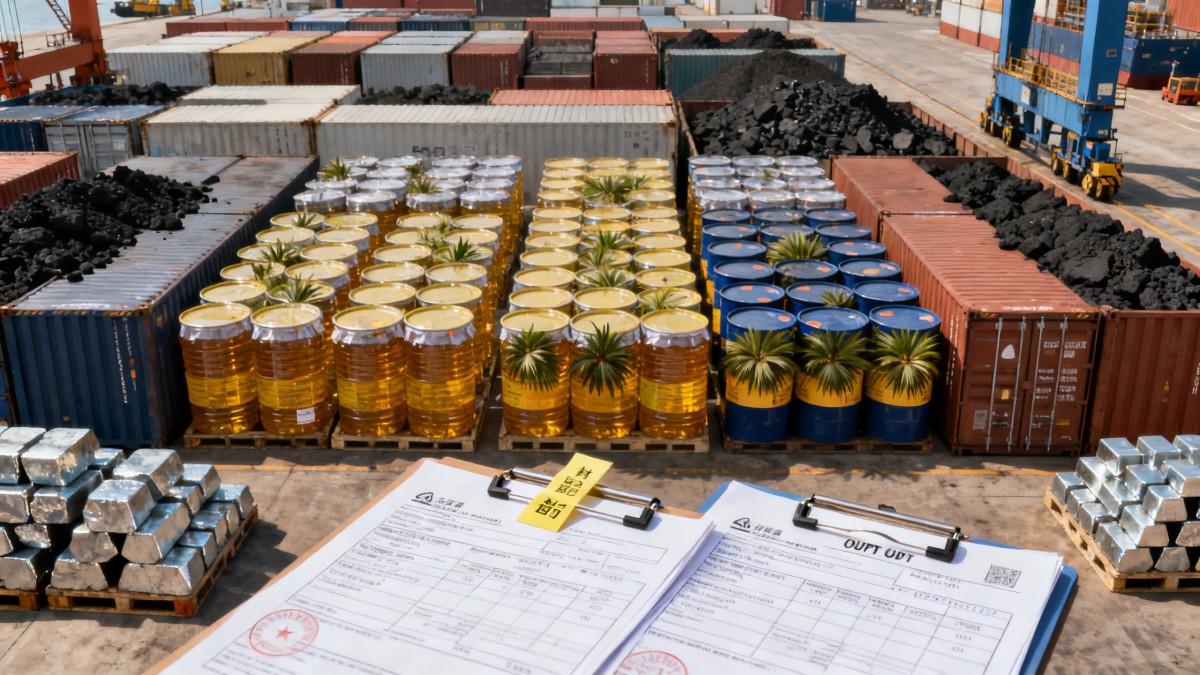
On June 1, 2026, Indonesia’s Ministry of Trade began the first implementation phase of the Export Control Act 2026, introducing centralized export controls involving palm oil derivatives, coal, and ferroalloys. The development deserves close attention from agrochemical companies, commercial feed pellet manufacturers, raw material importers, equipment-related buyers, and supply chain service providers that rely on Indonesian-origin materials or related manufacturing inputs.
Event Overview
According to the provided information, Indonesia’s Ministry of Trade launched the first enforcement phase of the Export Control Act 2026 on June 1, 2026.
The confirmed measures include export quota management, designated port requirements, and mandatory traceability code management for palm oil derivatives, including natural surfactants and plant-based emulsifiers, as well as ferroalloys used in equipment manufacturing for feed trace element additive production lines.
The information also identifies palm oil, coal, and ferroalloys as categories involved in centralized export control from June. At the currently available information level, the specific operational details disclosed in the summary are focused on palm oil derivatives and ferroalloys.
For Chinese agrochemical enterprises and commercial feed pellet companies that depend on Indonesian-origin raw materials or imported equipment-related inputs, the issue is not only a trade compliance update. It may also affect purchasing rhythm, supplier verification, shipping arrangements, and supply chain resilience assessment.
Which Sub-Sectors May Be Affected
Direct Trading Companies
Direct import and export traders may be among the first to face operational changes because the new measures involve export quotas, designated ports, and mandatory traceability codes.
The main impact may appear in shipment confirmation, export documentation review, port selection, and supplier communication. If a shipment falls within the controlled categories, traders may need to verify whether the exporter has available quota, whether the shipment is routed through an approved port, and whether the required traceability information is complete.
From an industry perspective, the key pressure for trading companies is likely to be transaction certainty. Even where demand remains unchanged, the execution process may become more dependent on documentation readiness and policy interpretation by counterparties.
Raw Material Procurement Enterprises
Agrochemical companies using palm oil derivatives such as natural surfactants and plant-based emulsifiers may need to reassess procurement plans involving Indonesian sources.
The impact is mainly reflected in supplier reliability, delivery schedule visibility, and alternative sourcing evaluation. Since the measures include quota and traceability requirements, procurement teams may need to confirm not only price and specification, but also whether the export process can be completed under the new control framework.
Analysis shows that the immediate concern for buyers is not necessarily a confirmed shortage, but the possibility of longer confirmation cycles and higher uncertainty in shipment execution.
Processing and Manufacturing Enterprises
Commercial feed pellet companies and related manufacturers may be affected if they rely on ferroalloys connected to the production equipment supply chain for feed trace element additive production lines.
The potential impact is more indirect than in raw material procurement, but it can still influence equipment manufacturing, spare parts planning, production line delivery, or maintenance-related purchasing where controlled ferroalloy inputs are involved.
From an industry perspective, manufacturers should pay attention to whether equipment suppliers have exposure to Indonesian ferroalloy sourcing and whether that exposure could affect production lead times or delivery commitments.
Distribution and Channel Companies
Distributors handling palm oil derivative-based products or equipment-related components may face changes in upstream delivery timing and documentation requirements.
The impact may appear in inventory turnover, customer delivery commitments, and contract communication. If upstream suppliers require additional time to meet export control procedures, distributors may need to manage expectations with downstream customers more carefully.
Observably, channel companies should avoid treating this as a simple customs delay issue. The presence of quota, port designation, and traceability code requirements means that compliance status may become part of commercial delivery risk assessment.
Supply Chain Service Providers
Freight forwarders, customs-related service providers, and supply chain coordinators may need to adjust their document review and shipment planning processes for affected goods.
The most relevant areas include confirming approved port arrangements, checking whether traceability code requirements are fulfilled, and ensuring that cargo descriptions align with the controlled product categories.
Current attention is better placed on process coordination rather than broad speculation. For shipments involving Indonesian palm oil derivatives or ferroalloys, service providers may need to request more complete compliance information before cargo scheduling.
What Companies and Practitioners Should Watch and How to Respond
Monitor Official Follow-Up and Implementation Details
Companies should continue to track official statements from Indonesia’s Ministry of Trade regarding the Export Control Act 2026, especially any clarification on product scope, quota allocation, designated ports, and traceability code procedures.
Current attention is better placed on the difference between the announced control framework and actual execution requirements. Buyers and traders should avoid relying only on general category names and should confirm whether specific product descriptions fall within the controlled scope.
Review Exposure to Key Product Categories
Agrochemical companies should review whether their imported natural surfactants, plant-based emulsifiers, or other palm oil derivative inputs are sourced from Indonesia or supplied through Indonesian exporters.
Commercial feed pellet enterprises and related equipment buyers should check whether machinery, production line components, or upstream equipment manufacturing relies on ferroalloy inputs affected by the new controls.
Analysis shows that this review should be conducted at the product-code, supplier, and shipment-route level where possible, rather than only at the broad supplier-name level.
Separate Policy Signals from Business Execution
The announcement indicates a centralized export control approach, but companies still need to distinguish between policy direction and actual shipment outcomes.
For ongoing contracts, enterprises should confirm whether suppliers can provide quota-related confirmation, designated port arrangements, and traceability code information before setting delivery expectations with internal production teams or downstream customers.
From an industry perspective, this distinction is important because not every affected category will necessarily experience the same operational pressure at the same time.
Prepare Procurement and Supply Chain Contingency Plans
Companies relying on Indonesian-origin materials or equipment-related inputs should review procurement lead times, inventory buffers, and supplier communication mechanisms.
Practical steps may include requesting updated export compliance confirmation from suppliers, checking whether shipments are planned through designated ports, reviewing contract clauses related to regulatory delays, and preparing alternative sourcing discussions where business continuity requires it.
Current attention is better placed on supply chain resilience assessment. The issue should be treated as a compliance and continuity planning matter, not merely as a price negotiation topic.
Editor’s View / Industry Observation
Analysis shows that Indonesia’s first implementation of the Export Control Act 2026 is better understood as a supply chain control signal with practical compliance implications, rather than only a routine trade policy update.
For agrochemical and commercial feed pellet-related businesses, the most important point is that the affected items are connected to real production inputs, processing aids, equipment manufacturing, and delivery arrangements. Even limited changes in export procedures may influence procurement timing and shipment certainty.
Observably, the measure has already formed a regulatory framework for certain categories, including quota, port, and traceability requirements. However, the full business impact still depends on subsequent implementation details, supplier compliance capacity, and how affected shipments are handled in practice.
Current attention is better placed on continuous monitoring and early operational verification. Companies with direct or indirect dependence on Indonesian supply should not wait until a shipment is delayed before reviewing exposure.
Conclusion
Indonesia’s June 1 implementation of centralized export controls under the Export Control Act 2026 introduces new compliance variables for palm oil derivatives, coal, and ferroalloys, with confirmed operational details focusing on palm oil derivatives and ferroalloys.
For relevant industries, the significance lies in supply chain visibility, documentation readiness, and procurement resilience. The development is not suitable for overstatement, but it should not be ignored by companies with Indonesian sourcing exposure.
From an industry perspective, the current development is better understood as both an active policy signal and an early-stage operational change. Enterprises should respond through targeted supplier checks, shipment process verification, and contingency planning based on their actual exposure.
Information Source Statement
Main source: Information provided regarding Indonesia’s Ministry of Trade and the first implementation phase of the Export Control Act 2026 on June 1, 2026.
Items requiring continued observation: further official clarification on detailed product coverage, quota allocation mechanisms, designated port lists, traceability code procedures, and actual shipment execution for affected categories.
