

The Authority in Global Agricultural Chemistry & Bio-Resources
How to Judge Organic Spirulina Powder Bulk Quality?
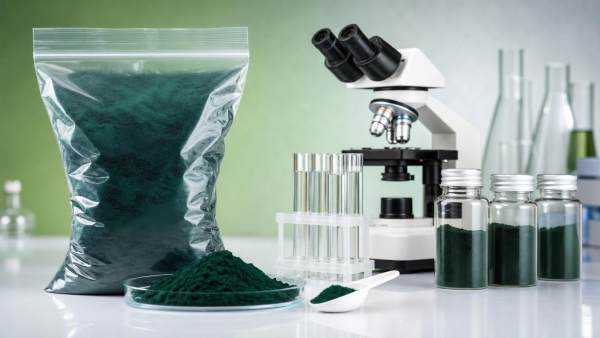
For quality control and safety teams, sourcing organic spirulina powder bulk is not just a price comparison. It is a risk assessment involving identity verification, contaminant control, regulatory documentation, and batch-to-batch consistency.
As spirulina moves deeper into nutraceutical, feed, and functional ingredient supply chains, evaluation must go beyond color or protein claims.
This guide explains how to judge organic spirulina powder bulk before approving it for commercial formulation, repacking, or long-term sourcing.
How should organic spirulina powder bulk be defined before quality testing?
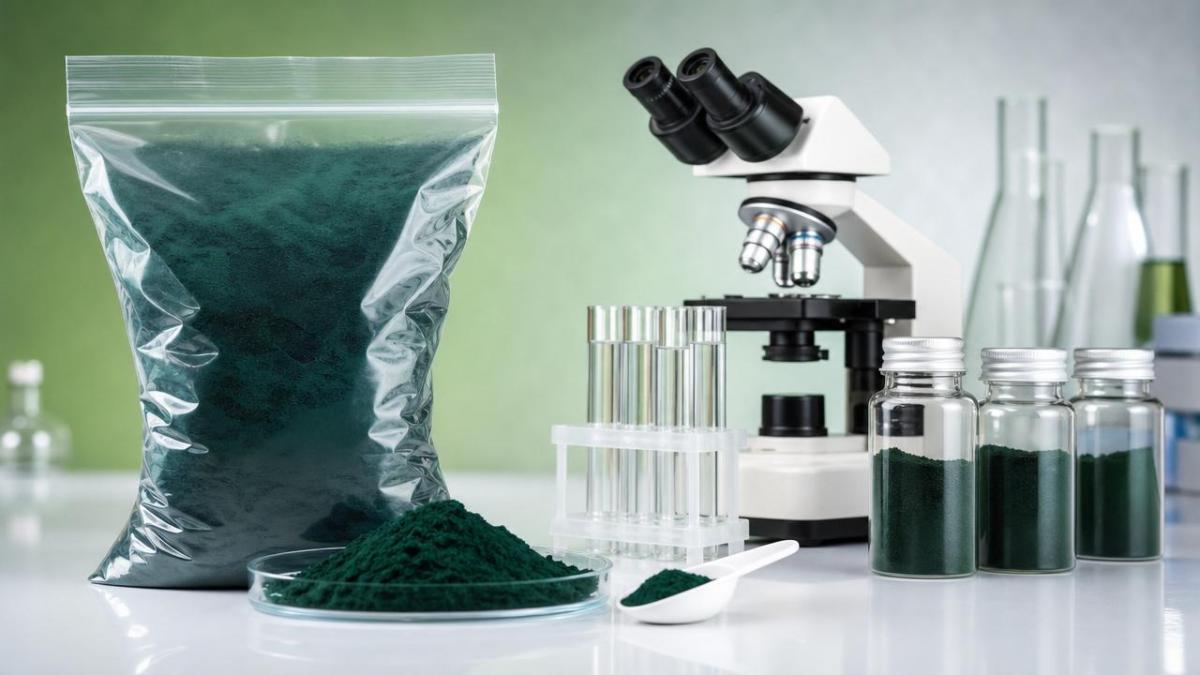
Organic spirulina powder bulk should be defined as dried biomass from Arthrospira species cultivated under certified organic conditions.
The definition must include species identity, cultivation system, harvest method, drying process, particle size, and intended application.
Without a precise specification, organic spirulina powder bulk can be judged only superficially. That creates risk during audits, formulation, and import review.
A complete product specification should identify whether the material is food grade, feed grade, cosmetic grade, or nutraceutical grade.
These categories may share similar appearance, but they differ in contaminant limits, documentation depth, and regulatory expectations.
Organic status also requires proof. A logo or marketing claim is not enough for organic spirulina powder bulk.
- Valid organic certificate from a recognized certifier.
- Scope covering cultivation, processing, and handling.
- Certificate number, validity period, and certified site.
- Lot traceability linking the certificate to shipped material.
A strong definition prevents confusion between organic spirulina powder bulk, conventional spirulina powder, blended green powders, and algae-based ingredient mixes.
What identity indicators prove the material is real spirulina?
Identity verification is the first technical checkpoint. Organic spirulina powder bulk should not be accepted based only on visual inspection.
Color can indicate freshness, but it cannot confirm species, purity, or absence of adulterants.
High-quality spirulina usually shows a deep blue-green to dark green color. A brown or dull tone may indicate oxidation or poor drying.
However, vivid color alone may be misleading if colorants, other algae, or chlorophyll-rich materials are present.
Reliable identity testing for organic spirulina powder bulk may include microscopy, protein profiling, pigment analysis, and DNA-based confirmation.
Phycocyanin content is especially useful because it reflects both spirulina identity and processing quality.
A very low phycocyanin value can suggest heat damage, extended storage, or lower-grade biomass.
Key identity checks
- Botanical or microbial identification naming Arthrospira platensis or Arthrospira maxima.
- Microscopic morphology consistent with spirulina filaments.
- Protein content supported by validated laboratory method.
- Phycocyanin, chlorophyll, and carotenoid values within expected ranges.
- No undeclared carriers, fillers, colorants, or botanical additives.
For organic spirulina powder bulk, identity data should appear on a batch-specific certificate of analysis, not only on a generic brochure.
Which contaminants matter most in organic spirulina powder bulk?
Contaminant control determines whether organic spirulina powder bulk is commercially usable. The main risks are microbiological, chemical, and environmental.
Spirulina grows in water-based systems, so water quality, open-air exposure, and post-harvest handling strongly affect safety.
Microbial limits should cover total plate count, yeast and mold, coliforms, Escherichia coli, Salmonella, and Staphylococcus aureus.
For food and nutraceutical applications, pathogen absence is a non-negotiable requirement.
Heavy metals are another priority. Organic spirulina powder bulk should be screened for lead, cadmium, arsenic, and mercury.
These metals can accumulate from water sources, soil dust, processing equipment, or local environmental conditions.
Cyanotoxins require special attention. Spirulina itself is not typically a toxin-producing cyanobacterium, but contamination by other cyanobacteria is possible.
Testing for microcystins helps verify that cultivation and harvesting systems prevent cross-contamination.
Recommended contaminant review
Organic certification does not replace contaminant testing. It verifies a production system, not every safety parameter in each batch.
How can processing quality affect bulk spirulina performance?
Processing quality has a direct effect on appearance, nutrition, solubility, odor, and shelf life.
Organic spirulina powder bulk is usually dried by spray drying, drum drying, or low-temperature drying systems.
Excessive heat can reduce pigment stability and create a cooked odor. Poor drying can leave moisture high enough for microbial growth.
Moisture and water activity should be reviewed together. Low moisture is useful, but water activity better predicts microbial stability.
A good bulk spirulina powder should disperse reasonably well, though complete instant solubility is not always expected.
Clumping, gritty texture, or visible foreign matter can indicate poor milling, humidity exposure, or weak packaging control.
Processing indicators to compare
- Moisture level and water activity.
- Particle size distribution and mesh specification.
- Bulk density for filling and blending behavior.
- Odor profile, with no rancid or burnt notes.
- Packaging barrier against oxygen, light, and humidity.
When organic spirulina powder bulk is used in tablets, capsules, drinks, or feed premixes, physical consistency becomes commercially important.
Small differences in particle size or density can affect dosing, flowability, color uniformity, and blend stability.
What documents should support a bulk organic spirulina shipment?
Documentation is a quality control tool, not administrative decoration. It links the material to origin, method, test result, and compliance status.
For organic spirulina powder bulk, every commercial lot should be supported by batch-specific records.
A certificate of analysis should identify batch number, manufacturing date, expiration date, test methods, limits, and actual results.
Avoid accepting documents that report only “complies” without numerical data for critical parameters.
Organic certificates should be current and traceable to the production and processing sites named in shipment records.
If the material crosses borders, import documents may need HS code, country of origin, phytosanitary information, and food safety declarations.
Core document checklist
- Batch-specific certificate of analysis.
- Organic certificate and transaction certificate, where applicable.
- Specification sheet with acceptance limits.
- Allergen, GMO, irradiation, and vegan statements.
- Heavy metal, pesticide, microbiology, and microcystin reports.
- SDS, flow chart, and traceability statement.
Strong documentation reduces uncertainty when organic spirulina powder bulk enters regulated nutraceutical, food, feed, or cosmetic supply chains.
How should samples and batches be compared before approval?
Sample approval should not rely on one attractive pre-shipment sample. Bulk lots must match the approved reference sample.
For organic spirulina powder bulk, retain samples should be stored under controlled conditions for future comparison.
Compare color, odor, texture, moisture, protein, phycocyanin, contaminants, and microbiological results across multiple lots.
A trend chart is often more useful than a single certificate. It shows whether the supplier can maintain consistency.
Batch-to-batch stability matters when spirulina is used in branded formulas, functional beverages, animal nutrition, or capsule blends.
If a new batch shows sudden changes, request a deviation explanation before release.
FAQ-style decision table
What mistakes should be avoided when buying organic spirulina powder bulk?
The most common mistake is treating organic spirulina powder bulk as a commodity ingredient.
Price matters, but an unusually low offer may reflect weak testing, old inventory, poor drying, or mixed-grade material.
Another mistake is approving a supplier based on a generic specification. Specifications should match the intended application and destination market.
It is also risky to ignore packaging. Bulk spirulina is sensitive to light, oxygen, moisture, and heat.
Multi-layer food-grade bags, sealed drums, or lined cartons can protect quality during transport and storage.
Long shipping routes require stronger attention to temperature exposure, container hygiene, pallet condition, and moisture protection.
- Do not approve material without batch-specific laboratory results.
- Do not rely on organic status alone.
- Do not ignore sensory changes between samples and shipments.
- Do not accept unclear origin or incomplete traceability.
- Do not skip retain-sample comparison after arrival.
A disciplined review process makes organic spirulina powder bulk easier to qualify, monitor, and defend during audits.
Final judgment: how to approve organic spirulina powder bulk with confidence
Judging organic spirulina powder bulk requires a layered approach. Start with identity, then verify safety, processing quality, documentation, and consistency.
No single factor proves quality. A good color, high protein claim, or organic certificate must be supported by batch-specific evidence.
Before approval, request a full document package, test a representative sample, and compare results against a written specification.
For ongoing supply, build a batch history covering contaminants, pigments, moisture, sensory data, and delivery performance.
This practical system helps separate reliable organic spirulina powder bulk from material that only looks acceptable at first inspection.
The next step is simple: define the specification, confirm documents, test independently when risk is high, and release only batches that meet every agreed standard.
Related Intelligence
- Natural IngredientsBotanical Ingredient Prices in Europe: Comparing Quotes by Grade and Order VolumeCompare Europe botanical ingredients price quotes by grade and order volume. Discover how potency, testing, delivery, and inventory costs reveal real savings before you buy.
- Natural IngredientsMayonnaise vs. Salad Dressing: Ingredient and Texture DifferencesMayonnaise vs. salad dressing: discover key ingredient, texture, stability, and application differences to choose the right product for every recipe.
- Natural IngredientsIndustrial-Scale Agricultural Sourcing: Key Criteria for Reliable SupplyIndustrial scale agri sourcing made reliable: assess supplier capacity, traceability, landed cost, logistics, and resilience to protect production continuity.
The Morning Broadsheet
Daily chemical briefings, market shifts, and peer-reviewed summaries delivered to your terminal.
