

The Authority in Global Agricultural Chemistry & Bio-Resources
EU Adds 3 Agricultural Adjuvant Substances to REACH Annex XVII
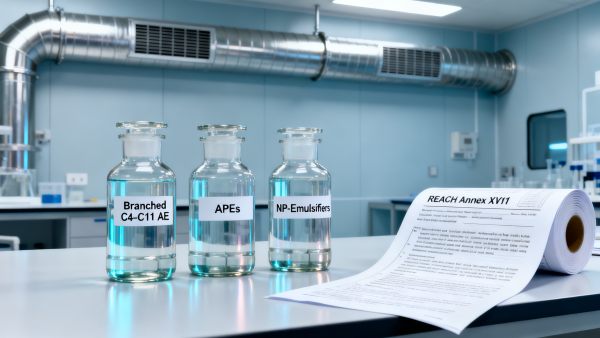
The European Commission officially adopted Regulation (EU) 2026/987 on 30 May 2026, restricting three surfactant classes widely used in pesticide formulations. This regulatory update directly affects agrochemical and custom synthesis enterprises exporting formulation intermediates and adjuvant components to the EU market, triggering urgent supply chain compliance reviews and alternative ingredient assessments.
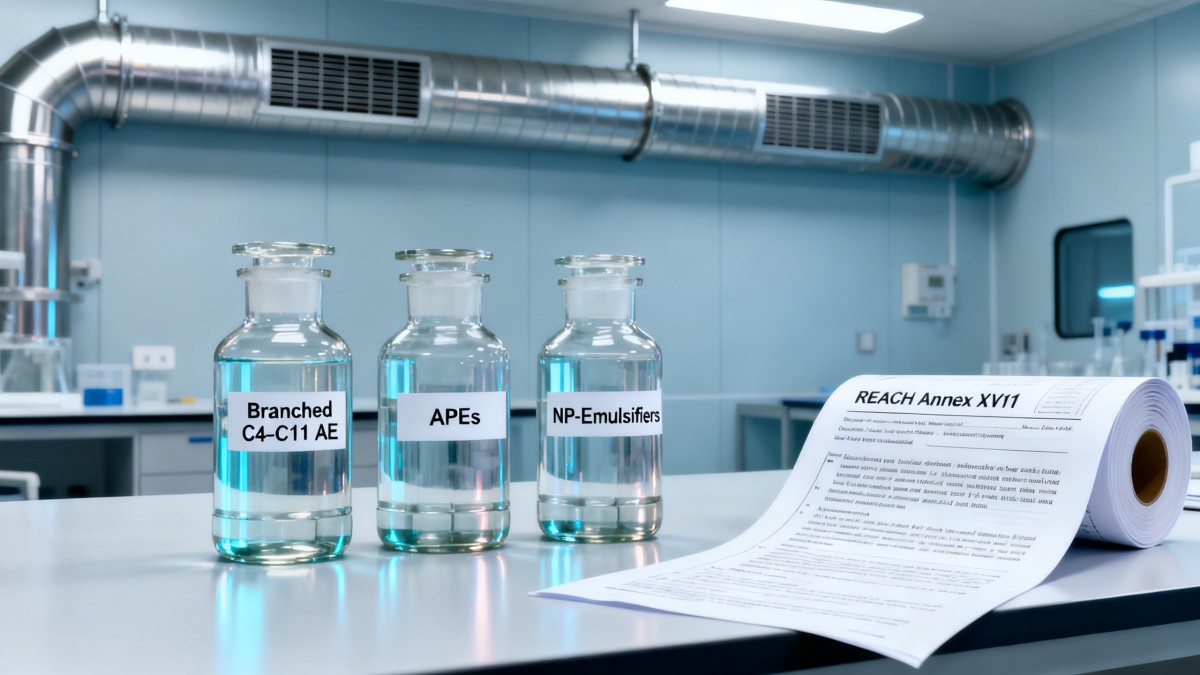
Regulatory Update: New Restrictions under REACH Annex XVII
On 30 May 2026, the European Commission published Regulation (EU) 2026/987, amending Annex XVII of the REACH Regulation. The amendment adds three substance groups to the restriction list: branched C9–C11 alcohol ethoxylates, certain alkylphenol polyethoxylates, and emulsifiers containing residual nonylphenol. These substances are prohibited from being placed on the EU market as of 1 November 2026.
Impact Across the Agrochemical Supply Chain
Export-oriented agrochemical manufacturers
These companies face immediate reformulation requirements for EU-bound pesticide products. Since the restricted surfactants are commonly used as formulation aids—enhancing solubility, stability, or spray dispersion—their prohibition necessitates technical revalidation of product efficacy, shelf life, and field performance. Regulatory submissions for new formulations may require updated ecotoxicological dossiers.
Custom synthesis service providers
Firms supplying intermediate compounds or tailored adjuvant blends must verify whether their current offerings contain any of the newly restricted substances—either as active ingredients or impurities (e.g., residual nonylphenol in ethoxylated emulsifiers). Contract documentation, batch-specific declarations of conformity, and updated SDS will be essential for maintaining EU customer trust.
Raw material procurement specialists
Procurement teams must reassess supplier certifications and analytical test reports for all surfactant-based inputs. Traceability down to manufacturing process parameters (e.g., ethoxylation degree, branching control, purification efficiency) becomes critical—not only for compliance but also to pre-empt downstream liability claims.
Regulatory and compliance support providers
Consultancies and testing laboratories are seeing increased demand for REACH Annex XVII gap analyses, restricted substance screening (e.g., via GC-MS for alkylphenols), and technical guidance on compliant alternatives such as linear alcohol ethoxylates or plant-derived biosurfactants.
Key Compliance Actions for Affected Enterprises
Immediate supply chain mapping and substance verification
Companies must trace all relevant surfactants across tiers—from raw material suppliers through formulation houses—to confirm presence, concentration, and origin of the three newly restricted categories. Analytical confirmation (e.g., quantification of residual nonylphenol below detection thresholds) is strongly advised.
Accelerated evaluation of technically viable alternatives
Substitution must address not only regulatory compliance but also functional equivalence: wetting, spreading, emulsification, and environmental safety profiles. Early engagement with EU importers on compatibility testing and dossier updates is recommended to avoid delays post-1 November 2026.
Revision of regulatory documentation and labeling
SDS, product specifications, and EU declaration of conformity must reflect the absence of restricted substances. Where legacy formulations remain in stock, clear segregation and time-bound transition plans should be documented internally and shared transparently with EU partners.
Industry Perspective: A Shift Toward Functional Transparency
Analysis shows this amendment reflects a broader regulatory trend: moving beyond hazard-based classification toward function-driven scrutiny of formulation auxiliaries. What deserves closer attention is how quickly substitution pathways can scale—particularly for niche alkylphenol-free emulsifiers with proven field performance. Observably, the six-month window between adoption and enforcement (30 May to 1 November 2026) compresses typical reformulation timelines, placing greater emphasis on pre-validated alternatives and collaborative data sharing among formulators, suppliers, and regulators.
Strategic Implication for Global Agrochemical Trade
This restriction underscores that compliance is no longer confined to active ingredients—it now extends deeply into formulation chemistry. For exporters, it signals an accelerating shift where regulatory readiness must be embedded in R&D, procurement, and quality assurance—not treated as a final gatekeeping step. While the scope is targeted, its operational ripple effects highlight growing interdependence between chemical innovation, regulatory foresight, and supply chain agility.
Source Information and Ongoing Monitoring
This article is based solely on the user-provided title, event date (30 May 2026), and summary description. Specific official source links were not provided in the input and should be verified continuously. Stakeholders are advised to monitor upcoming ECHA guidance documents on enforcement interpretation, national competent authority notifications, and potential updates to harmonised classification or authorisation pathways. Industry feedback on analytical methodology consistency and alternative surfactant acceptance remains highly relevant for future implementation clarity.
Related Intelligence
- Smart GreenhouseGreenhouse Equipment for Vertical Farming: Choosing Lighting and VentilationChoose greenhouse equipment for vertical farming with confidence. Compare lighting, airflow, and moisture control to improve crop uniformity and manage costs. Explore the guide.
- Forestry EquipmentChoosing Compact Forestry Machinery for Small Woodlots and Narrow AccessChoose compact forestry machinery that fits small woodlots and narrow access. Compare payload, turning clearance, safety, and running costs to find the right machine for your site.
- APIs & IntermediatesProcurement Planning: Which Resource Reports Help Prevent Material Shortages?Discover how procurement planning resource reports reveal usable stock, shortage dates, and supplier risks so you can prevent material shortages and keep production on track.
The Morning Broadsheet
Daily chemical briefings, market shifts, and peer-reviewed summaries delivered to your terminal.
