

The Authority in Global Agricultural Chemistry & Bio-Resources
Papain Enzyme Powder Uses in Food Processing: Activity, Dosage, and Safety
Papain Enzyme Powder Uses in Food Processing: Activity, Dosage, and Safety
For quality control and safety teams, papain enzyme powder offers valuable functionality in food processing—from meat tenderization and protein hydrolysis to clarification and texture optimization.
Yet its performance depends on verified activity, controlled dosage, and strict allergen and handling safeguards.
This guide examines industrial applications, procurement specifications, batch testing priorities, and practical controls for safe, compliant use.
What Is Papain Enzyme Powder and Why Is It Used?
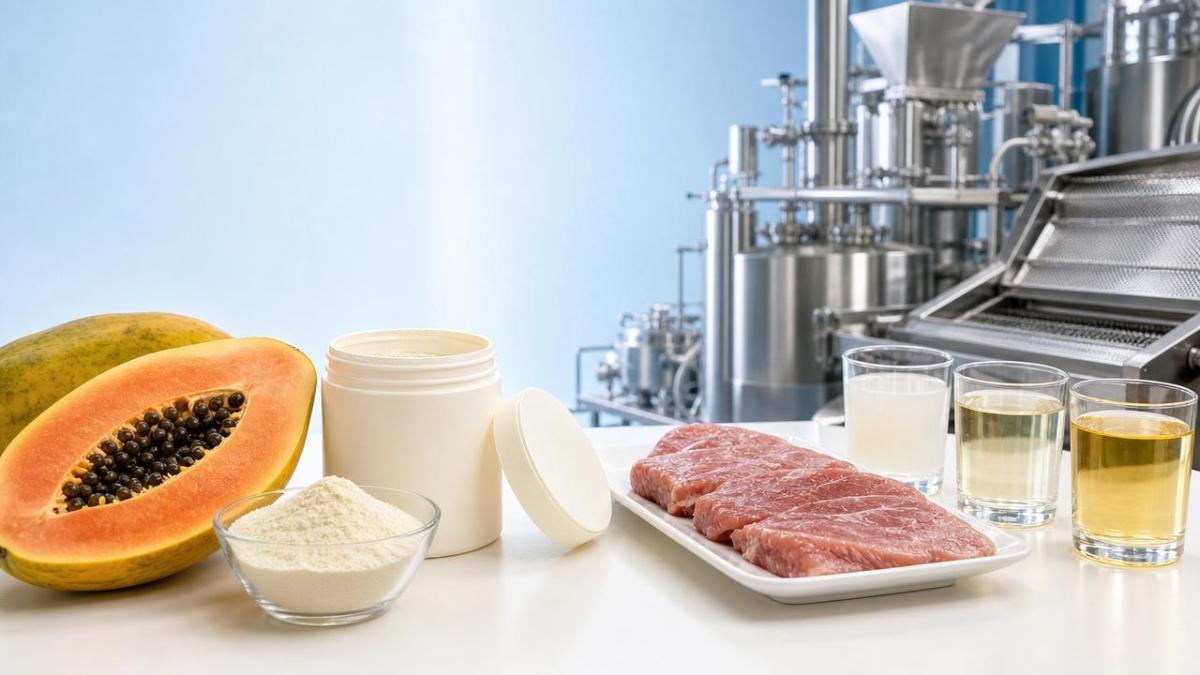
Papain enzyme powder is a proteolytic enzyme preparation derived mainly from papaya latex.
It breaks peptide bonds in proteins, helping modify texture, solubility, viscosity, and digestibility.
In food processing, papain enzyme powder is valued because it works under relatively mild conditions.
It can reduce mechanical processing intensity, shorten treatment time, and improve consistency across protein-rich materials.
Common substrates include meat, fish, collagen, gelatin, legumes, yeast proteins, and beverage haze-forming proteins.
The powder format is preferred for storage efficiency, easier dosing, and compatibility with dry premixes.
However, papain enzyme powder is not a generic tenderizer only.
Its effect depends on enzyme activity, formulation carriers, particle size, microbial status, and process parameters.
How does papain differ from other proteases?
Papain is a cysteine protease, while bromelain and ficin have different plant origins and performance profiles.
Compared with some microbial proteases, papain enzyme powder may offer broader substrate action and familiar labeling acceptance.
The best choice still depends on pH, temperature, flavor impact, regulatory status, and target hydrolysis level.
Where Is Papain Enzyme Powder Applied in Food Processing?
Papain enzyme powder is used when controlled protein modification improves processing yield or finished product quality.
The most recognized application is meat tenderization, especially for tougher cuts and standardized marinated products.
It weakens structural proteins, helping create a softer bite without long aging periods.
In protein hydrolysis, papain enzyme powder supports production of peptides, savory bases, nutritional ingredients, and functional blends.
Hydrolysis can improve solubility and reduce viscosity, but excessive treatment may create bitterness.
In beverage and brewing applications, papain may help reduce protein haze and improve clarity stability.
It is also considered in fish processing, collagen modification, dough-related trials, and specialty ingredient preparation.
- Meat: tenderization, marinade systems, improved bite consistency.
- Seafood: texture adjustment and protein breakdown control.
- Beverages: haze reduction and clarification support.
- Protein ingredients: hydrolysates, peptide blends, flavor bases.
- Gelatin and collagen: viscosity and functional property adjustment.
Each application needs small-scale validation before commercial adoption.
A dosage that works for beef may damage fish texture or over-hydrolyze plant proteins.
How Should Enzyme Activity Be Evaluated Before Use?
Activity is the core specification for papain enzyme powder, but activity units are not always directly comparable.
Different suppliers may report USP units, TU, FCC units, casein digestion units, or proprietary assay values.
A clear certificate of analysis should identify the assay method, substrate, pH, temperature, and acceptance range.
Without those details, two batches labeled similarly may perform differently in production.
Papain enzyme powder should also be checked for moisture, ash, carrier composition, microbial limits, and heavy metals.
Food-grade documentation may include allergen statements, non-GMO status, halal, kosher, or organic compatibility where relevant.
What process factors change papain performance?
Papain activity is influenced by temperature, pH, water activity, contact time, salt, inhibitors, and substrate structure.
Typical activity is favorable in mildly acidic to neutral conditions, though exact ranges vary by preparation.
Heat can accelerate action at first, then permanently deactivate the enzyme if limits are exceeded.
Process validation should define the desired endpoint and the inactivation step.
This prevents papain enzyme powder from continuing to soften or hydrolyze proteins during storage.
What Dosage Range Is Practical for Industrial Processing?
There is no universal dosage for papain enzyme powder because enzyme activity and food matrices vary widely.
A practical approach begins with laboratory trials using activity-based dosing, not only weight-based addition.
Small pilot batches can identify the balance between treatment time, texture, yield, taste, and enzyme cost.
For meat tenderization, low inclusion levels are often tested first to avoid mushy texture.
For protein hydrolysis, dosage may be higher, but endpoint control becomes more important.
For clarification, papain enzyme powder is usually assessed by clarity, turbidity reduction, and stability over shelf life.
Documented trials should include batch number, activity units, addition rate, temperature, pH, and mixing conditions.
This makes papain enzyme powder performance easier to reproduce during scale-up.
What Safety and Regulatory Issues Require Attention?
Papain enzyme powder can be safe in food manufacturing when it meets food-grade specifications and is handled correctly.
The main occupational concern is respiratory sensitization from enzyme dust exposure.
Closed transfer, local exhaust ventilation, protective gloves, goggles, and suitable respirators reduce exposure risk.
Dust control is especially important during weighing, blending, bag opening, and dry premix preparation.
Papain may also present allergen concerns, including possible sensitivity linked with papaya or latex-associated reactions.
Food labeling requirements depend on jurisdiction, application, residual enzyme status, and final product claims.
Regulatory review should consider FDA, EU food enzyme rules, Codex guidance, and local additive frameworks.
Which quality documents should be requested?
- Certificate of analysis with activity method and batch data.
- Food-grade declaration and manufacturing flow summary.
- Microbiological limits, including pathogens where applicable.
- Heavy metal, pesticide, and contaminant statements.
- Allergen, GMO, halal, kosher, and country-of-origin documents.
- Safety data sheet covering enzyme dust handling.
Reliable papain enzyme powder supply should include traceability from raw latex sourcing through finished packaging.
Storage conditions also matter, since moisture and heat can reduce activity before use.
How Can Papain Enzyme Powder Be Compared and Selected?
Selection should begin with application fit, not only price per kilogram.
A low-cost papain enzyme powder may be expensive if activity varies or filtration losses increase.
Compare cost per verified activity unit, expected dosage, yield improvement, and failure risk.
Particle size affects dispersion, dustiness, and blending uniformity.
Carrier ingredients affect labeling, solubility, and compatibility with dry or liquid systems.
Stability data should cover real storage temperatures, not only ideal laboratory conditions.
What mistakes cause inconsistent results?
The most common mistake is treating papain enzyme powder as a simple commodity additive.
Another mistake is changing suppliers without bridging trials between activity methods and real process outcomes.
Poor mixing can create localized over-treatment, especially in marinades and dry rub systems.
Skipping endpoint control may cause continued breakdown after packaging or during chilled storage.
Ignoring dust safety can create compliance issues even when the final food product is acceptable.
What Is the Practical Next Step for Implementation?
A structured evaluation plan helps convert papain enzyme powder from a trial ingredient into a controlled processing tool.
Start by defining the target outcome, such as tenderness, clarity, hydrolysis level, or viscosity reduction.
Then request samples with complete documentation and compare them under identical conditions.
- Confirm food-grade status, regulatory fit, and supplier traceability.
- Standardize activity units before comparing dosage economics.
- Run bench tests across pH, temperature, and contact time ranges.
- Validate quality endpoints and enzyme inactivation conditions.
- Document worker exposure controls for powder handling.
- Scale gradually, with batch records tied to activity results.
Papain enzyme powder can improve yield, texture, clarity, and protein functionality when applied with technical discipline.
The strongest results come from verified activity, controlled dosing, compliant sourcing, and documented safety measures.
For robust implementation, build a specification sheet before purchasing commercial volumes.
Include activity method, microbiological limits, allergen controls, storage rules, and process validation requirements.
With that foundation, papain enzyme powder becomes a predictable tool rather than an uncontrolled variable.
Related Intelligence
- Food Grade EnzymesWhat Drives Industrial Enzyme Costs? Activity, Format, and Supply Risk ExplainedIndustrial enzyme cost factors explained: compare activity, formulation, shelf life, documentation, and supply risk to reduce process costs and improve purchasing decisions.
- Food Grade EnzymesIs There a Global Standard for Biochemical Engineering Product Quality?Is there a global standard for biochemical engineering product quality? Explore GMP, ISO, traceability, and supplier checks for confident global sourcing.
- Food Grade EnzymesHow Enzymes for Cracker Formulation Improve Texture and Shelf LifeEnzymes for cracker formulation can enhance dough handling, crisp texture, and shelf life. Explore targeted enzyme strategies for consistent, high-quality crackers.
The Morning Broadsheet
Daily chemical briefings, market shifts, and peer-reviewed summaries delivered to your terminal.
