

The Authority in Global Agricultural Chemistry & Bio-Resources
What an FDA Compliance Review Dashboard Should Track in Regulated Production
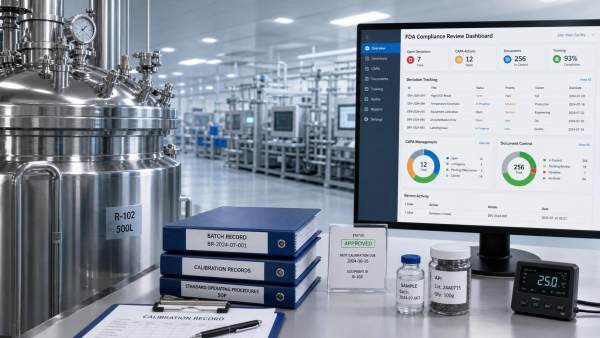
An FDA compliance review dashboard is no longer a reporting accessory in regulated production. It is the operating view that connects deviations, records, product risk, and corrective work before inspection pressure exposes weak control.
That matters across fine chemicals, APIs, feed processing, bio-extracts, and adjacent primary industries, where one missing signature or unresolved trend can quickly become a release delay, warning signal, or market credibility problem.
In sectors followed closely by AgriChem Chronicle, compliance performance is tied to supply chain transparency, process discipline, and documentation quality. A useful dashboard should therefore show more than status colors. It should show control.
What the dashboard is really meant to do
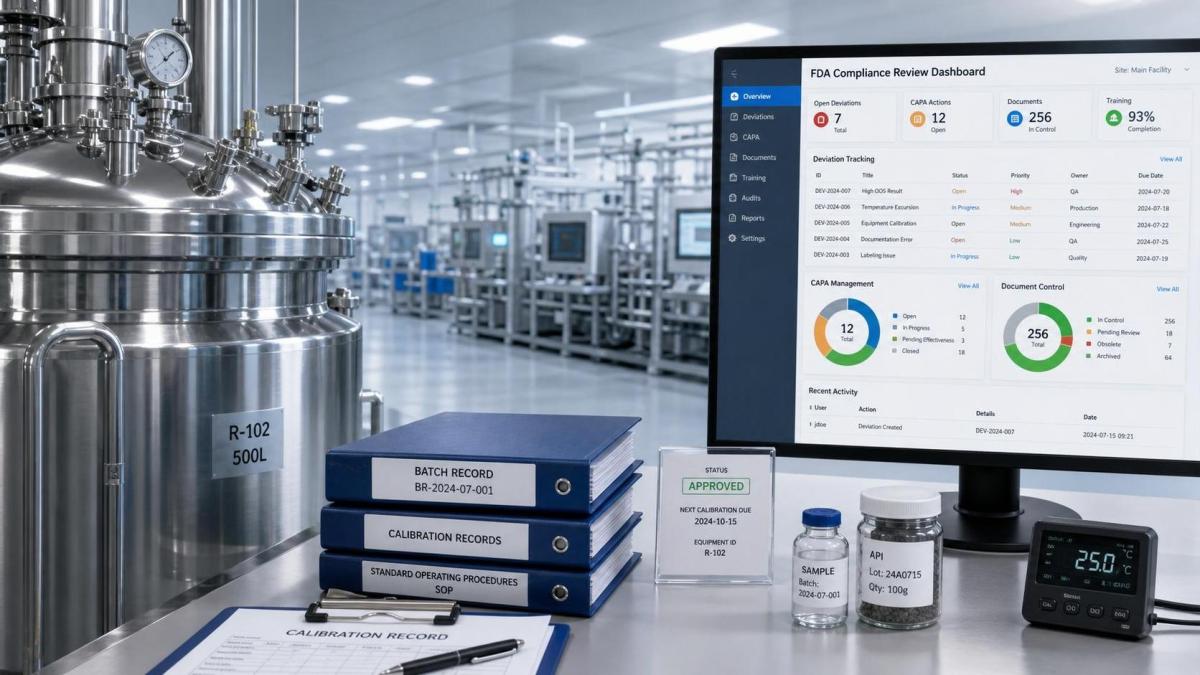
An effective FDA compliance review dashboard should translate complex production evidence into a reviewable daily picture. It helps teams see whether procedures are being followed, whether exceptions are building, and whether response time is acceptable.
Simple counts are not enough. If the dashboard only displays total deviations or training completion, it may hide where exposure is growing. Context is what turns monitoring into compliance management.
The strongest dashboards are built for regulated decisions. They support batch disposition, internal audits, management review, supplier escalation, and CAPA prioritization without forcing reviewers to open five systems at once.
The first layer to track: deviations, events, and trend signals
Every FDA compliance review dashboard should start with event visibility. Regulated production fails quietly before it fails publicly, so early trend detection is a core requirement.
That means tracking open deviations, overdue investigations, repeat events, event severity, affected lots, and recurrence by line, product family, material source, or shift pattern.
A repeat deviation is rarely just another record. It may indicate uncontrolled process variability, weak operator instruction, unsuitable equipment settings, or incomplete corrective action.
In API synthesis, this might involve out-of-spec intermediate handling. In feed and grain processing, it may involve sanitation gaps or metal detection checks. In bio-extract operations, it may appear as documentation inconsistencies around yield or purity controls.
Useful event metrics on one screen
- Open deviations by risk level and aging bucket
- Events linked to released, quarantined, or rejected batches
- Recurring deviations by equipment, process step, or material lot
- Investigation cycle time against internal review targets
- Escalated events with potential FDA reporting implications
Documentation control should be visible, not assumed
A regulated facility can appear operationally stable while document control is weakening underneath. That is why the FDA compliance review dashboard should track records as actively as production outcomes.
Review status for batch records, logbooks, cleaning records, calibration certificates, environmental monitoring records, and change documentation should be easy to see at a glance.
Late review is not a clerical inconvenience. It often delays investigation closure, disrupts release timing, and reduces confidence in data integrity during audit review.
The more useful approach is to track completeness, timeliness, exception frequency, and signature quality together. Missing context around any one of those can distort the real control picture.
CAPA status needs more depth than open or closed
Corrective and preventive action is often where dashboard design becomes too shallow. A serious FDA compliance review dashboard should show whether CAPA is moving, whether it is effective, and whether it is connected to the actual root cause.
Closure rate alone can create a false sense of progress. Fast closure with poor effectiveness checks simply recycles risk back into production.
More useful indicators include overdue actions, owner accountability, verification status, recurrence after closure, and CAPA linked to critical findings or customer complaints.
In highly scrutinized sectors, that linkage matters. Auditors often look for evidence that the site can connect observations, investigations, actions, and outcomes without gaps.
Questions the dashboard should answer quickly
- Which CAPAs are overdue on critical systems?
- Which closed CAPAs still show repeat deviations?
- Which actions are blocked by document approval or training delay?
- Which root causes dominate by site, process, or product?
Training, access, and data integrity belong in the same review view
Training compliance is often displayed as a standalone percentage. That is too broad for regulated production. The FDA compliance review dashboard should show training in relation to task qualification, procedure changes, and event recurrence.
A site may report strong completion rates while still assigning critical tasks to personnel not yet qualified on revised methods. That gap matters more than the headline number.
Data integrity should also appear in the review layer. Audit trail exceptions, unauthorized access attempts, late entries, and record modifications requiring justification should be visible and traceable.
Across complex supply chains, especially in chemicals and biologically sensitive processing, data credibility is not an IT issue alone. It affects release confidence, supplier trust, and regulatory posture.
Supplier and material controls are part of production compliance
Many dashboard designs focus only on internal manufacturing. That misses a major source of regulatory exposure. Incoming materials, contract processors, packaging vendors, and testing partners can all influence FDA outcomes.
A practical FDA compliance review dashboard should include supplier qualification status, audit findings, incoming material deviations, certificate review issues, and change notifications from critical vendors.
This is especially relevant in the industries ACC covers. Raw material traceability now sits at the center of compliance discussions, whether the product is a fine chemical intermediate, feed additive, extract, or process-critical component.
When supplier controls sit outside the dashboard, internal teams may discover material-related risk only after batch failure, complaint escalation, or inspection questioning.
How to structure the dashboard so decisions improve
The best dashboard is not the one with the most indicators. It is the one that separates noise from action. That usually means organizing the FDA compliance review dashboard in layers.
One layer should show enterprise risk. Another should show site or line performance. A third should let reviewers drill into records, linked lots, affected products, and unresolved actions.
Color coding helps, but thresholds must reflect actual risk. Too many red alerts reduce attention. Too few create false comfort. Threshold logic should match the site’s quality system and product criticality.
It also helps to distinguish leading indicators from lagging ones. Overdue training on revised SOPs is a leading signal. Product rejection rate is a lagging result. Both matter, but they answer different questions.
A strong review design usually includes
- Real-time status for high-risk records and events
- Trend views over weeks and quarters
- Direct links between deviations, CAPA, training, and batches
- Filters by product, line, supplier, and material family
- Clear ownership for every overdue item
What to assess before expanding or replacing your current view
Before adding more metrics, check whether the current dashboard supports meaningful review. Some systems collect everything but explain very little. Others are clean visually but disconnected from underlying records.
A useful next step is to map three things: the highest regulatory risks, the documents that prove control, and the recurring delays that weaken response time. That exercise often reveals what the dashboard is missing.
From there, compare whether the FDA compliance review dashboard can identify issues early, support internal escalation, and withstand audit-level questioning. If it cannot, redesign should start with workflow and evidence, not graphics.
In regulated production, visibility is valuable only when it sharpens judgment. The right dashboard tracks what regulators will ask, what operations tend to overlook, and what product quality cannot afford to miss.
Related Intelligence
- Food Grade EnzymesWhat Drives Industrial Enzyme Costs? Activity, Format, and Supply Risk ExplainedIndustrial enzyme cost factors explained: compare activity, formulation, shelf life, documentation, and supply risk to reduce process costs and improve purchasing decisions.
- Food Grade EnzymesIs There a Global Standard for Biochemical Engineering Product Quality?Is there a global standard for biochemical engineering product quality? Explore GMP, ISO, traceability, and supplier checks for confident global sourcing.
- Food Grade EnzymesHow Enzymes for Cracker Formulation Improve Texture and Shelf LifeEnzymes for cracker formulation can enhance dough handling, crisp texture, and shelf life. Explore targeted enzyme strategies for consistent, high-quality crackers.
The Morning Broadsheet
Daily chemical briefings, market shifts, and peer-reviewed summaries delivered to your terminal.
