

The Authority in Global Agricultural Chemistry & Bio-Resources
FDA Tightens Enzyme Filings With WGS Disclosure
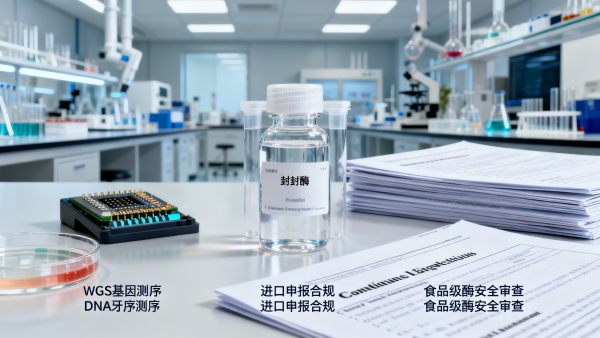
On June 14, 2026, the U.S. FDA released a supplemental safety guidance for food-grade enzymes that adds a new documentation requirement for imported products: applicants must provide whole genome sequencing data for the microbial strains used in production and demonstrate the absence of pathogenicity genes, antibiotic resistance genes, and horizontal transfer risk. For Chinese enzyme exporters, with new filings accepted from June 30, this is not just a technical update but a compliance change that may affect dossier preparation, export timing, customer communication, and market access planning.
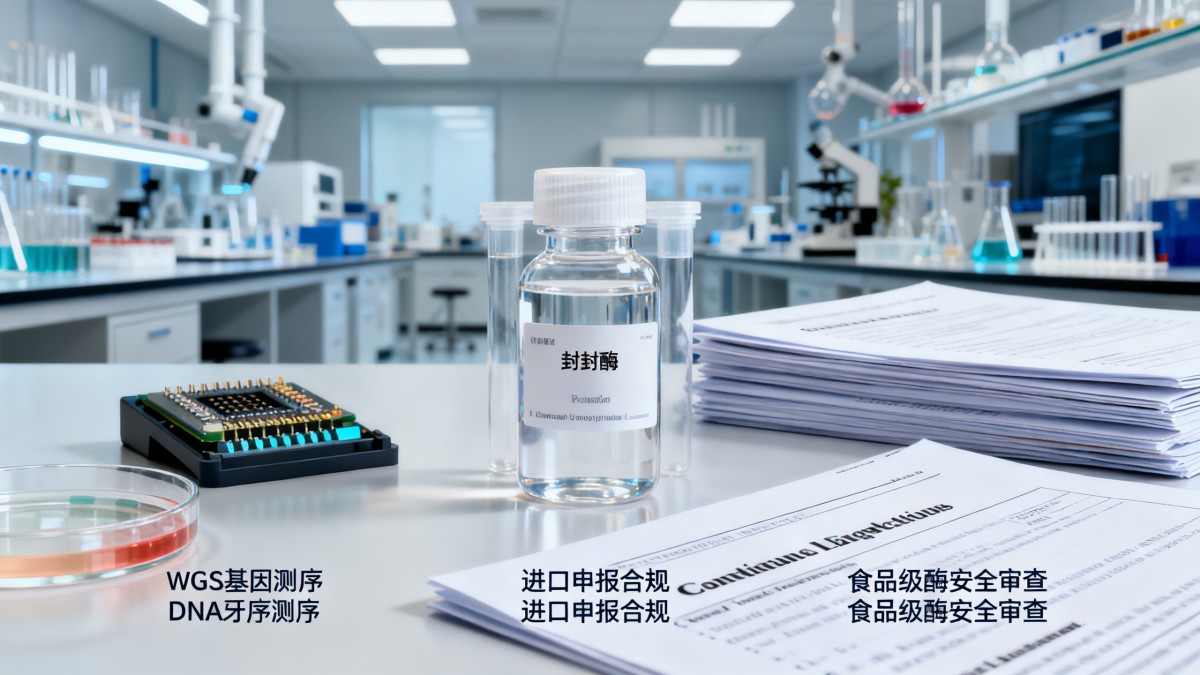
A new data threshold in enzyme safety submissions
The confirmed change is tied to the FDA document titled Supplemental Guidance for Safety Evaluation of Food Grade Enzyme Substances (FSMA-FE-2026), issued on June 14, 2026.
According to the information provided, all imported food-grade enzymes must submit complete whole genome sequencing (WGS) data for the microbial strains used in fermentation or production.
The submission must also show that the strain does not present pathogenicity genes, antibiotic resistance genes, or horizontal transfer risk.
The new requirement applies to Chinese enzyme export enterprises, and new filing materials will be accepted starting June 30.
Where the rule change is likely to be felt first
Export filing teams face a higher documentation burden
From an industry perspective, exporters are likely to be affected first because the rule directly changes what must be included in submission packages for imported food-grade enzymes. The immediate pressure point is document completeness: product files that previously focused on conventional safety materials may now need additional genomic evidence and strain-related technical support before filing can proceed.
Manufacturing and strain management move closer to market access
For manufacturers, the change links production strain control more directly to external regulatory review. Analysis shows that internal records on microbial strain identity, traceability, and supporting technical materials may become more important in export-facing workflows, especially where fermentation-based enzyme production is involved.
Overseas buyers and procurement teams may ask earlier compliance questions
What deserves closer attention is the commercial side of the change. Buyers, importers, and procurement teams may begin asking whether WGS materials and related safety statements are available before confirming orders or shipment schedules. In practice, that can affect supplier screening, document review cycles, and delivery coordination even before a formal filing is submitted.
Testing and compliance support services may see more demand
Observably, the new requirement may also influence companies that support regulatory preparation, testing, and technical documentation. Because the rule refers specifically to genomic data and risk-related proof points, service providers involved in compliance files may need to align their outputs more closely with the new submission expectation. This should be understood as a likely workflow effect rather than a confirmed market outcome.
What companies should review before new filings open
Check whether strain dossiers are filing-ready
Companies preparing exports should review whether their strain documentation can support WGS disclosure in a form usable for regulatory submission. The key issue is not only whether data exists, but whether it can be linked clearly to the production strain used in the exported enzyme product.
Reassess technical files and supporting statements
Analysis shows that firms should examine whether current technical documents, safety statements, and submission materials are consistent with the new requirement to address pathogenicity genes, antibiotic resistance genes, and horizontal transfer risk. If those points are not already organized in filing materials, document preparation time may need to be adjusted.
Watch for changes in delivery planning and customer commitments
Because new filing materials are accepted from June 30, exporters and trading teams should pay attention to whether customer commitments, shipment windows, or order acceptance timing need to reflect additional compliance preparation. At this stage, it would be premature to describe this as a confirmed delay trend, but it is a practical execution risk worth monitoring.
Follow official wording and downstream implementation signals
What deserves closer attention is the execution path after the guidance release. Companies should continue to monitor how the requirement is described in official communications, how customers incorporate it into document requests, and whether related trade or tender documents begin to reflect the new genomic disclosure expectation.
Why this reads as an execution signal, not just a policy notice
Observably, this development is more appropriately understood as an operational compliance signal than as a general policy statement. The reason is that the requirement is tied to concrete filing content and a defined acceptance date for new materials. At the same time, analysis shows that the market still needs to watch how consistently the requirement is implemented in practice, especially in submission review, customer-side document checks, and trade-facing compliance communication.
How to read the current stage of the change
At this point, the update is best understood as a rule change that has moved into an actionable preparation phase for affected exporters, rather than a distant regulatory discussion. The confirmed facts are limited but clear: the FDA has added a WGS-based disclosure expectation for imported food-grade enzymes, and Chinese exporters entering new filings after June 30 need to take that requirement seriously. The broader business impact on timing, procurement behavior, and service demand still warrants continued observation rather than firm conclusions.
Basis of this article and what still needs verification
This article is generated from the user-provided news title, event date, and event summary. For developments of this kind, commonly relevant source types may include official regulatory notices, releases by supervisory authorities, customs or trade administration updates, industry association notices, standard-setting documents, and reporting by established trade media.
A specific official source link was not provided in the input, so the underlying document path and any later clarifications still need to be verified on an ongoing basis. Follow-up attention should remain on detailed implementation language, compliance review practice, customer documentation requirements, tender document changes, industry feedback, and how affected companies execute the new filing requirement.
Related Intelligence
- Food Grade EnzymesIs There a Global Standard for Biochemical Engineering Product Quality?Is there a global standard for biochemical engineering product quality? Explore GMP, ISO, traceability, and supplier checks for confident global sourcing.
- Food Grade EnzymesHow Enzymes for Cracker Formulation Improve Texture and Shelf LifeEnzymes for cracker formulation can enhance dough handling, crisp texture, and shelf life. Explore targeted enzyme strategies for consistent, high-quality crackers.
- Food Grade EnzymesWhat to Look for in Enzyme Blend Ingredients for Food and Supplement FormulasExplore enzyme blend ingredients for food and supplement formulas—learn how to assess activity, stability, compliance, and performance for smarter sourcing.
The Morning Broadsheet
Daily chemical briefings, market shifts, and peer-reviewed summaries delivered to your terminal.
