

The Authority in Global Agricultural Chemistry & Bio-Resources
Enzyme Processing Solutions in Europe: Which Process Fits Heat-Sensitive Food Ingredients?
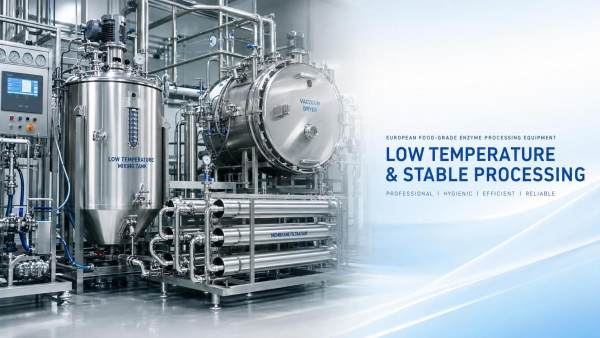
Enzyme Processing Solutions in Europe: Which Process Fits Heat-Sensitive Food Ingredients?
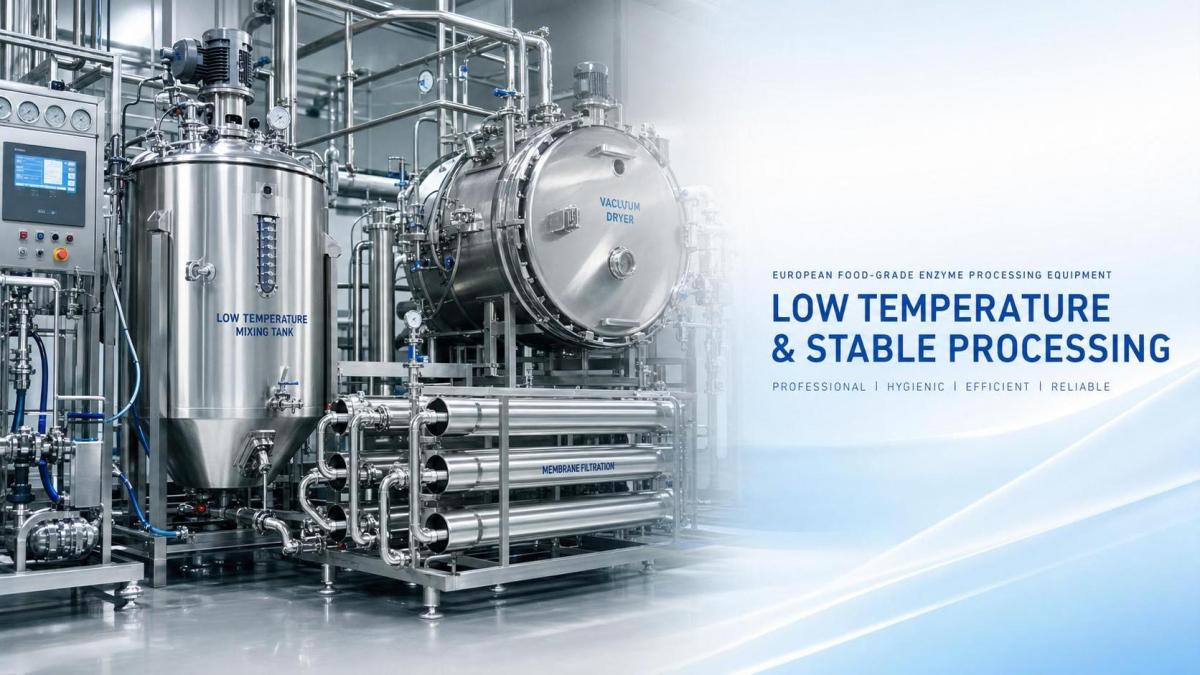
Choosing the right enzyme processing solutions Europe offers starts with one practical question. How much heat can your ingredient tolerate before quality begins to slip?
That matters because many food enzymes react quickly to thermal stress. Activity drops, aromas fade, and functional performance becomes harder to control.
In real production, the issue is rarely just temperature. Residence time, moisture, oxygen exposure, shear, and cleaning requirements also shape the right process choice.
Across Europe, processors are under pressure to protect yield while meeting strict hygiene and traceability standards. That makes process fit more important than process speed alone.
The best enzyme processing solutions Europe suppliers provide usually balance four things. They preserve bioactivity, support stable throughput, simplify validation, and limit product loss.
This guide looks at the most workable options for heat-sensitive food ingredients. It also explains when each route makes sense and where operators should stay cautious.
Why Heat-Sensitive Ingredients Need a Different Processing Logic
Not every ingredient fails in the same way. Some enzymes lose catalytic activity first, while others keep activity but lose dispersibility, flavor integrity, or shelf-life stability.
This is why enzyme processing solutions Europe buyers compare more than capital cost. They need a process window that matches the actual sensitivity profile of the material.
Common heat-sensitive ingredients include digestive enzymes, fermentation aids, dairy bioactives, plant extracts, probiotics blended with enzymes, and specialty powder premixes.
When these materials see unnecessary heat, three problems appear fast:
- Lower enzyme potency and weaker batch-to-batch consistency.
- Changes in taste, odor, or color that reduce formulation flexibility.
- More rework, more rejects, and higher compliance risk.
A good processing plan therefore begins with critical limits. Maximum product temperature, target water activity, exposure time, and acceptable potency loss should be defined early.
Core Enzyme Processing Solutions Europe Plants Commonly Use
Most enzyme processing solutions Europe facilities use fall into a few practical categories. Each one protects quality in a different way.
Cold Processing and Chilled Blending
Cold processing is often the first choice for fragile powdered or liquid enzymes. It keeps product temperatures low throughout transfer, dosing, blending, and packing.
This route works well for premixes, beverage systems, and post-fermentation additions. It is especially useful when potency retention matters more than aggressive throughput.
Its limits are also clear. Cold systems need tight moisture control, insulated lines, and disciplined sanitation to avoid condensation and microbial risk.
Vacuum Drying
Vacuum drying lowers the boiling point of water. That allows moisture removal at gentler temperatures than standard thermal drying.
For many enzyme processing solutions Europe manufacturers recommend, this is a strong middle ground. It supports stable drying without exposing the product to harsh heat peaks.
It suits enzyme concentrates, botanical blends, and intermediate powders. Still, cycle times can be longer, and chamber loading patterns must be controlled carefully.
Freeze Drying
Freeze drying is widely seen as the premium solution for highly heat-sensitive ingredients. Water is removed by sublimation under deep vacuum after freezing.
This usually preserves structure, activity, and flavor better than conventional drying. It also helps products that need a porous, fast-rehydrating powder format.
The tradeoff is cost. Freeze drying brings higher energy use, longer processing times, and stricter maintenance expectations.
Membrane Filtration and Low-Temperature Concentration
For liquid enzyme streams, membrane systems can reduce water load before final stabilization. Ultrafiltration and nanofiltration are common depending on molecular targets.
These enzyme processing solutions Europe teams use are effective where thermal evaporation would damage activity. They also support better fraction control and cleaner downstream handling.
The operating challenge is fouling. Membrane performance depends heavily on feed quality, CIP discipline, and pressure management.
Microencapsulation
Microencapsulation is less about primary drying and more about protection. It creates a barrier against heat, oxygen, humidity, or gastric conditions, depending on the final use.
When used well, it extends shelf life and supports controlled release. It is often paired with other enzyme processing solutions Europe plants already operate.
It is useful, but not universal. Coating materials, particle size, and release profile must match the food matrix or the benefit may disappear.
How to Match the Process to the Ingredient
A workable decision model keeps the evaluation simple. Start with the ingredient, then move to plant realities.
- Define the thermal limit and acceptable activity loss.
- Check the starting form: liquid, slurry, paste, granule, or powder.
- Set throughput, hold time, and packaging expectations.
- Review hygiene level, allergen segregation, and validation needs.
- Compare total operating cost, not purchase price alone.
In practice, the best enzyme processing solutions Europe users choose often look different by application.
Operational Risks That Can Undermine Good Equipment
Even strong enzyme processing solutions Europe installations fail when the line is poorly controlled. In most cases, the issue is not the machine. It is the operating discipline.
Watch these points closely:
- Long idle time between unit operations.
- Hidden warm spots in transfer lines or tanks.
- Poorly tuned CIP cycles that leave residues or excess moisture.
- Inconsistent dosing during blending or encapsulation.
- Weak incoming raw material specifications.
From a quality standpoint, validation should cover more than end-product potency. Trend data on inlet temperature, vacuum stability, humidity, and hold time often explains future deviations earlier.
This is also where European compliance expectations matter. Food safety documentation, traceability, and repeatable sanitation protocols are part of process fit, not separate paperwork.
What to Ask Before Selecting Enzyme Processing Solutions Europe Suppliers
Before approving a line or retrofit, ask targeted technical questions. The quality of these answers often predicts the real performance better than a polished sales sheet.
- What product temperature range is proven under full load?
- How is residence time measured and controlled?
- Which surfaces or zones create the highest thermal risk?
- What cleaning method protects both hygiene and enzyme integrity?
- Can the system support pilot trials using your actual formulation?
- What potency retention data exists after packaging and storage?
The strongest enzyme processing solutions Europe providers usually offer application support, not just hardware. That includes trial protocols, parameter mapping, and post-startup optimization.
A Practical Selection Path for Better Product Stability
If your ingredient is extremely fragile and high value, freeze drying or membrane-led concentration is often the safer route. The higher cost is usually justified by retention.
If output volume is larger and sensitivity is moderate, vacuum drying or chilled blending may offer the best balance of efficiency and protection.
If storage and downstream use are the bigger concern, encapsulation can add another layer of security. It works best when paired with a low-stress primary process.
The main point is simple. Good enzyme processing solutions Europe plants depend on fit, not fashion. The right process is the one that protects activity while keeping production realistic.
For teams evaluating a new line, start with thermal mapping, pilot testing, and potency tracking across the full workflow. That gives a clearer answer than broad equipment claims.
In a regulated and quality-driven market, that approach leads to better output consistency, fewer surprises, and a process choice that continues to make sense after scale-up.
Related Intelligence
- Food Grade EnzymesIs There a Global Standard for Biochemical Engineering Product Quality?Is there a global standard for biochemical engineering product quality? Explore GMP, ISO, traceability, and supplier checks for confident global sourcing.
- Food Grade EnzymesHow Enzymes for Cracker Formulation Improve Texture and Shelf LifeEnzymes for cracker formulation can enhance dough handling, crisp texture, and shelf life. Explore targeted enzyme strategies for consistent, high-quality crackers.
- Food Grade EnzymesWhat to Look for in Enzyme Blend Ingredients for Food and Supplement FormulasExplore enzyme blend ingredients for food and supplement formulas—learn how to assess activity, stability, compliance, and performance for smarter sourcing.
The Morning Broadsheet
Daily chemical briefings, market shifts, and peer-reviewed summaries delivered to your terminal.
