

The Authority in Global Agricultural Chemistry & Bio-Resources
ECHA Adds 27 SVHC Limits for Botanical Extracts
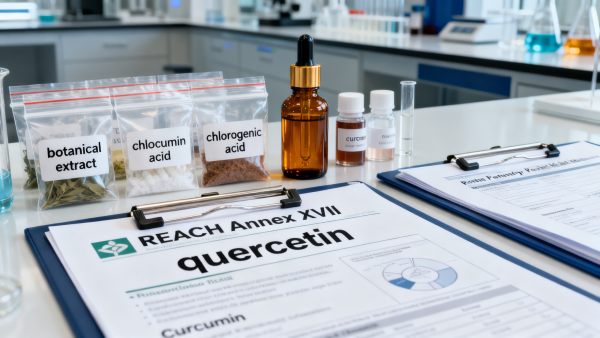
On July 18, 2026, the European Chemicals Agency (ECHA) formally updated Annex XVII of REACH, adding 27 new SVHC limit requirements for exported botanical extracts. The change covers widely used natural ingredients including quercetin, chlorogenic acid, and curcumin, and it will become mandatory on October 1, 2026. For exporters, importers, procurement teams, and supplier management functions, the update is worth close attention because it directly links market access to compliance documentation and third-party testing readiness.
What the REACH Annex XVII Update Confirms
According to the provided event information, ECHA updated REACH Annex XVII on July 18, 2026 for botanical extract export products. The revision introduces limit requirements for 27 substances of very high concern (SVHCs). The scope includes mainstream natural ingredients such as quercetin, chlorogenic acid, and curcumin. The new rule will be enforced from October 1, 2026, and exporters will be required to provide a declaration of conformity together with third-party test reports. The adjustment is described as directly affecting compliant sourcing routes for global botanical extract importers and the standards used to review supplier qualifications.
Where the Immediate Pressure Is Likely to Appear
Export transactions may face a stricter documentation threshold
From an industry perspective, direct trading companies are likely to feel the impact first because the rule is tied to export compliance. The main pressure point is not only the product itself, but also whether supporting documentation can be prepared in time, especially declarations of conformity and third-party test reports required for shipment or customer review.
Procurement teams may need to reassess supplier screening logic
Analysis shows that raw material buyers and importing companies may need to revisit how they evaluate botanical extract suppliers. The update explicitly points to changes in compliant sourcing paths and supplier qualification review standards, which means procurement decisions may increasingly depend on documentation completeness, testing capability, and consistency across affected ingredient categories.
Processors and manufacturers may need closer coordination with upstream partners
For processing and manufacturing businesses using botanical extracts as inputs, the likely impact sits in material intake, specification confirmation, and delivery scheduling. If an extract falls within the affected scope, the practical issue becomes whether upstream suppliers can provide compliant paperwork and third-party verification without disrupting production or customer commitments.
Supply chain and service providers may see more compliance-related checks
Observably, service providers involved in quality control, trade support, and supply chain coordination may encounter tighter review requirements from both exporters and buyers. Even without adding new legal obligations beyond the provided facts, the update suggests that more transactions will depend on document review, testing coordination, and clearer communication between counterparties.
What Companies Should Watch Before Enforcement Begins
Track the exact compliance language used in business documents
What deserves closer attention is the difference between a regulatory announcement and the language eventually used in contracts, declarations, specifications, and customer audit requests. Companies dealing in botanical extracts should focus on whether internal and external documents are aligned with the new Annex XVII requirement before the October 1, 2026 enforcement date.
Review exposure across affected ingredient categories
Because the update names widely used natural ingredients such as quercetin, chlorogenic acid, and curcumin, businesses should identify where these categories appear in their export portfolios, sourcing plans, or customer orders. The key issue is not to assume all products carry the same compliance burden, but to determine which product lines and transactions may require more immediate review.
Prepare for supplier qualification checks to become more evidence-based
Analysis shows that supplier assessment may move beyond commercial reliability and into proof-based compliance review. In practice, this means companies should pay attention to whether suppliers can provide the required declaration of conformity and third-party test reports in a form acceptable to buyers and cross-border counterparties.
Factor compliance timing into delivery and customer communication
Another practical point is execution timing. Where supply agreements or shipments extend across the October 1, 2026 enforcement date, companies may need to clarify document readiness, testing lead time, and customer expectations early. This is especially relevant for teams managing procurement, order fulfillment, and account communication.
Why This Looks Like More Than a Routine Technical Update
From an industry perspective, this development is more appropriate to understand as both a near-term operational change and a longer-term compliance signal. The near-term aspect is clear: a mandatory date has been set, and exporters are expected to provide specific compliance materials. The longer-term signal is that botanical extracts, even where they involve mainstream natural ingredients, are being judged through a more explicit substance-limit and supplier-verification framework. At the same time, it remains appropriate to keep observing how market participants interpret and implement the requirement in actual transactions.
How to Read the Current Signal
At this stage, the update should be read less as a standalone headline and more as a practical compliance trigger for botanical extract trade. The confirmed facts already point to real changes in export documentation, supplier qualification review, and compliant sourcing decisions. A cautious industry reading is that the rule has immediate relevance for affected business flows, while some of its wider commercial effects still need to be tracked through implementation and buyer response.
Basis of This Article and Follow-up Verification
This article is based on the user-provided news title, event date, and event summary concerning ECHA's July 18, 2026 update to REACH Annex XVII for botanical extracts. For this type of industry development, commonly relevant source categories may include official notices, company disclosures, industry association updates, authoritative media coverage, and standards or regulatory documents. No specific official source link was provided in the input, so the exact primary reference should continue to be verified. Follow-up attention should focus on any further official wording, enforcement-related clarification, and how documentation requirements are applied in real procurement and export workflows.
Related Intelligence
- Botanical ExtractsAre Botanical Extracts Classified as Agrochemicals Under New Rules?Are bio extracts considered agricultural chemicals under new rules? Learn how claims, composition, and market rules affect classification—and what to verify before launch.
- Botanical ExtractsChoosing Botanical Extracts for Pharmaceuticals: Potency, Purity, and ComplianceBotanical extracts for pharmaceuticals: learn how to assess potency, purity, traceability, and GMP compliance for confident, regulatory-ready supplier selection.
- Botanical ExtractsBotanical Extracts Market Outlook: Supply, Pricing, and Buyer RisksBotanical extracts market insights on supply, pricing, quality control, and buyer risks—compare suppliers confidently and protect your sourcing strategy.
The Morning Broadsheet
Daily chemical briefings, market shifts, and peer-reviewed summaries delivered to your terminal.
