

The Authority in Global Agricultural Chemistry & Bio-Resources
Farm Input Quality Standards Explained: What Buyers Should Check Before Sourcing
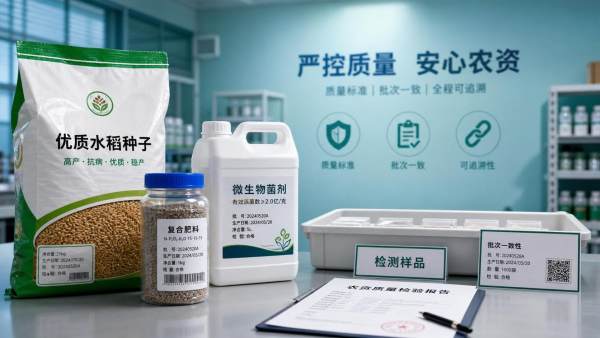
Farm input quality standards sit at the center of sourcing decisions that affect yield stability, compliance exposure, and operating cost. Whether the product is seed, fertilizer, crop protection chemistry, or feed ingredients, quality cannot be reduced to a price sheet or a sample that performed well once.
In primary industries and fine chemical supply chains, the real question is consistency. A shipment must match its specification, carry the right documentation, and arrive with traceable evidence that it was produced, stored, and transported under controlled conditions.
That is why farm input quality standards matter beyond inspection alone. They shape how sourcing teams compare offers, manage supplier risk, and protect downstream performance in increasingly regulated global markets.
Why quality standards have become a sourcing priority
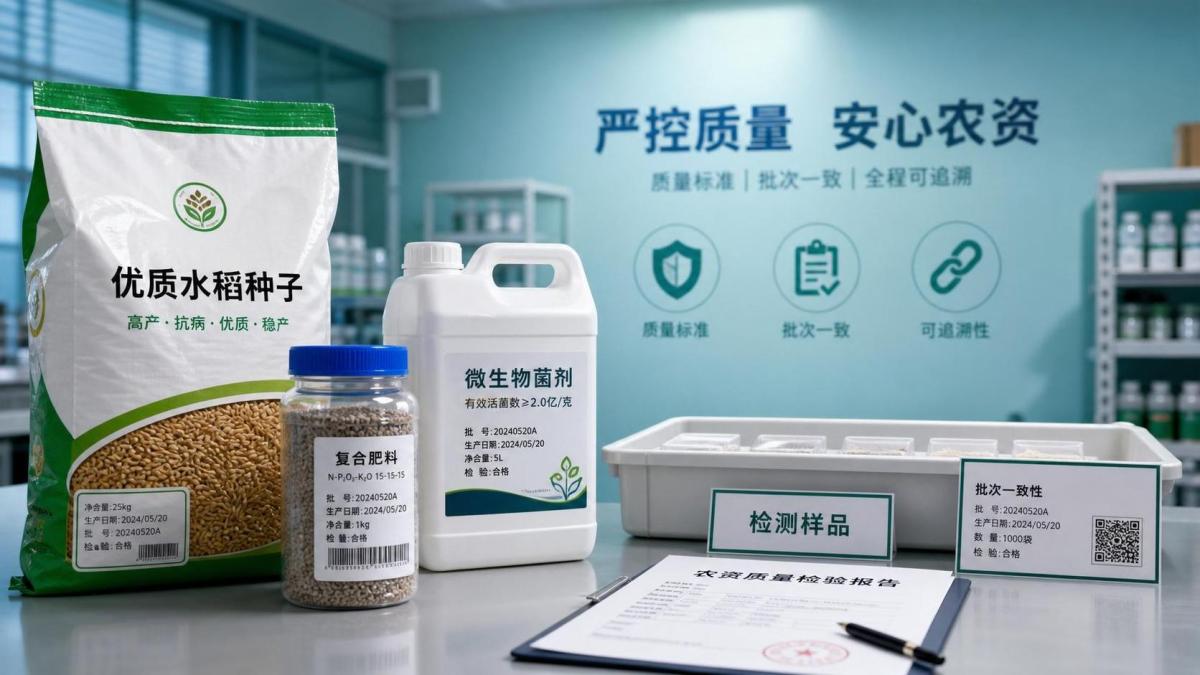
Agricultural inputs now move through longer and more fragmented supply chains. Raw materials may come from one country, formulation from another, and packaging or warehousing from a third.
That complexity raises the chance of substitution, contamination, label mismatch, moisture damage, or simple batch drift. For buyers, the visible risk is delayed supply. The less visible risk is variable field performance.
AgriChem Chronicle has tracked this pattern across agricultural chemicals, feed processing, and adjacent fine chemical sectors. The same lesson keeps appearing: quality failure is rarely a single event. It is usually a chain of weak controls.
Farm input quality standards provide a common language for controlling that chain. They define how products should be tested, labeled, documented, and released before they enter commercial use.
What farm input quality standards actually cover
The term includes more than legal compliance. It covers physical, chemical, biological, and administrative controls that help verify a product is fit for its intended use.
For seeds, this may include germination rate, varietal purity, vigor, moisture level, and freedom from weed seed contamination. For fertilizers, attention shifts to nutrient assay, solubility, caking tendency, particle uniformity, and heavy metal limits.
Crop protection products introduce another layer. Active ingredient concentration, formulation stability, impurity profile, packaging integrity, and registration status all matter. Feed ingredients require their own controls around nutrient consistency, microbiological safety, adulteration risk, and storage behavior.
In practical terms, farm input quality standards answer five questions: what the product is, whether it matches the claim, whether it is compliant, whether it will perform consistently, and whether the supplier can prove all of that.
Quality is product-specific, but the sourcing logic is shared
Different input categories use different test methods and regulatory frameworks. Still, sourcing reviews usually follow the same structure: specification, certification, batch evidence, traceability, packaging control, and supplier capability.
That shared logic is useful when procurement spans multiple categories. It allows teams to compare risk in a disciplined way, even when products are technically very different.
The checkpoints worth checking before any purchase order
A supplier can present polished documents and still leave meaningful gaps. The strongest review process focuses on evidence that connects paperwork to manufacturing reality.
Among these points, batch consistency often deserves the closest attention. Many sourcing failures involve product that technically passes minimum limits while still drifting enough to affect blending, application rate, storage life, or field response.
Documents alone do not prove quality
One of the most common mistakes is treating certification as a substitute for verification. Certificates matter, but only when they are current, relevant, and tied to the exact manufacturing site and product grade.
A valid quality review normally asks for more than a generic certificate. It should check whether the COA reflects the shipped lot, whether the test methods are appropriate, and whether there is a documented process for nonconforming material.
This is especially important in sectors adjacent to fine chemicals and regulated bioproducts. Standards culture from GMP, FDA, and EPA environments has influenced agricultural sourcing because traceable evidence is now expected, not optional.
The supplier audit still matters
Even a limited supplier audit can reveal issues that never appear on a specification sheet. Storage segregation, calibration routines, retained samples, and change-control records often tell more than marketing claims.
Where on-site visits are not practical, remote audits should still cover process flow, testing capability, subcontracting practices, and incident history. Farm input quality standards become more credible when the operating system behind them is visible.
How the risks differ across input categories
Not every input fails in the same way. A useful sourcing approach separates technical quality from logistics quality, then reviews the two together.
- Seeds: genetic purity may be acceptable, but poor storage can damage vigor before delivery.
- Fertilizers: nutrient content may test correctly, while particle size inconsistency disrupts spreading accuracy.
- Crop protection products: formulation may be compliant, but weak packaging can compromise shelf life or safety.
- Feed ingredients: assay may look strong, yet moisture or contamination risk may shorten usable life.
This is where farm input quality standards become operational rather than theoretical. They help define acceptance criteria that reflect actual use conditions, not just laboratory results.
Building a sourcing framework that holds up under pressure
A workable framework does not need to be complicated. It needs to be consistent enough that every supplier is measured against the same decision logic.
Start with a written specification that defines critical quality attributes and acceptable ranges. Then connect that specification to sampling rules, approval steps, and escalation procedures.
Next, separate mandatory requirements from preferred ones. Regulatory compliance, identity, and traceability are usually non-negotiable. Lead time flexibility or packaging format may be negotiable if the core quality system is strong.
It also helps to review supplier performance over time, not transaction by transaction. Complaint rates, deviation trends, documentation accuracy, and responsiveness during incidents are all part of the quality picture.
Useful signals during supplier comparison
- Stable test results across recent lots
- Fast access to original compliance documents
- Clear ownership of quality complaints and CAPA actions
- Transparent disclosure of subcontracted production or repacking
- Evidence of controlled storage and transport conditions
These signals often distinguish a dependable source from one that merely passes initial screening.
A practical next step for better sourcing decisions
The most effective use of farm input quality standards is to turn them into a repeatable checklist linked to business risk. Products with higher regulatory sensitivity, narrower performance margins, or more variable raw materials should receive deeper scrutiny.
From there, compare current suppliers against that checklist and identify where evidence is weak. Missing lot history, vague labeling controls, or inconsistent documentation are often early warnings rather than minor administrative issues.
For organizations operating across agriculture, feed, biochemicals, or primary processing, this discipline creates a stronger bridge between technical assurance and commercial purchasing. It also makes supplier discussions more precise, especially when disruptions occur.
A well-built sourcing review does not promise perfect supply. It does, however, make quality risks visible earlier, which is usually where the best commercial decisions begin.
Related Intelligence
- AgrochemicalsWhat Are the Main Risks of Non-Transparent Agricultural Supply Chains?what are the main risks of non transparent agri supply chains? Explore traceability, compliance, contamination, disruption, and cost risks—plus practical controls.
- AgrochemicalsGrain Production: Key Practices for Improving Yield While Protecting Soil HealthGrain production strategies to improve yield, protect soil health, manage nutrients, reduce compaction, and build resilient fields for lasting results.
- AgrochemicalsHow Do New FDA Rules Affect Agri-Chemical Sourcing Strategies?How do new FDA rules impact agri chemical sourcing strategies? Explore practical supplier screening, traceability, contaminant control, and risk-based compliance steps.
The Morning Broadsheet
Daily chemical briefings, market shifts, and peer-reviewed summaries delivered to your terminal.
