

The Authority in Global Agricultural Chemistry & Bio-Resources
ECHA Tightens REACH Rules for Botanical Extract Exports
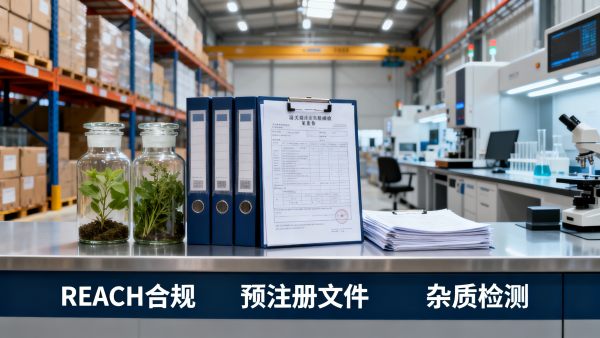
On July 17, 2026, the European Chemicals Agency (ECHA) put into effect stricter REACH compliance requirements for botanical extracts of natural origin entering the EU. The change matters immediately for exporters, importers, distributors, procurement teams, and customs-facing supply chain operations because pre-registration and impurity profile documentation are now tied more directly to market access and clearance timing, with non-compliant shipments facing refusal of entry or high port-related delay costs.
What the New Requirement Confirms
According to the information provided, ECHA formally implemented enhanced REACH compliance requirements for natural-origin botanical extracts on July 17, 2026. Under the rule, all suppliers exporting such products to the EU must complete substance pre-registration before import.
The same requirement also calls for an impurity profile report issued by an ISO 17025-accredited laboratory. The report must cover residual solvents, heavy metals, pesticide residues, and unknown monomers.
The stated direct consequence is operational: the requirement affects customs clearance timing and procurement access for global distributors. Products that do not meet the requirement may be denied entry into the EU or incur substantial port detention-related charges.
Where Pressure Will Be Felt Across the Chain
Export transactions now depend more heavily on document readiness
From an industry perspective, direct trading companies are likely to feel the impact first because shipment release into the EU is now more closely linked to whether pre-registration and impurity documentation are complete before import. The immediate pressure point is no longer only product movement, but also whether compliance files can support the transaction on time.
Procurement decisions may shift toward compliance-verifiable supply
Analysis shows that raw material buyers and sourcing teams may need to screen botanical extract suppliers more carefully. The reason is practical: if a supplier cannot provide the required pre-registration status and ISO 17025-based impurity report, the product may face entry barriers, which can affect approved vendor access and purchasing continuity.
Distribution and customs-facing operations face higher timing sensitivity
Distributors and supply chain service providers are also exposed because the summary explicitly links the new requirement to customs clearance efficiency. In operational terms, this means document gaps can turn into border delays, rejected consignments, or extra detention costs, making compliance timing part of logistics planning rather than a separate regulatory issue.
Downstream users may need closer coordination with suppliers
For downstream application companies and EU-bound buyers, the issue is not only whether an extract is available, but whether it can be imported without disruption. What deserves closer attention is that compliance status may influence delivery confidence, onboarding of new suppliers, and communication around order lead times.
What Companies Should Watch Now
Whether pre-registration is treated as a shipment prerequisite in practice
Observably, the most immediate issue is execution at the transaction level. Companies involved in EU shipments should pay close attention to how pre-registration status is checked before import and whether internal release procedures, customer documentation requests, and shipment booking steps need to be adjusted accordingly.
The quality and scope of impurity reports
Another practical focus is the impurity profile itself. The provided information makes clear that the report must come from an ISO 17025-accredited laboratory and cover residual solvents, heavy metals, pesticide residues, and unknown monomers. For companies, that means the key question is not only whether a test report exists, but whether its source and scope align with the stated requirement.
Supplier qualification and lead-time risk
Analysis shows that supplier qualification may become more documentation-driven for botanical extracts bound for the EU. Businesses should pay attention to whether existing suppliers can consistently provide the required compliance package and whether testing, registration, and document preparation could extend order fulfillment cycles.
Customer communication before goods move
What deserves closer attention is the difference between policy wording and day-to-day execution. Even where supply is available, exporters and distributors may need earlier communication with customers and partners on compliance status, shipment timing, and contingency planning to reduce exposure to refusal of entry or detention-related costs.
Why This Looks Larger Than a Routine Filing Change
Analysis shows that this development should not be read as a minor paperwork adjustment. The confirmed facts tie compliance directly to import eligibility and clearance efficiency, which raises the commercial significance of documentation for botanical extracts entering the EU.
At the same time, it is more appropriate to understand this as both an immediate operational change and a longer-term compliance signal. The immediate change is clear from the implementation date and the required documents. The longer-term signal is that natural-origin extracts are being treated with closer attention to substance identification and impurity transparency in cross-border trade.
Observably, the market still needs continued monitoring because the provided information confirms the requirement and its direct consequences, but does not by itself answer every practical question companies may face in implementation. That makes follow-through on official wording and business application especially important.
How the Industry May Best Read This Update
In practical terms, this update is most relevant as a compliance and transaction-readiness issue for companies moving botanical extracts into the EU. It points to tighter alignment between regulatory documentation, customs handling, and procurement access.
From an industry perspective, the most balanced reading is that this is already an effective rule change with short-term operational consequences, while its broader commercial impact still needs to be observed through actual enforcement, supplier readiness, and customer acceptance practices. The immediate takeaway is clear: for EU-bound botanical extract trade, document completeness is now more directly linked to whether business can proceed smoothly.
Basis of This Article
This article is based on the user-provided news title, event date, and event summary concerning the ECHA rule that took effect on July 17, 2026 for botanical extracts exported to the EU.
For this type of industry update, commonly relevant source categories may include official notices, company disclosures, industry association information, authoritative media coverage, and standards-related documents. However, a specific official source link was not provided in the input, so the exact primary publication should still be verified on an ongoing basis.
Areas that remain worth watching include any further official clarification of implementation details, how the requirement is applied in import practice, and whether documentation expectations evolve in related trade and procurement workflows.
Related Intelligence
- Botanical ExtractsChoosing Botanical Extracts for Pharmaceuticals: Potency, Purity, and ComplianceBotanical extracts for pharmaceuticals: learn how to assess potency, purity, traceability, and GMP compliance for confident, regulatory-ready supplier selection.
- Botanical ExtractsBotanical Extracts Market Outlook: Supply, Pricing, and Buyer RisksBotanical extracts market insights on supply, pricing, quality control, and buyer risks—compare suppliers confidently and protect your sourcing strategy.
- Botanical ExtractsEurope Botanical Extracts Market: Key Growth Drivers, Risks, and OpportunitiesEurope botanical extracts market insights: explore growth drivers, regulatory risks, supply-chain challenges, and scalable opportunities for compliant, high-value ingredients.
The Morning Broadsheet
Daily chemical briefings, market shifts, and peer-reviewed summaries delivered to your terminal.
