

The Authority in Global Agricultural Chemistry & Bio-Resources
FDA Tightens Import Proof for Botanical Extracts
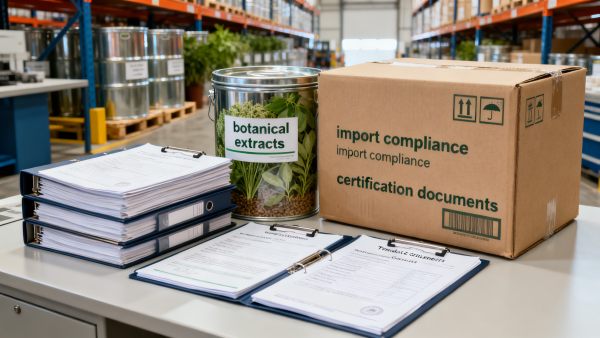
On July 16, 2026, the US FDA released a new import compliance alert for botanical extracts, introducing a clearer documentary requirement for products shipped to the US market. Starting October 1, 2026, exporters of botanical extracts, including dietary supplement ingredients, will need to submit third-party certification reports covering both cGMP under 21 CFR Part 111 and ISO 22000:2018. This deserves attention because the change is tied directly to import clearance timing and market access, with potential consequences for exporters, buyers, manufacturers, and supply chain teams handling US-bound natural ingredients.
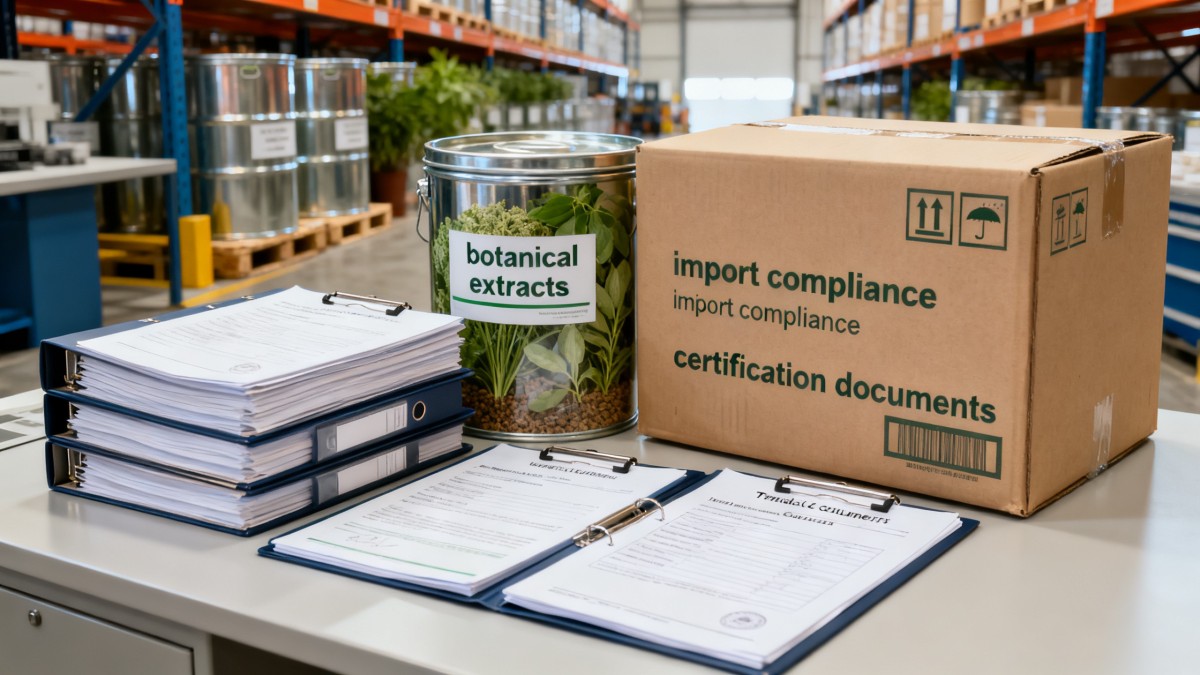
A New Documentation Threshold for US-Bound Extracts
The confirmed information shows that the US FDA issued the Botanical Extracts Import Compliance Alert on July 16, 2026. Under this update, from October 1, 2026, all botanical extracts exported to the United States, including raw materials used in dietary supplements, must be accompanied by third-party certification reports demonstrating compliance with cGMP under 21 CFR Part 111 and ISO 22000:2018.
The provided information also states that the policy has a direct effect on customs clearance efficiency and import eligibility for Botanical Extracts exporters. Products that do not meet the requirement may face port refusal and batch recall risk.
Where the Practical Pressure Will Appear First
Export shipments facing a stricter pre-clearance burden
For exporters selling botanical extracts into the US, the immediate impact is likely to center on whether shipment files are complete before dispatch. Analysis shows that compliance is no longer only a factory-side quality issue; it becomes part of the import entry package. Companies in this position should pay close attention to whether their third-party certification reports match the stated cGMP and ISO 22000:2018 requirements and whether those documents are ready in time for shipment and customs submission.
Procurement teams reassessing supplier qualification
For buyers and sourcing teams purchasing botanical extracts for US delivery or US-facing supply chains, the update may affect supplier screening and order planning. From an industry perspective, the main issue is not only product availability but whether a supplier can support both certification tracks in a form acceptable for import use. That places more weight on vendor qualification files, documentary review, and procurement timing for contracts linked to US delivery schedules.
Manufacturing and processing operations under document-linked compliance review
Processors and manufacturers using botanical extracts in dietary supplement-related applications may also feel the impact through upstream raw material control. Observably, if incoming extract suppliers cannot provide the required third-party reports, downstream production planning could face interruption, especially where delivery depends on uninterrupted US entry. What deserves closer attention is the connection between certification status, raw material release, and shipment scheduling.
Logistics and compliance service providers handling higher file sensitivity
Supply chain service providers, customs-facing coordinators, and certification-related service firms may see greater pressure around document accuracy and handoff timing. Analysis shows that once certification reports become a practical import condition, any mismatch between cargo, product scope, and compliance paperwork could affect clearance speed. The operational focus here is likely to be document completeness, version control, and communication between exporters, certifiers, and shipment coordinators.
What Companies Should Review Before the October Start Date
Check whether current certifications actually cover the new requirement
Analysis shows that companies should first verify whether existing compliance files already include valid third-party evidence for both cGMP under 21 CFR Part 111 and ISO 22000:2018. Where one side is missing, the risk is not abstract; it may affect admissibility and shipment timing once the October 1 date takes effect.
Re-examine shipment files and product documentation
What deserves closer attention is the alignment between certification reports and the products being exported. Companies should review whether product dossiers, shipment documents, quality records, and technical files are organized in a way that supports the new import requirement. The provided information does not specify the full execution format, so this remains an area that requires careful follow-up rather than assumption.
Adjust procurement and delivery planning around certification lead time
From an industry perspective, procurement and delivery schedules may need to reflect the time required to obtain or update third-party certification reports. This is especially relevant for contracts, replenishment cycles, and shipments already scheduled close to the October implementation date. The key issue is not only compliance itself, but whether compliance can be demonstrated in time for trade execution.
Watch for further wording, interpretation, and market practice
Observably, the current information confirms the requirement and implementation date, but it does not provide the full operational detail for every trade scenario. Companies should therefore monitor subsequent official wording, execution interpretation, tender and sourcing document changes, and feedback from actual import handling. At this stage, those points should be treated as follow-up items, not settled outcomes.
Why This Looks Like an Execution Signal, Not Just a Headline
Analysis shows that this update is more than a general policy message because it ties a named import requirement to a fixed implementation date and to concrete trade consequences such as clearance delays, port refusal, and batch recall risk. At the same time, it would be premature to treat every enforcement detail as fully known, since the provided information does not include expanded procedural guidance, document templates, or case handling standards.
It is more appropriate to understand this as a rule change with clear market-entry implications and as an execution signal that companies should act on now, while still keeping later interpretation under review. For the industry, the important question is not only whether the requirement exists, but how consistently it will be reflected in shipment review, procurement practice, and supplier qualification workflows.
How the Market Should Read This Update Now
In practical terms, this development points to a tighter import compliance threshold for botanical extracts entering the United States. The confirmed facts already indicate a direct connection between certification readiness and access to the market. A neutral reading is that the change should be taken seriously as an approaching operational requirement, while some implementation details still warrant observation as the effective date gets closer.
Current industry attention is therefore best placed on certification readiness, document alignment, supplier qualification, and shipment planning rather than on broad speculation. That makes this update less a background policy item and more a near-term compliance checkpoint for companies involved in US-bound botanical extract trade.
Basis of This Article and What Still Needs Verification
This article is based on the user-provided news title, event date, and event summary relating to the US FDA update on botanical extract import compliance issued on July 16, 2026. For events of this kind, relevant source categories commonly include official regulatory notices, releases from supervisory authorities, customs or trade administration information, industry association updates, standard-setting documents, and reporting by authoritative trade media.
No specific official source link was provided in the input, so the exact official publication link still needs to be verified on an ongoing basis. Observably, the points that warrant continued monitoring include detailed policy wording, certification execution standards, documentary interpretation, procurement and tender file adjustments, industry feedback, and how affected companies implement the requirement in practice.
Related Intelligence
- Botanical ExtractsChoosing Botanical Extracts for Pharmaceuticals: Potency, Purity, and ComplianceBotanical extracts for pharmaceuticals: learn how to assess potency, purity, traceability, and GMP compliance for confident, regulatory-ready supplier selection.
- Botanical ExtractsBotanical Extracts Market Outlook: Supply, Pricing, and Buyer RisksBotanical extracts market insights on supply, pricing, quality control, and buyer risks—compare suppliers confidently and protect your sourcing strategy.
- Botanical ExtractsEurope Botanical Extracts Market: Key Growth Drivers, Risks, and OpportunitiesEurope botanical extracts market insights: explore growth drivers, regulatory risks, supply-chain challenges, and scalable opportunities for compliant, high-value ingredients.
The Morning Broadsheet
Daily chemical briefings, market shifts, and peer-reviewed summaries delivered to your terminal.
