

The Authority in Global Agricultural Chemistry & Bio-Resources
China Tightens Food Import Registration Rules
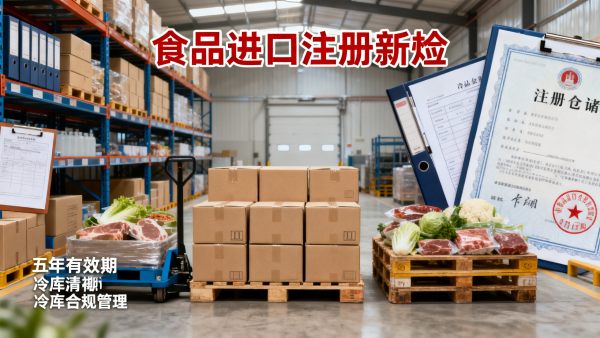
Image placement plan: use one visual near the beginning of the article to highlight the policy change and support reader understanding of registration scope, five-year validity, and the added cold-storage compliance requirement effective on June 1, 2026.
On June 1, 2026, new registration rules for overseas manufacturers of imported food take effect under General Administration of Customs Order No. 280. The change affects market access planning for exporters serving China, especially where products such as Botanical Extracts, Natural Ingredients, and Commercial Feed Pellet may involve animal-derived inputs or related storage links, because 20 categories of high-risk foods will follow classified registration management, registrations will be valid for five years, supporting cold storage for animal-origin foods will be brought into supervision, and registrations for edible bird's nest and meat products will not be renewed automatically.
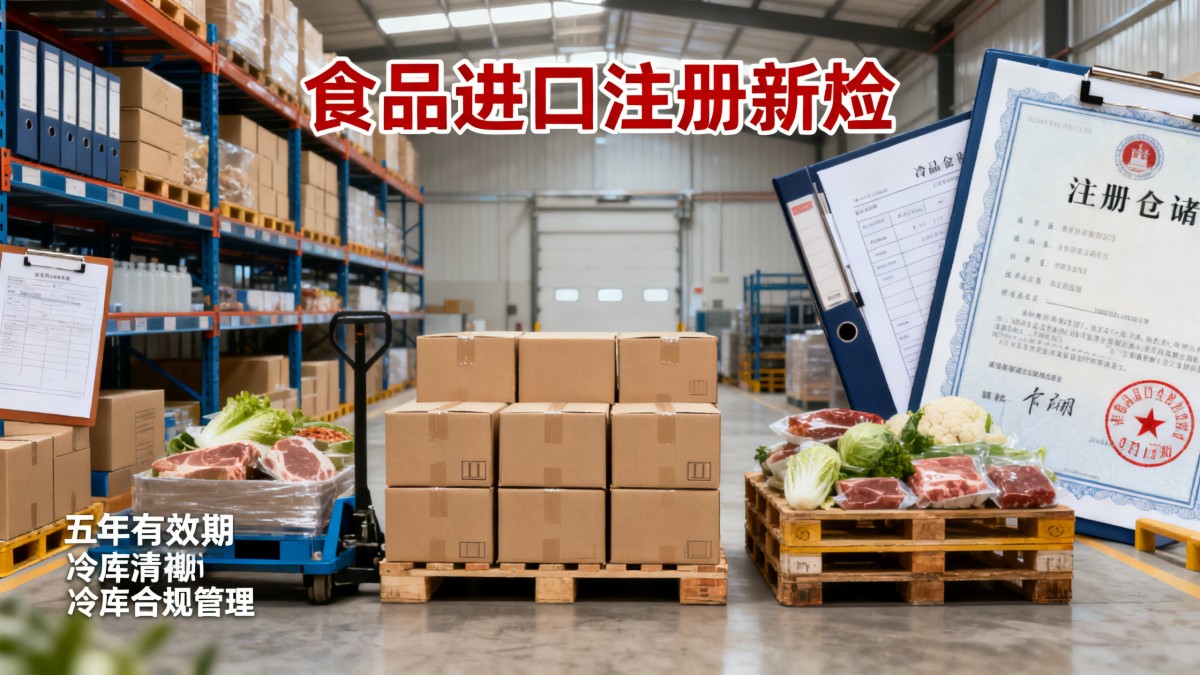
Key confirmed changes in the new registration framework
According to the information provided, General Administration of Customs Order No. 280 will take effect on June 1, 2026. It introduces classified registration management for 20 categories of high-risk foods, including meat, aquatic products, dairy products, and edible bird's nest. The validity period of registration is unified at five years. Supporting cold storage facilities for animal-origin foods are included in supervision. At the same time, registration qualifications for edible bird's nest and meat products cannot be extended automatically.
The same information indicates that this change directly affects the long-term stability of market access for overseas manufacturers exporting to China when supplying Botanical Extracts that contain animal-derived excipients, Natural Ingredients, and Commercial Feed Pellet. It also indicates that enterprises need to start re-examination preparations in advance and upgrade cold-storage compliance where relevant.
How different market participants may be affected
Trading companies directly involved in export business
Direct trading companies may be affected because registration status is closely linked to continued access to the Chinese market. The impact is likely to appear in export scheduling, customer contract continuity, and document review before shipment. What deserves closer attention is whether the products handled by the trader fall into the regulated high-risk categories or rely on animal-origin ingredients, supporting facilities, or suppliers whose registration continuity may become less predictable.
Raw material sourcing and ingredient procurement companies
Procurement-focused companies may be affected where upstream ingredients include animal-derived excipients or where ingredient origin influences product classification. The impact may show up in supplier screening, qualification verification, and purchase timing. From an industry perspective, these companies need to pay closer attention to the registration validity cycle, the status of overseas production sites, and whether any related cold-chain or storage arrangements now fall within the compliance scope.
Processing and manufacturing enterprises
Processing and manufacturing enterprises may face direct operational implications if their exported products depend on ingredients, semi-finished materials, or storage conditions covered by the new rules. The impact may be reflected in formulation review, export product classification, production planning, and quality documentation. Observably, manufacturers should pay particular attention to whether animal-origin auxiliary materials create additional registration or supervision requirements that were previously treated as less critical in long-term export planning.
Supply chain and logistics service providers
Supply chain service providers, especially those connected with cold-chain support, may be affected because supporting cold storage for animal-origin foods is now explicitly included in supervision. The impact may appear in facility readiness, service qualification review, and coordination with overseas factories and exporters. It is more appropriate to understand this as a compliance-linked logistics issue rather than a transport issue alone, since storage capability and regulatory readiness may now influence shipment continuity.
What companies should prioritize now
Bring forward registration review timelines
Companies should review the five-year registration validity arrangement and identify products or facilities that may require early re-examination planning. This is especially important for edible bird's nest and meat products, where automatic renewal is not available. Businesses tied to these categories should avoid relying on passive continuation assumptions in long-term sales or procurement arrangements.
Check whether product composition changes the compliance path
For Botanical Extracts, Natural Ingredients, and Commercial Feed Pellet, enterprises should examine whether animal-derived excipients, processing aids, or related materials could change the applicable regulatory treatment. This matters because the summary provided directly links the new rules to the stability of exports in these product areas. Product classification and supporting technical documentation therefore become a practical checkpoint.
Upgrade cold-storage compliance where animal-origin links exist
Where products, ingredients, or supporting operations involve animal-origin foods, enterprises should verify whether related cold storage falls within the supervised scope under the new rules. Relevant attention points include facility readiness, matching records, and coordination between production sites and storage providers. The immediate business concern is not only operational suitability but also whether the compliance status of support facilities could affect continued registration-related acceptance.
Strengthen supplier qualification and traceability files
Companies should tighten management of overseas producer qualifications, validity periods, and supporting technical files. This includes reviewing supplier status for products exposed to the new classification system and preparing traceability and compliance records that can support re-examination. From a practical business angle, stronger file control may help reduce disruptions in procurement, export delivery, and customer communication.
Industry observation: stricter continuity management may become the real pressure point
Analysis shows that the most important shift is not only the existence of registration itself, but the stronger emphasis on continuity management across the full export chain. The five-year validity period creates a clearer time boundary, while the removal of automatic extension for edible bird's nest and meat products increases the need for active compliance management.
From an industry perspective, the inclusion of supporting cold storage in supervision may raise the operational threshold for companies whose export models depend on coordinated factory-and-storage arrangements. This should not automatically be read as a broad market closure. However, it does suggest that preparation cycles may need to start earlier, especially where products have indirect animal-origin exposure through ingredients, excipients, or storage handling.
What deserves closer attention is the knock-on effect on internal coordination. Exporters, ingredient buyers, manufacturers, and logistics partners may need to align documentation, facility status, and review timing more closely than before. Observably, companies with weak qualification tracking could face greater uncertainty in maintaining stable access over multi-year supply programs.
Why this rule change matters for the sector
This regulatory update matters because it connects registration validity, product category management, and supporting cold-storage supervision into one compliance framework that can affect long-term export stability. For companies linked to animal-origin inputs or regulated food categories, the issue is no longer only initial approval but also ongoing readiness for review and facility alignment. A rational reading is that businesses should prepare early, verify classification carefully, and treat registration continuity as a strategic operating issue rather than an administrative formality.
Source note and follow-up points
This article was generated based on the user-provided news title, event date, and event summary. Typical source types for this kind of development may include customs regulations, official regulatory notices, registration guidance, and trade compliance updates. Specific official source links were not provided in the input and should be verified continuously.
Further observation is still needed regarding implementing details, practical interpretation of certification and registration review, changes in tender or procurement documents, supervision expectations for supporting cold storage, and industry feedback on how the new rules are applied in practice.
Related Intelligence
- Botanical ExtractsChoosing Botanical Extracts for Pharmaceuticals: Potency, Purity, and ComplianceBotanical extracts for pharmaceuticals: learn how to assess potency, purity, traceability, and GMP compliance for confident, regulatory-ready supplier selection.
- Botanical ExtractsBotanical Extracts Market Outlook: Supply, Pricing, and Buyer RisksBotanical extracts market insights on supply, pricing, quality control, and buyer risks—compare suppliers confidently and protect your sourcing strategy.
- Botanical ExtractsEurope Botanical Extracts Market: Key Growth Drivers, Risks, and OpportunitiesEurope botanical extracts market insights: explore growth drivers, regulatory risks, supply-chain challenges, and scalable opportunities for compliant, high-value ingredients.
The Morning Broadsheet
Daily chemical briefings, market shifts, and peer-reviewed summaries delivered to your terminal.
