

The Authority in Global Agricultural Chemistry & Bio-Resources
Can Bio-Extracts for pharmaceutical applications scale?
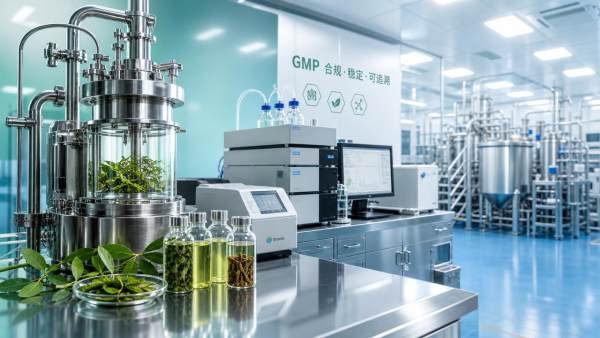
As demand for traceable, biologically derived inputs accelerates across modern drug development, technical evaluators face a critical question: can Bio-Extracts for pharmaceutical applications scale without compromising purity, consistency, or regulatory compliance? From validated extraction platforms to GMP-ready quality systems and resilient raw-material sourcing, scalability now depends on more than production volume. It requires a disciplined assessment of process control, analytical verification, and supply chain transparency.
Can Bio-Extracts for pharmaceutical applications truly scale?
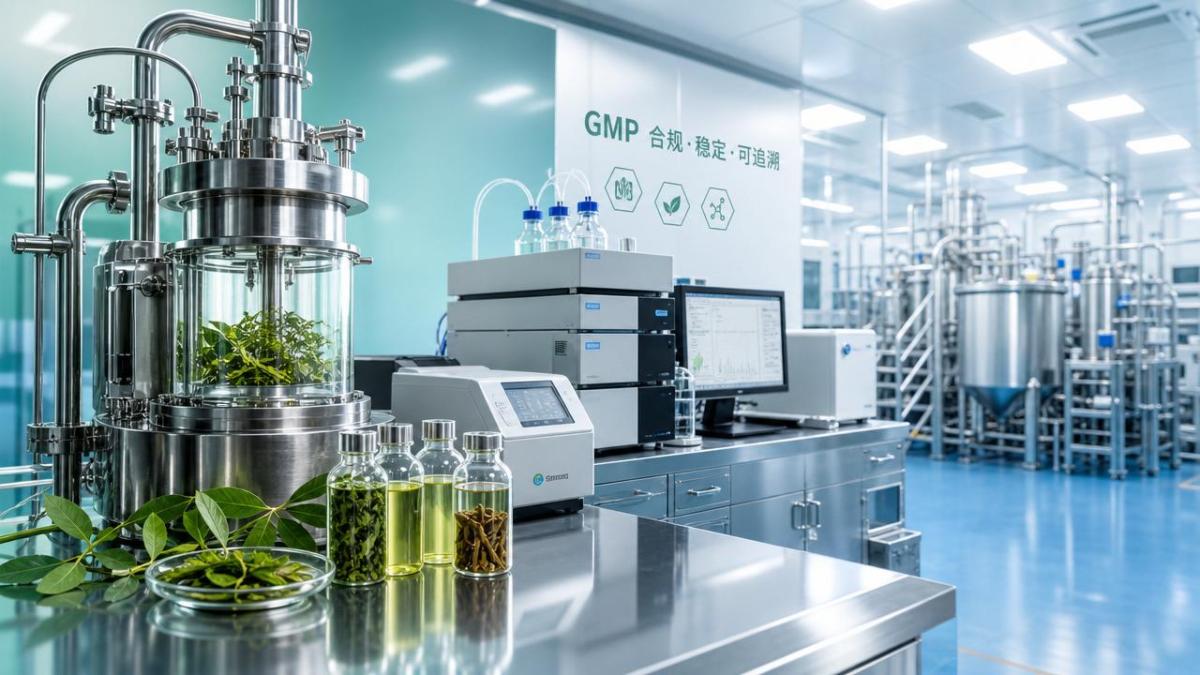
Yes, but scale is not only an engineering question.
Bio-Extracts for pharmaceutical applications scale when biology, chemistry, operations, and compliance are controlled together.
A larger extractor cannot correct weak botanical identification, unstable biomass, or incomplete analytical methods.
The practical definition of scale includes reproducible composition, validated removal of impurities, and predictable batch release.
For pharmaceutical use, “natural origin” is not enough.
Each extract must be understood as a controlled material with defined attributes.
- Identified source species and plant part.
- Controlled extraction solvent and process parameters.
- Validated marker compounds or chemical fingerprint.
- Limits for residues, microbes, toxins, and heavy metals.
- Documented stability under intended storage conditions.
Bio-Extracts for pharmaceutical applications become scalable when these attributes remain stable across seasons, suppliers, and production campaigns.
What makes pharmaceutical bio-extracts harder to scale than food ingredients?
Food-grade and cosmetic-grade extracts can tolerate wider sensory or compositional variation.
Pharmaceutical programs require tighter evidence, deeper documentation, and stronger change control.
Bio-Extracts for pharmaceutical applications must satisfy both biological complexity and regulated quality expectations.
The challenge starts in the field, forest, fermentation vessel, or aquaculture environment.
Growth conditions influence metabolite profiles, impurity risks, and extraction performance.
Rainfall, soil chemistry, harvest timing, genetics, storage, and transport can all affect final quality.
Synthetic APIs often begin with defined reagents.
Bio-based materials begin with living variability.
That difference drives additional controls during sourcing, qualification, extraction, and release testing.
Key difference at commercial scale
This is why Bio-Extracts for pharmaceutical applications need early industrial planning, not late-stage troubleshooting.
Which applications are most realistic for scaled bio-extracts?
Not every biologically derived extract should become a high-volume pharmaceutical input.
The best candidates have clear function, measurable markers, and a manageable impurity profile.
Bio-Extracts for pharmaceutical applications are commonly evaluated in several practical settings.
- Phytochemical intermediates for semi-synthetic APIs.
- Excipients derived from marine, plant, or microbial sources.
- Purified fractions used in topical or oral formulations.
- Reference materials for botanical drug development.
- Bioactive compounds supporting research pipelines.
Scalability is strongest when the active or functional component can be quantified reliably.
A vague extract with broad claims is difficult to defend under pharmaceutical scrutiny.
A defined fraction with repeatable analytical fingerprints has a stronger path.
Marine polysaccharides, fermentation-derived metabolites, and purified plant alkaloids show how scale can be feasible.
However, each category brings different risks.
Marine sources may face ecological, traceability, and contaminant challenges.
Plant sources may face agricultural variability and adulteration risks.
Microbial systems may demand fermentation control, strain stability, and containment safeguards.
The application determines the acceptance threshold.
Bio-Extracts for pharmaceutical applications used near active dosing require the most rigorous proof.
How should scalability be assessed before committing resources?
A reliable assessment starts with evidence, not optimism.
Bio-Extracts for pharmaceutical applications should pass a staged technical review before expansion.
The first step is source mapping.
This includes species verification, origin documentation, cultivation method, harvesting controls, and logistics risk.
The second step is process mapping.
Critical parameters include particle size, solvent ratio, temperature, time, pH, filtration, concentration, and drying method.
The third step is analytical mapping.
Testing should confirm identity, potency, purity, residual solvent, microbial load, allergens, toxins, and stability.
A practical readiness checklist
- Define the quality target product profile.
- Confirm raw-material availability over multiple seasons.
- Run pilot batches using representative feedstock.
- Compare chemical fingerprints across batches.
- Validate impurity removal and microbiological controls.
- Model cost, yield, waste, and regulatory documentation.
If one stage fails, expansion should pause.
Bio-Extracts for pharmaceutical applications rarely recover from weak foundations after capital investment.
What risks most often undermine Bio-Extracts for pharmaceutical applications?
The most common risk is confusing repeatable yield with repeatable quality.
A process may produce kilograms consistently while the chemical profile shifts silently.
Bio-Extracts for pharmaceutical applications need both mass balance and molecular consistency.
Adulteration is another material concern.
High-value botanical or marine inputs can attract substitution, dilution, or undeclared processing aids.
Authentication testing should not be optional.
DNA barcoding, microscopy, spectroscopy, and chromatography can support source confidence.
Contaminants also become more visible at scale.
Pesticides, mycotoxins, heavy metals, residual solvents, endotoxins, and microbial contamination require defined limits.
Regulatory risk increases when documentation trails are incomplete.
Batch records, certificates of analysis, deviation reports, and stability data must be inspection-ready.
Common scaling mistake
The mistake is scaling supply before locking the specification.
Specifications should define what matters chemically, biologically, toxicologically, and operationally.
For Bio-Extracts for pharmaceutical applications, a narrow specification is not bureaucracy.
It is the operating language between sourcing, production, testing, and regulatory review.
What cost and timeline factors should be expected?
Scaled bio-extraction can be cost-effective, but early development is rarely cheap.
Bio-Extracts for pharmaceutical applications require method development, validation, stability studies, and supplier qualification.
Timeline pressure often comes from raw-material cycles.
If a harvest window is missed, a full comparability study may wait months.
Fermentation routes can reduce seasonal dependence, but they introduce bioprocess development costs.
Extraction technology also shapes economics.
Ethanol extraction, water extraction, supercritical CO2, membrane separation, and resin purification have different trade-offs.
Solvent recovery, energy demand, waste treatment, and operator safety must enter cost models.
The cheapest process may become expensive if it creates difficult impurities.
A longer development phase can reduce failure during validation or commercial transfer.
Indicative decision table
This table helps compare Bio-Extracts for pharmaceutical applications before full technical transfer.
How can a scale-up strategy be made more defensible?
A defensible strategy begins with quality by design.
Critical quality attributes should be linked to critical process parameters from the start.
Bio-Extracts for pharmaceutical applications benefit from digital batch records and transparent supply-chain data.
Traceability should connect each batch to origin, processing history, test results, and storage conditions.
Supplier audits should examine practical capability, not only certificates.
Important areas include sanitation, segregation, pest control, training, equipment maintenance, and deviation handling.
Analytical methods should be fit for purpose.
Identity testing, assay methods, impurity methods, and stability methods must answer different questions.
Overreliance on one technique can create blind spots.
A combined approach is usually stronger for Bio-Extracts for pharmaceutical applications.
Operational recommendations
- Build a reference library of approved raw materials.
- Use pilot data to define acceptable operating ranges.
- Run comparability studies after source or process changes.
- Maintain retained samples for investigation and trend analysis.
- Document sustainability claims with verifiable evidence.
Environmental responsibility is also becoming commercially relevant.
Waste streams, solvent use, biodiversity impact, and carbon footprint influence long-term acceptance.
Scalable Bio-Extracts for pharmaceutical applications should be technically sound and environmentally accountable.
Bottom line: what is the next practical step?
Bio-Extracts for pharmaceutical applications can scale, but only under disciplined control.
The strongest programs define the extract, verify the source, validate the process, and document every change.
The next step is a structured feasibility review.
Start by comparing source security, analytical readiness, impurity controls, GMP alignment, and cost sensitivity.
Then test assumptions through representative pilot batches and independent analytical confirmation.
AgriChem Chronicle tracks these intersections across fine chemicals, agricultural inputs, bio-extracts, and primary processing.
For deeper market intelligence, technical review, or editorial collaboration, engage with verified data before scale decisions become irreversible.
In a regulated supply chain, the winning question is not whether volume is possible.
It is whether Bio-Extracts for pharmaceutical applications can deliver the same evidence at every batch, site, and season.
Related Intelligence
- Botanical ExtractsChoosing Botanical Extracts for Pharmaceuticals: Potency, Purity, and ComplianceBotanical extracts for pharmaceuticals: learn how to assess potency, purity, traceability, and GMP compliance for confident, regulatory-ready supplier selection.
- Botanical ExtractsBotanical Extracts Market Outlook: Supply, Pricing, and Buyer RisksBotanical extracts market insights on supply, pricing, quality control, and buyer risks—compare suppliers confidently and protect your sourcing strategy.
- Botanical ExtractsEurope Botanical Extracts Market: Key Growth Drivers, Risks, and OpportunitiesEurope botanical extracts market insights: explore growth drivers, regulatory risks, supply-chain challenges, and scalable opportunities for compliant, high-value ingredients.
The Morning Broadsheet
Daily chemical briefings, market shifts, and peer-reviewed summaries delivered to your terminal.
